Work pressure or something else…political battle in West Bengal, how many BLOs have died so far?
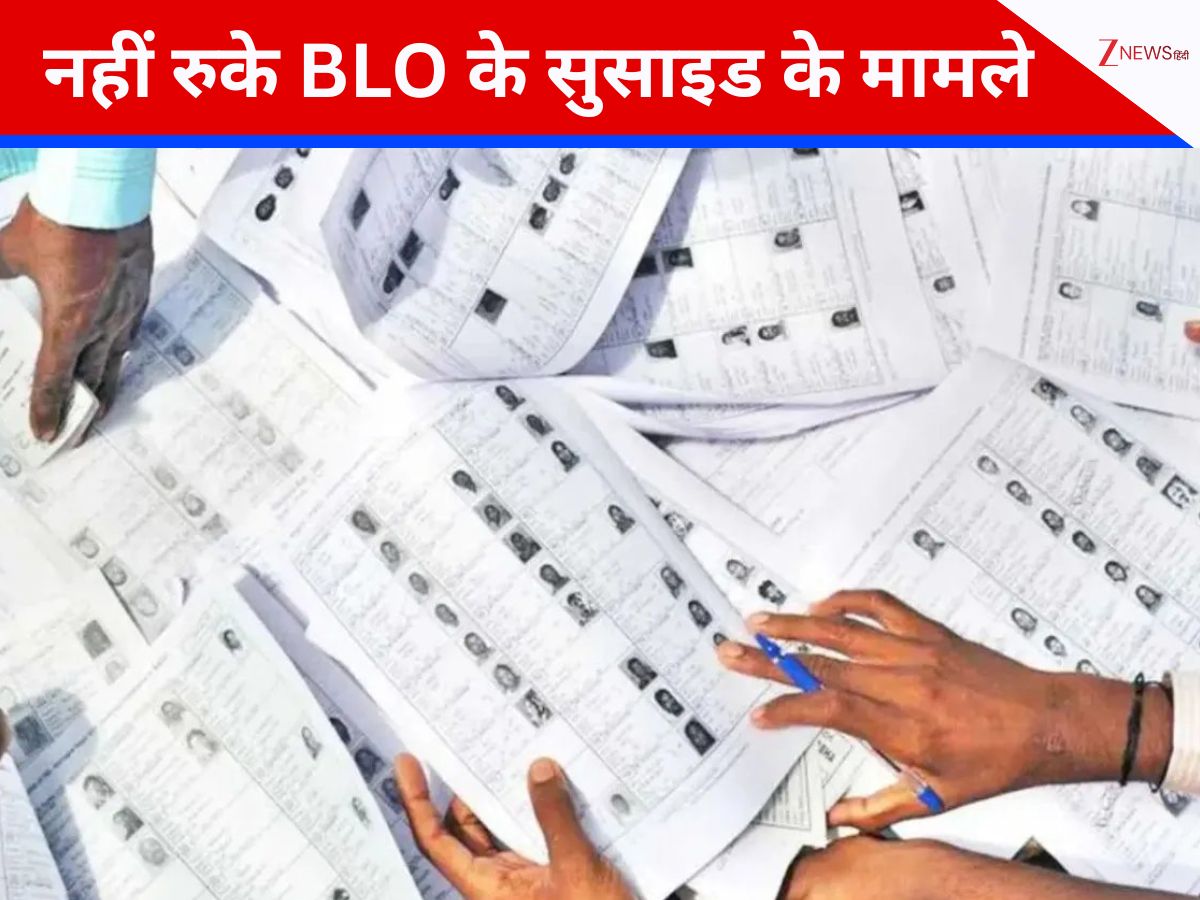
Another Booth Level Officer (BLO) has died by suicide during the Special Intensive Revision (SIR) campaign being conducted by the Election Commission in West Bengal. The body of a BLO was found hanging from a noose in a school room in Murshidabad district of Bengal. BLO suicides are not a new phenomenon in West Bengal. This series of incidents has been ongoing since the Election Commission started the Special Intensive Revision (SIR). Including this case, a total of 8 BLOs have now died by suicide in West Bengal. The deceased BLO has been identified as 47-year-old Hamimul Islam.
An officer from Ranitala police station informed the media that Hamimul Islam was employed as a teacher at Pakmari Char Krishnapur Boys Primary School. He was also posted as a Booth Level Officer at a polling center in Purba Alapur village under Kharibona Gram Panchayat. According to family members, Hamimul Islam left home on Saturday morning as usual to go to school but did not return by the afternoon. When there was no contact for a long time, family and local residents began searching for him. On Saturday night, his body was found hanging from a noose in a room on the school premises.
Family Alleges Work Pressure
The deceased’s family has directly alleged that the excessive workload associated with the SIR and the dual responsibilities of being a BLO alongside teaching duties had severely disturbed him mentally. Family members say it was due to this pressure that he took this step. Upon receiving information about the incident, local police reached the spot. The police took custody of the body and sent it for postmortem, initiating an investigation into the entire matter. According to a police officer, the deceased’s family members have alleged that due to the dual responsibilities of being a teacher and a BLO, Hamimul was under excessive workload, which had kept him under prolonged mental stress.
Suicide Due to Mental Pressure?
Family members say that over the past few weeks, the pressure to complete SIR-related tasks on time had suddenly increased significantly. This additional responsibility worsened Hamimul’s mental condition. The deceased’s elder brother, Farman-ul-Kalam, alleged that the pressure of duties related to the SIR was far beyond his brother’s capacity. He says it was due to extreme stress and mental pressure that Hamimul ended his life by hanging. Police are investigating the case, taking all aspects into account.
West Bengal
West Bengal is a state in eastern India, historically part of the ancient kingdoms of Magadha and Bengal, and later a major center of British colonial rule with Kolkata as the capital of British India until 1911. It is renowned for its profound cultural contributions, including the Bengal Renaissance of the 19th-20th centuries, which revolutionized literature, art, and social reform. Today, it is celebrated for its vibrant festivals like Durga Puja, rich literary heritage, and distinctive traditions in music, cinema, and cuisine.
Murshidabad district
Murshidabad district in West Bengal, India, was the last capital of independent Bengal before British colonial rule. It is historically significant as the seat of the Nawabs of Bengal, most notably Siraj-ud-Daulah, whose defeat at the Battle of Plassey in 1757 marked a pivotal British takeover. Today, the district is renowned for its architectural heritage, including the Hazarduari Palace and Katra Mosque, which reflect its former political and cultural prominence.
Ranitala police station
Ranitala Police Station is a local law enforcement facility located in the Ranitala area of West Bengal, India. While specific historical details about the station itself are not widely documented, it serves as a part of the broader colonial and post-colonial policing system established in the region during British rule and maintained after India’s independence. Its primary function is to maintain public order and provide security for the residents of its jurisdiction.
Pakmari Char Krishnapur Boys Primary School
Pakmari Char Krishnapur Boys Primary School is a local primary school located in a rural char (riverine island) area of Bangladesh, likely in the Gaibandha or Kurigram district. Its history is rooted in providing basic education to boys in an isolated, flood-prone region, reflecting community efforts to establish accessible schooling despite geographical challenges.
Purba Alapur village
Purba Alapur is a village located in the Barisal District of southern Bangladesh. While specific historical records for the village itself are limited, the broader Barisal region has a rich history as part of the ancient kingdoms of Bengal and later as a prominent center for rice cultivation and riverine trade. Today, it represents the traditional agrarian and river-focused lifestyle common to many villages in the Ganges Delta.
Kharibona Gram Panchayat
“Kharibona Gram Panchayat” is a village-level local self-government institution in the state of West Bengal, India. As a Gram Panchayat, its history is tied to the broader Panchayati Raj system established by the Indian constitution to administer rural areas, with its specific local governance structure evolving over recent decades to manage the public affairs and development of the Kharibona village community.
Election Commission
The Election Commission is an independent governmental body responsible for organizing and overseeing the democratic process of elections within a country. Its history is tied to the development of modern representative democracy, with many nations establishing permanent commissions in the 19th and 20th centuries to ensure free and fair voting, manage voter registration, and enforce electoral laws. Its core function is to uphold the integrity of elections and maintain public confidence in the democratic system.
Booth Level Officer (BLO)
A Booth Level Officer (BLO) is not a physical place or cultural site, but an administrative position in India’s electoral system. A BLO is a local government official responsible for maintaining and updating the voter list for a specific polling booth area. The role was formally strengthened by the Election Commission of India around 2006 to ensure greater accuracy in electoral rolls and to facilitate voter registration at the grassroots level.

)