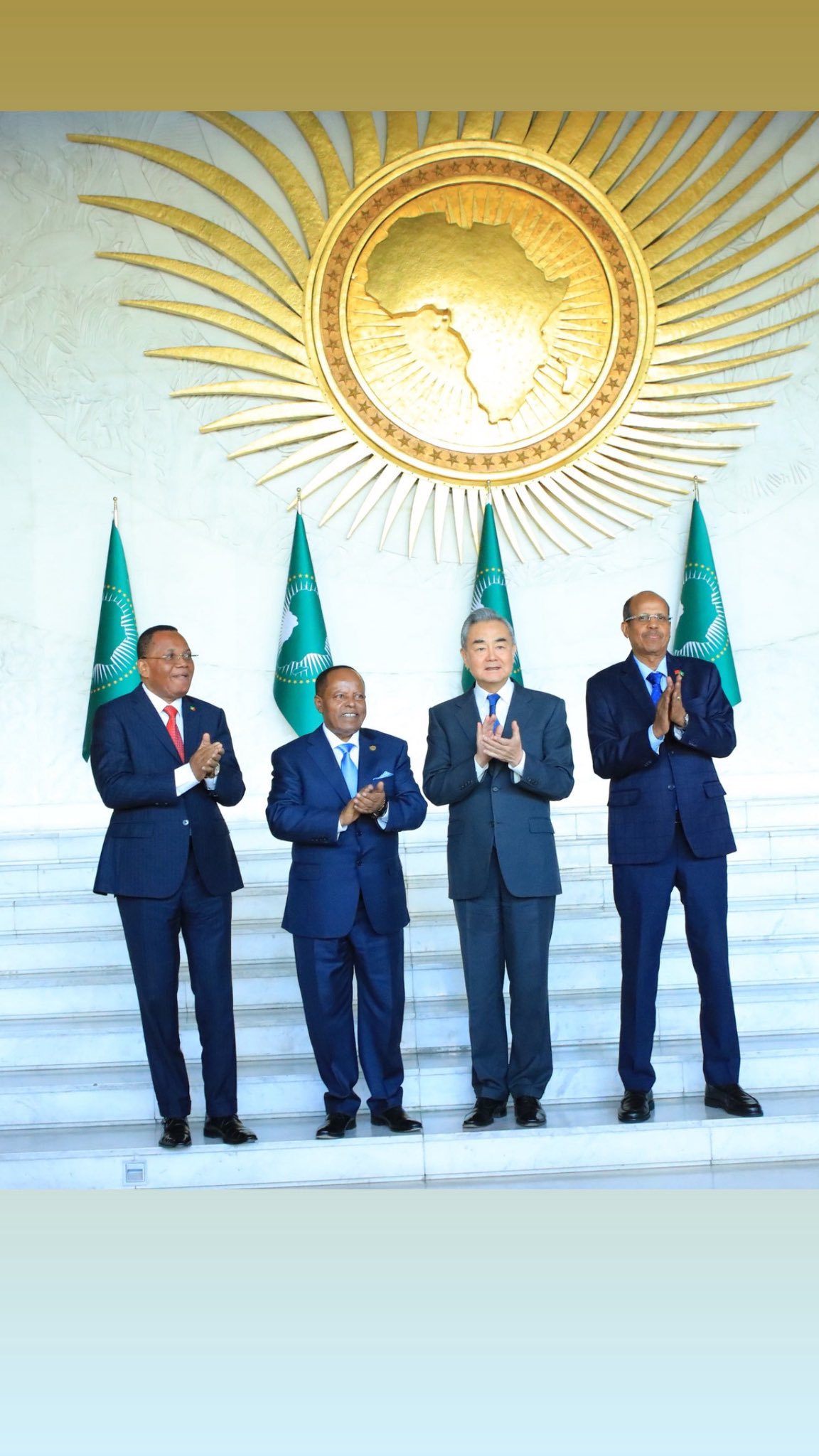
Senior officials and distinguished figures gathered in the multipurpose hall to launch this program, which seeks to transcend the traditional frameworks of relations by fostering intellectual, cultural, and social synergy between the 2.8 billion citizens of China and the African continent.
The 2026 People-to-People Exchange Program is expected to include expanding scholarship quotas, simplifying procedures for cultural exchange visas, and launching a “Fast Track” corridor for African businesspeople participating in trade fairs in China.
In the opening speech, a profound vision was presented regarding the cultural compatibility between the two sides, noting that African human-centered philosophies like “Ubuntu” reflect Confucian virtues of social harmony and empathy.
It was emphasized that upcoming decades of cooperation must prioritize the transfer of advanced technology, particularly in the fields of artificial intelligence and biotechnology. There was also a strong emphasis on the necessity for Africa to transform from being merely a source of raw materials, calling for Chinese partners to support the continent’s green minerals strategy and its path towards technological independence.
In turn, the welcoming remarks highlighted that this partnership represents a cornerstone for the success of “Agenda 2063.” The strategic depth of the relationship was underscored, encompassing infrastructure, energy, and the social sector. It was noted that amid a decline in international multilateralism, solidarity between Africa and China represents a vital safety valve for a balanced global system, stressing that the voices of nearly three billion people must carry significant weight in international decision-making to ensure a future defined by mutual respect rather than hegemony.
The initiative was described as a means to deepen the roots of China-Africa friendship among the youth and local communities. A history spanning two millennia, reaching back to the ancient Silk Road, was recalled, noting that the modern struggle for independence forged close bonds that rise to the level of brotherhood.
A future focused on “shared modernization” was proposed, where China’s vast market becomes a catalyst for African industrialization through tariff exemption policies and the expansion of vocational training via initiatives such as “Luban Workshops.”
Confucian virtues
“Confucian virtues” are not a physical place but the core ethical principles of Confucianism, a philosophical system developed in ancient China by Confucius (c. 551–479 BCE). These virtues, such as *ren* (benevolence), *yi* (righteousness), and *li* (propriety), were intended to create a harmonious society through moral cultivation and proper relationships. Historically, they became the foundation for Chinese social order, education, and governance for over two millennia.
Ubuntu
Ubuntu is a philosophical concept originating among the Bantu peoples of Southern Africa, most famously articulated in the Zulu phrase “Umuntu ngumuntu ngabantu” (“A person is a person through other people”). It emphasizes communal interdependence, compassion, and shared humanity. While not a physical site, it is a foundational cultural and ethical worldview that has significantly influenced social structures and post-apartheid reconciliation efforts in South Africa.
Agenda 2063
“Agenda 2063” is not a physical place or cultural site, but rather a strategic framework and blueprint for the socio-economic transformation of the African continent. Adopted by the African Union in 2015, it outlines a 50-year development plan with ambitious goals for inclusive growth, political unity, and cultural renaissance, aiming to achieve “The Africa We Want” by the year 2063. Its history is rooted in pan-African ideals and builds upon previous initiatives like the Lagos Plan of Action and the Abuja Treaty.
ancient Silk Road
The ancient Silk Road was a vast network of trade routes connecting East Asia and the Mediterranean world, active from around the 2nd century BCE to the 14th century CE. It facilitated the exchange of goods like silk, spices, and technologies, while also enabling the spread of ideas, religions, and cultures across continents. Its legacy profoundly shaped the civilizations of China, Central Asia, the Middle East, and Europe.
Luban Workshops
The Luban Workshops are vocational training centers established by China abroad, primarily in developing countries, to teach practical skills in fields like manufacturing, information technology, and traditional crafts. Named after the ancient Chinese master carpenter Lu Ban, they symbolize craftsmanship and knowledge sharing. Their history is recent, with the first workshop launched in Thailand in 2016 as part of China’s international vocational education cooperation under the Belt and Road Initiative.