Within a few months, foreign shareholders withdrew, and key leaders resigned.
Halong Canned Food has had a new chairman for only a few months
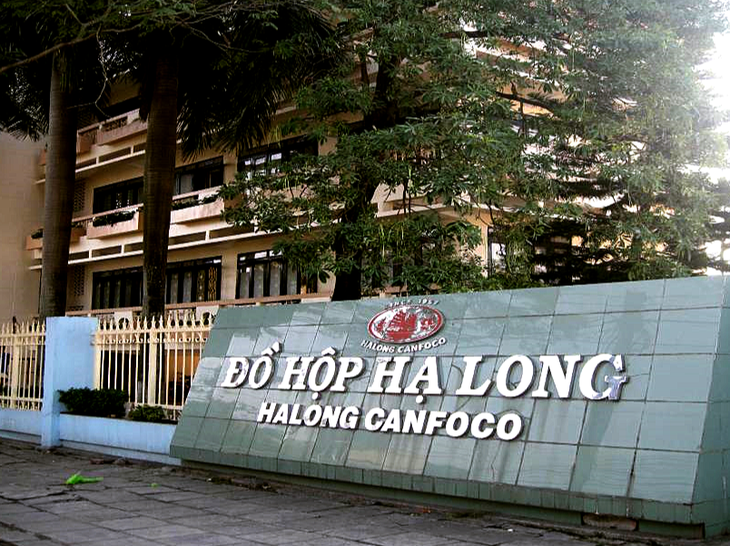
As of now, no further official information has been updated. However, the incident related to Halong Canned Food Joint Stock Company during this period has raised many questions among the public. Specifically, according to the company’s announcement, the discovery of diseased pork in the company’s warehouse was made in September 2025, but it has only been widely reported now.
Halong Canned Food also recorded strong fluctuations in its shareholder structure and leadership just a few months after the incident was discovered.
Specifically, at the annual general meeting of shareholders held in April 2025, the positions of board members for Mr. Kek Chin Ann, Mr. Wilson Cheah Hui Pin, and Mr. Bui Quoc Hung were dismissed. Simultaneously, the meeting dismissed the positions of supervisory board members for Ms. Tran Thi Minh Man and Ms. Nguyen Thi Huong Giang.
Immediately afterward, a new team of senior personnel was consolidated. The new board members include Mr. Nguyen Anh Tuan, Ms. Ngo Ha Chi, and Mr. Nguyen Tuan Diep. The two supervisory board members are: Mr. Nguyen Duc Hanh and Mr. Nguyen Viet Hoang.
Mr. Nguyen Anh Tuan was appointed as Chairman of the Board of Directors of Halong Canned Food.
Subsequently, the company completed procedures to change its business registration certificate related to the change of legal representative, now held by Mr. Tuan.
Domestic and foreign shareholders race to withdraw capital
Just before the meeting, in March 2025, a group of major foreign shareholders along with many individuals also simultaneously divested all the shares they held in the company.
Specifically, the institutional shareholder Landial Pte. Ltd sold all 732,400 CAN shares, equivalent to 14.65% of the charter capital, in the trading session on March 3, 2025, thereby officially withdrawing from the list of major shareholders of Halong Canned Food Joint Stock Company. At the same time, Mr. Low Say Pun also divested all 384,500 shares he held.
The wave of capital withdrawal also spread to the group of internal shareholders. Mr. Wilson Cheah Hui Pin – who was still a board member at the time – sold all 119,300 CAN shares. His wife, Ms. Le Minh Ha, also took similar action by divesting all 274,190 shares.
Furthermore, another major individual shareholder, Mr. Pham Huu Quy Lam, also sold all 438,120 shares.
In total, approximately 1.95 million CAN shares changed hands in a short period, equivalent to roughly 39% of Halong Canned Food’s charter capital.
But the fluctuations did not stop. In mid-July 2025, Ms. Bui Thi Huong submitted her resignation from the position of Chief Accountant. Subsequently, Mr. Nguyen Huu Duc was assigned by the company to be in charge of accounting starting in August 2025.
According to the management report for the first six months of 2025, Mr. Nguyen Anh Tuan – Chairman of Halong Canned Food – and his relatives do not hold any shares. Similarly, Mr. Nguyen Thanh Trung – Vice Chairman of the company – also does not own any CAN shares.
Meanwhile, Vietnam National Sea Products Corporation (Seaprodex – SEA) is currently the largest shareholder, owning 27.75% of the charter capital of Halong Canned Food. Other shareholders contributed over 36.1 billion VND, accounting for 72.25%.
Once a Top 50 strong brand
As reported, Hai Phong City Police have just detained over 130 tons of pork infected with African swine fever at the Joint Stock Company.
The information quickly attracted attention and caused a stir in public opinion, as Halong Canned Food is a large-scale brand with products widely consumed in the market.
This company is currently a partner of many major retail systems such as GO!, Saigon Co.op, MM Mega Market,