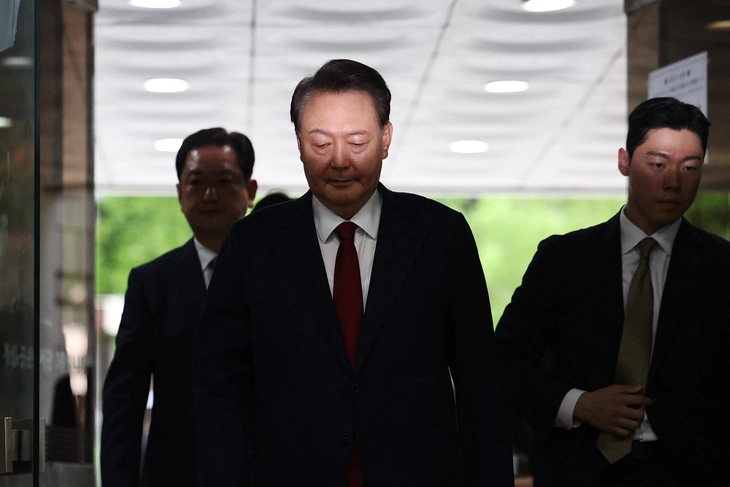
Former South Korean President Yoon Suk Yeol could face the death penalty or life imprisonment, as the first trial regarding the 2024 martial law imposition enters its final sentencing phase today, January 9.
Although South Korea has maintained a moratorium on executions for nearly 30 years and has not carried out any death sentences since 1997, prosecutors stated this penalty could still be proposed for Yoon.
At the Seoul Central District Court, prosecutors accused Yoon and former Defense Minister Kim Yong Hyun of beginning to plan in October 2023 to temporarily suspend the National Assembly and seize legislative power.
The indictment specified that Yoon sought to label political opponents, including opposition leader Lee Jae Myung, as “anti-state forces” in order to proceed with their arrest.
The former President is also accused of masterminding a rebellion by imposing martial law on December 3, 2024. Although it lasted only about six hours, the event shocked public opinion and the South Korean political scene.
Yoon later denied all charges, asserting that imposing martial law was within his authority and intended to warn about opposition parties obstructing government operations.
During the January 9 trial, Yoon appeared alongside seven other defendants, including former Defense Minister Kim Yong Hyun and his defense lawyers.
The sentencing hearing began early for the defense to present their case, after which the prosecutor will deliver final arguments and propose sentences for each defendant.
In addition to charges related to martial law, Yoon faces several other charges, including obstruction of an arrest warrant and abuse of power.
The court is expected to deliver its verdict in February.
Former President Yoon Suk Yeol is prosecuted on charges of ‘aiding the enemy’ and abuse of power, related to ordering a drone to fly over North Korea to create a pretext for imposing martial law.