Diplomatic Escalation: Indonesia and Turkey Hold First “2 Plus 2” Meeting, Focusing on Security and Economy
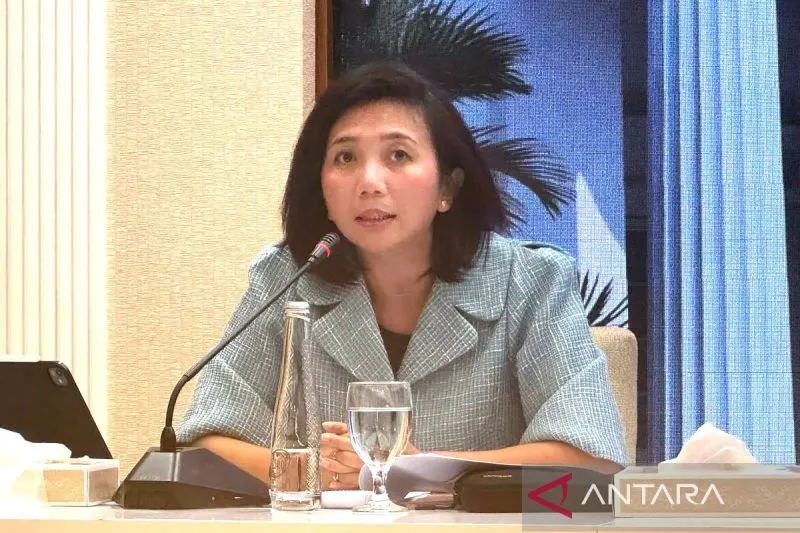
Indonesia is strengthening its strategic diplomatic architecture with Turkey through the establishment of a “2 Plus 2” meeting mechanism (Foreign Ministers and Defense Ministers). This step is a direct follow-up to the results of the High Level Strategic Cooperation Council between the President of Indonesia, Prabowo Subianto, and the President of Turkey, Recep Tayyip Erdogan.
The inaugural 2 Plus 2 meeting is scheduled to take place in Ankara, Turkey, on January 9-10, 2026.
The 2 Plus 2 mechanism is highly exclusive, with Indonesia currently having such a format with only a handful of countries, including Australia, Japan, China, and France.
Agenda for Strategic Cooperation
The main focus of discussions in this 2 Plus 2 forum covers a broad spectrum of bilateral strategic cooperation, including:
Security and Defense Industry: Strengthening collaboration in the defense sector.
Economy and Trade: Encouraging an increase in trade volume and investment.
Development and Energy.
Discussions will also touch on broader regional issues in Europe, Southeast Asia, and the Pacific.
Multilateral Consolidation and Global Issues
In addition to the bilateral agenda, the two countries will also use this meeting to consolidate cooperation in multilateral forums. This includes coordinating positions in the G20, ASEAN, and BRICS. Crucial global issues, such as the situation in Palestine and the Islamic Solidarity Fund (ISF), will also be discussed.
Separately, the Indonesian Foreign Minister is also scheduled to deliver an official invitation from President Prabowo Subianto to President Erdogan to attend the D-8 (Developing Eight) Summit, which Indonesia will host as the D-8 chair on April 15, 2026.
G20
The G20 is not a physical place or cultural site, but rather an international forum for the governments and central bank governors of 19 countries and the European Union. It was founded in 1999 in response to financial crises to promote global economic stability and cooperation. Its members represent around 80% of the world’s economic output and two-thirds of its population.
ASEAN
BRICS
BRICS is not a physical place or cultural site, but a major international political and economic alliance. It originally began in 2001 as “BRIC,” an acronym for the emerging economies of Brazil, Russia, India, and China, which formally formed a diplomatic group in 2009. South Africa joined in 2010, expanding the acronym to BRICS, with a focus on enhancing cooperation and influencing global governance.
D-8 (Developing Eight) Summit
The D-8 (Developing Eight) Summit is the periodic meeting of the leaders of eight major developing Muslim-majority nations—Bangladesh, Egypt, Indonesia, Iran, Malaysia, Nigeria, Pakistan, and Turkey. It was established in 1997 with the aim of fostering economic cooperation, improving trade, and enhancing the member states’ positions in the global economy. The summits serve as a platform to discuss and coordinate joint initiatives on development, trade, and international issues.
Islamic Solidarity Fund (ISF)
The Islamic Solidarity Fund (ISF) is a financial institution established in 1974 by the Organisation of Islamic Cooperation (OIC) to promote economic and social development among member states and Muslim communities worldwide. Its primary purpose is to provide emergency relief and support long-term development projects in areas such as education, health, and infrastructure, fostering solidarity and cooperation within the Islamic world.
Ankara
Ankara is the capital city of Turkey, located in the central Anatolia region. While its history dates back to ancient civilizations like the Hittites, it gained modern prominence in 1923 when Mustafa Kemal Atatürk chose it as the capital of the newly founded Republic of Turkey, replacing Istanbul. Today, it is a major political and administrative center, home to significant landmarks such as the Anıtkabir (Atatürk’s mausoleum) and the ancient Ankara Castle.
Turkey
Turkey is a transcontinental nation bridging Europe and Asia, renowned for its deep historical layers as the heart of the Byzantine and Ottoman Empires. Its cultural landscape is marked by iconic sites like the Hagia Sophia in Istanbul, the ancient ruins of Ephesus, and the unique geological formations of Cappadocia. This rich heritage, spanning from antiquity through to a modern republic founded in 1923, makes it a significant crossroads of civilizations.
Indonesia
Indonesia is a Southeast Asian archipelago nation comprising over 17,000 islands, whose history is marked by powerful Hindu-Buddhist kingdoms like Srivijaya and Majapahit, followed by centuries of Dutch colonial rule. It is renowned for its immense cultural and biological diversity, with iconic sites such as the Hindu temple complex of Prambanan and the Buddhist monument of Borobudur, both dating from the early medieval period. The country declared its independence in 1945 and is now the world’s largest Muslim-majority nation.