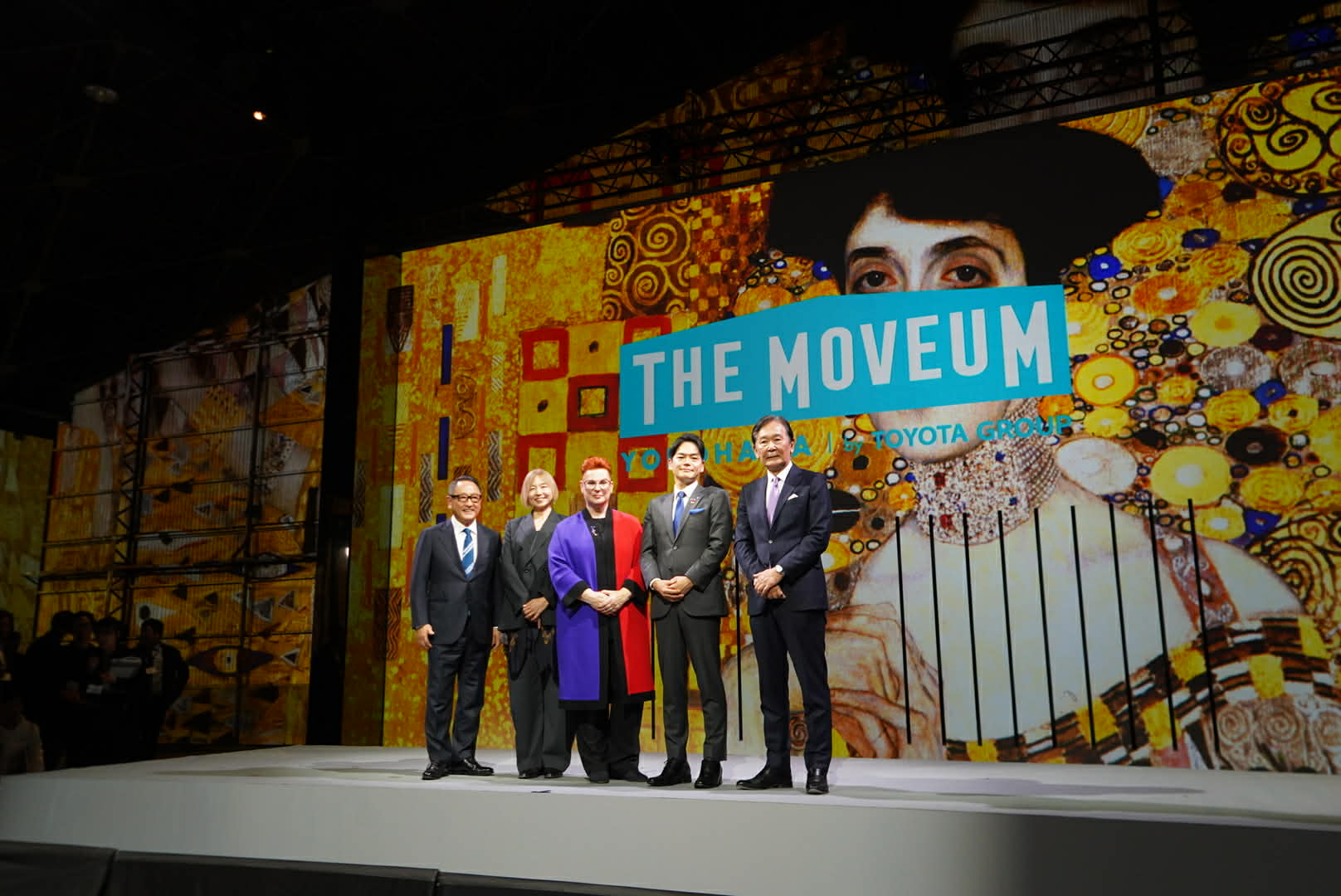
The immersive museum „THE MOVEUM YOKOHAMA by TOYOTA GROUP“ is currently being held at the Yamashita Pier No. 4 Upper Warehouse.
In the theater, experience the works of Gustav Klimt and Egon Schiele as part of „Vienna Fin-de-Siècle Art ‚The Golden Age of Beauty‘ Gustav Klimt and Egon Schiele ~Artists of Light and Shadow~„.
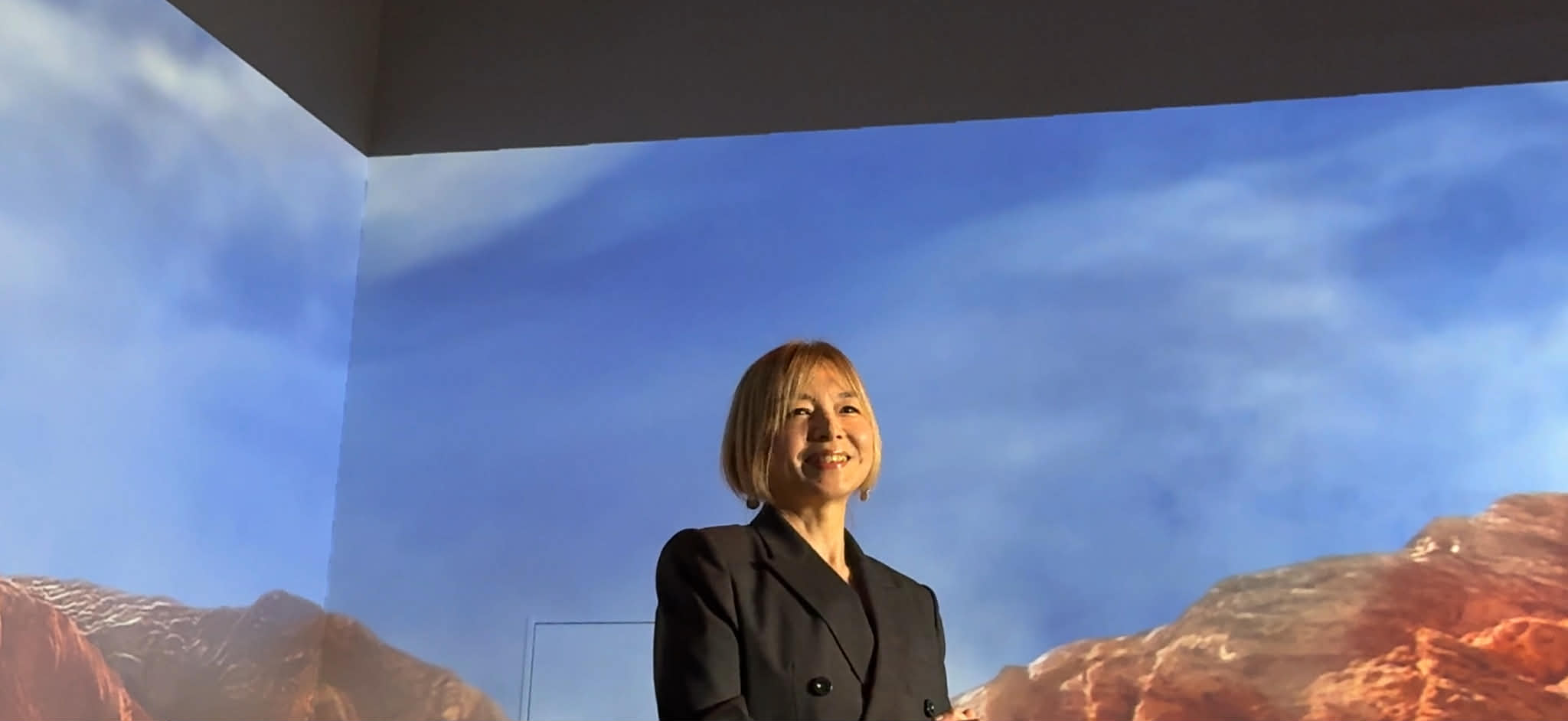
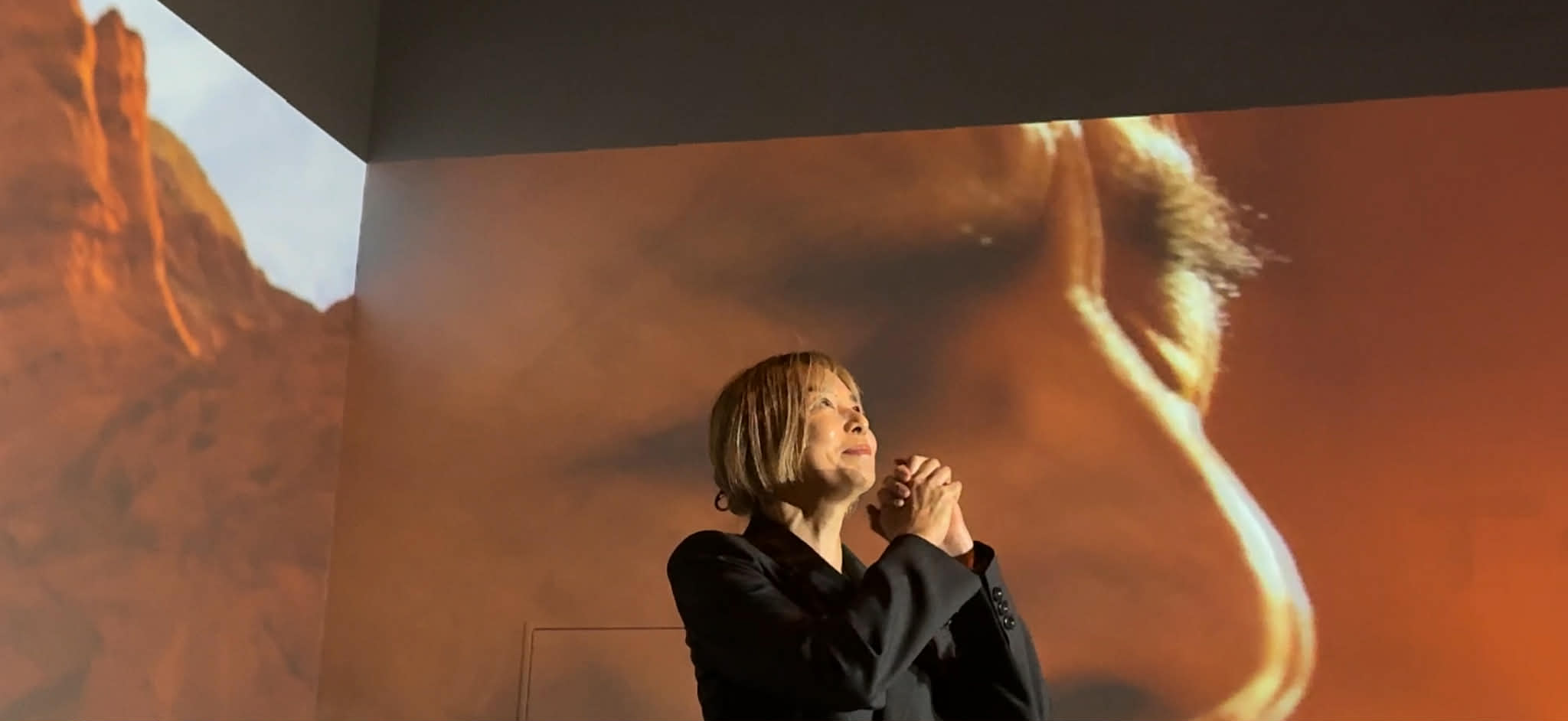
In the studio, a new series „ONE MOMENT“ is being screened, which fuses immersive art with the video and sound work „LISTEN.„.
For over a decade, starting in 2010, a project has been undertaken to travel the world exploring musical cultures, building a video library, and creating short films and movies. „ONE MOMENT“ delivers sounds born from diverse environments, based on footage collected from visits to around 20 countries including Hungary and Serbia, featuring rhythms of nomadic peoples, melodies of wandering tribes, and feasts of song.
An interview conducted ahead of the screening of „ONE MOMENT“ in Yokohama is summarized here.
„THE MOVEUM YOKOHAMA“ is held in the Yamashita Pier No. 4 Upper Warehouse, a massive warehouse that is an industrial heritage site from the Showa era. What are your thoughts on this space?
It’s wonderful, isn’t it? This atmospheric feeling of history and time layered upon itself is absolutely impossible to replicate.
Even if you tried to recreate it, it’s not something that can be built quickly. There’s a truly good atmosphere, a cultural atmosphere, layered here, don’t you think?
So, within this atmosphere, utilizing the aged, character-filled wall surfaces, the visuals projected onto them also look fantastic.
In a sense, I think it’s a tremendously beautiful, unique space where something like a „collaboration between the present age and antiquity“ is being achieved here. That’s why I’m so happy to be able to participate here.
Did you receive any inspiration?
I think „THE MOVEUM YOKOHAMA“ has a theme of collaboration between now and antiquity, transcending boundaries and fusing together. The project I’ve been pursuing, „LISTEN.“, is about removing walls—overcoming and eliminating all such dividing barriers like borders, boundaries, and national borders.
I believe sound is a symbolic element that erases these divisions.
Sound has a history of boldly crossing walls and borders, traveling back and forth, allowing wonderful elements from different cultures to fuse and build new beauty.
In that sense, „LISTEN.“ has been chasing this idea of sound that transcends boundaries. Being able to recreate and launch that feeling here together is very meaningful to me.
„THE MOVEUM YOKOHAMA“ is also a proof-of-concept experiment to attract people through art and technology. What kind of place do you think Yamashita Pier should become in the future?
Above all, it faces the sea, waves, and nature.
The sea has connected civilizations across the globe since ancient times. People have traveled on its currents and waves, and a port is where those on the island meet those arriving from across the sea.
So it’s a place of encounter. I hope this place continues to be a port that facilitates encounters between this island, Japan, and the world.
Ports are wonderful. The strength of being a port, or even just the feeling of being a „port,“ creates a mindset of „Alright, I’ll receive this,“ „Alright, I’ll set off from here,“ „I’m departing.“ So, I hope it becomes that „symbolic port,“ the first step for all to traverse and connect the entire globe as one.