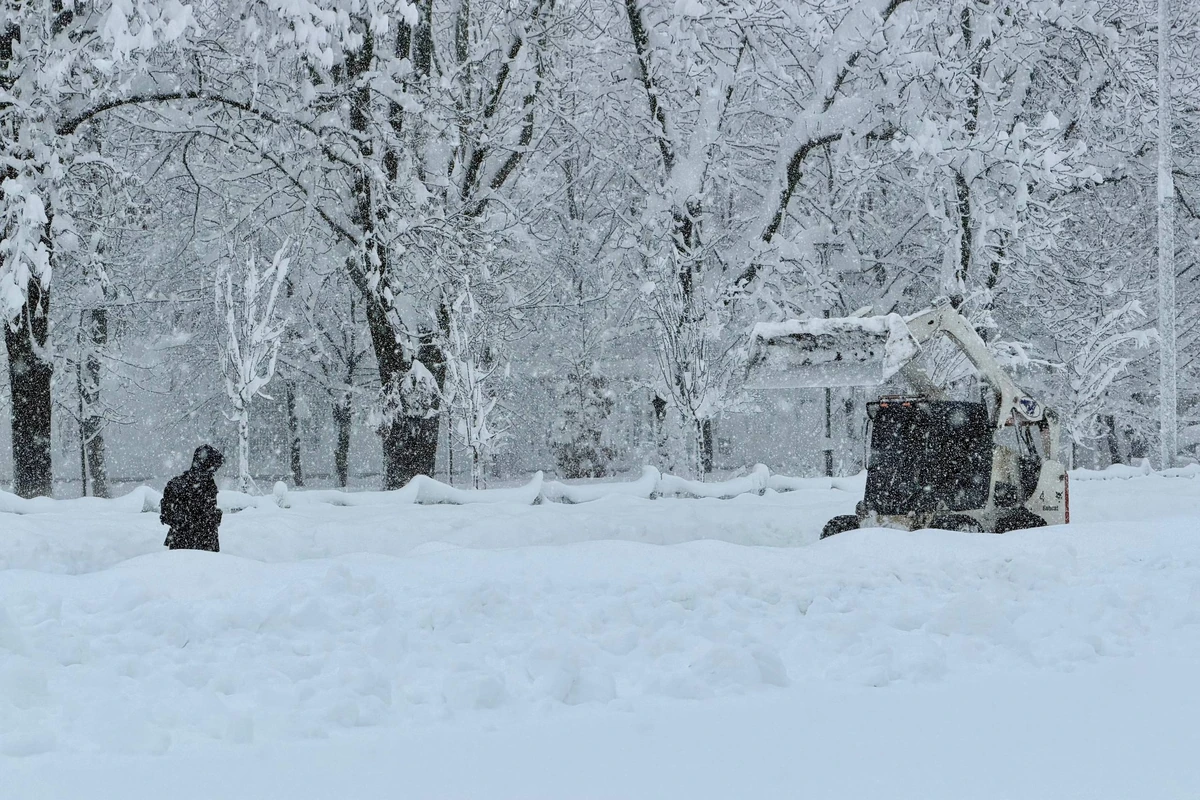
Republic of Adygea Hit by Heavy Precipitation on December 31. Some Settlements Without Power and Heating.
As a result, the head of the republic decided to introduce a state of emergency in Maykop, Maykopsky, Giaginsky, Krasnogvardeysky, Shovgenovsky, and Koshekhablsky districts.
“The decision was made to mobilize all forces and resources to eliminate the consequences of the severe weather in the shortest possible time,” the head explained.
One of the serious problems was not only the loss of power, heating, and transport collapse, but also the accumulation of snow on canopies. For instance, a man died in Maykop in the courtyard of a private house after a canopy collapsed.
“I urge residents of settlements to remain cautious and promptly clear their property and territory of snow,” the head of Adygea emphasized.
All special services and departments have been switched to a 24/7 operation mode. Work is underway to restore electricity and heating and to clear roads.
Maykop
Maykop is a city in southern Russia, best known for the Maykop culture, a major Bronze Age civilization dating to around 3700–3000 BCE that was first identified through a royal burial mound (kurgan) discovered there in 1897. Today, it serves as the capital of the Republic of Adygea and is an administrative and cultural center in the North Caucasus region.
Maykopsky district
The Maykopsky district is a municipal region in the Republic of Adygea, Russia, centered around the city of Maykop. The area is historically significant as part of the ancestral homeland of the Circassian (Adyghe) people and is renowned for the **Maykop culture**, a major Early Bronze Age archaeological culture (circa 3700–3000 BCE) known for its rich kurgan (burial mound) discoveries. Today, it is an administrative and agricultural area that preserves its deep historical roots and Adyghe cultural heritage.
Giaginsky district
The Giaginsky district is a municipal region located in the Republic of Adygea, Russia, within the fertile Kuban region. Historically, its modern settlement was significantly shaped by the resettlement of Cossacks in the 19th century, following the Caucasian War. Today, it is known for its agricultural economy, particularly grain production, and its rich Adyghe (Circassian) cultural heritage.
Krasnogvardeysky district
The Krasnogvardeysky district is a large administrative area in Saint Petersburg, Russia, established in 1973. Its history is primarily tied to the 20th-century expansion of the city, with its name (“Red Guards District”) commemorating the Bolshevik Red Guards of the 1917 Russian Revolution. Today, it is a major residential and industrial zone, featuring modern housing complexes and significant commercial developments.
Shovgenovsky district
The Shovgenovsky district is a rural administrative region in the Republic of Adygea, Russia, established in 1936 and named after the Adyghe revolutionary Shakhambor Shovgenov. Historically part of the traditional lands of the Adyghe (Circassian) people, its development has been closely tied to agriculture and the cultural heritage of the region’s indigenous population.
Koshekhablsky district
Koshekhablsky district is a municipal district located in the Republic of Adygea, Russia. Historically, it is part of the traditional homeland of the Adyghe (Circassian) people, and its development as an administrative area is closely tied to the agricultural and rural settlement patterns of the region in the 20th century. Today, it is known for its villages, farmland, and cultural connection to the Adyghe heritage.
Republic of Adygea
The Republic of Adygea is a federal subject of Russia located in the North Caucasus, renowned for its mountainous landscapes and as the ancestral homeland of the Adyghe people (Circassians). Its history is deeply tied to the Circassians, who faced a brutal expulsion by the Russian Empire in the 19th century following the prolonged Caucasian War. Today, it is a vibrant center for the preservation and revival of Circassian language, culture, and traditions within the Russian Federation.