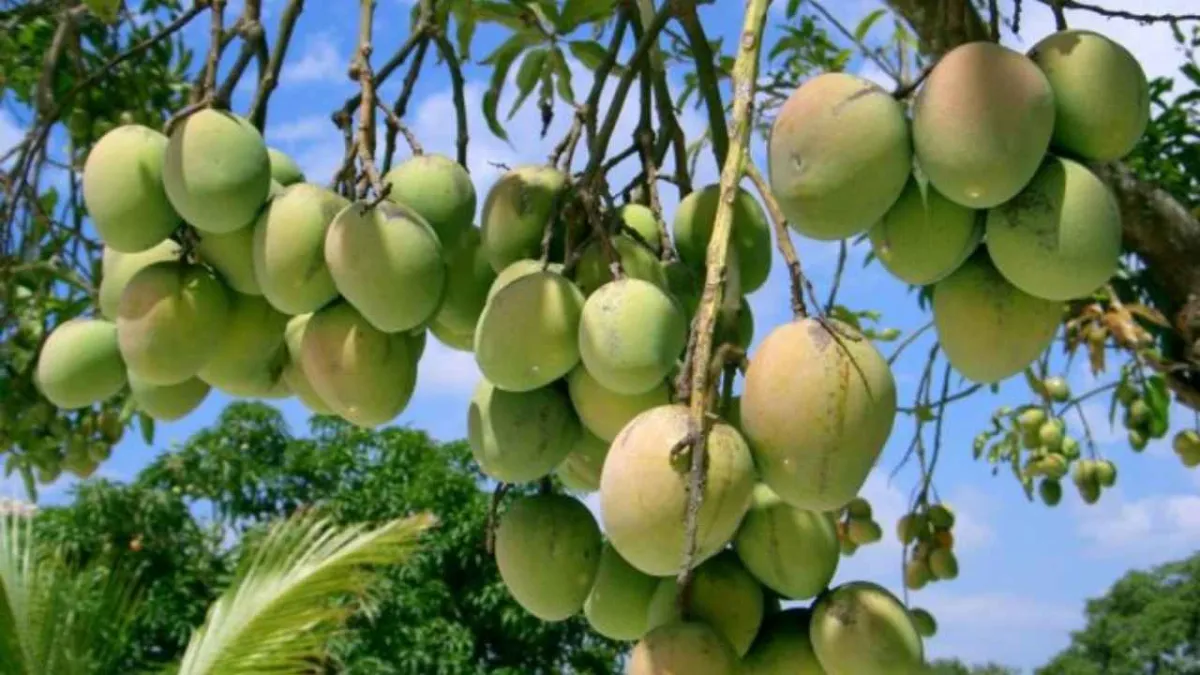
In Australia, mango growers suffer significant losses every season when a large number of fruits fall from trees before ripening. These mangoes neither ripen properly nor reach consumers, causing both economic and environmental damage.
According to research, premature fruit drop is a major cause of low mango yields, with only about 0.1 percent of fruits reaching maturity. This results in substantial losses for producers and a waste of resources.
With ongoing climate change, this problem has gained global importance, affecting everything from food security to farmers’ incomes. Mango is a high-value crop in Australia, where over 63,000 tons are produced annually, contributing approximately 220 million Australian dollars to the economy.
However, due to environmental sensitivity, mango crops are at greater risk in unstable climates. Conditions such as drought, heatwaves, and leaf fall affect the natural process that causes fruit drop.
Research has found that during stress, trees develop hormonal imbalances and carbohydrate deficiencies. When the supply of sugars necessary for fruit development is disrupted, the tree prioritizes its own survival and the fruit falls.
Researchers have described this as a molecular “quit signal” that tells the tree to abandon the fruit. This signal is linked to a complex network of gene activity and hormonal signals.
To understand this process, scientists are studying gene activities in the tissues of the mango stem (pedicel), where nutrients and signals are exchanged between the tree and the fruit.
Research suggests that the use of plant growth regulators is an effective measure against fruit drop. These are artificial forms of hormones that help maintain balance in trees under stress.
Trials found that their application during the early flowering stage was more effective, resulting in yield increases of up to 17 percent.
The study is ongoing and will be published next year following review. Its aim is not to develop new mango varieties, but to understand the natural process of immature fruit drop and suggest better management practices for farmers.
Scientists stated that the benefits of this research will not be limited to mangoes. Other crops like apples, oranges, and avocados also face fruit drop problems due to environmental stress. A better understanding of this process in mangoes could benefit many crops globally.