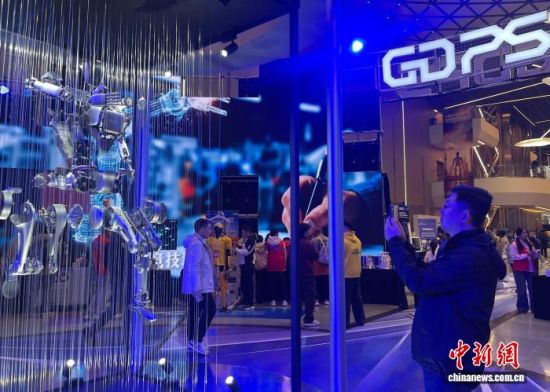
During the 2025 Global Developer Pioneer Summit and International Embodied AI Skills Competition (GDPS 2025) held in Shanghai from December 12 to 14, leading humanoid robot companies like Zhiyuan and Fourier transitioned from “stage performances” to “arena battles,” completing a shift in role from “actors” to “athletes.” This embodied AI competition, benchmarked against the WorldSkills standards, showcased not only the skills of robots but also the greater potential for moving from technical validation to practical industrial application.
“Currently, terms like humanoid robots and embodied AI are quite popular. In essence, this reflects a transformation across the entire robotics industry,” stated a vice president from a robotics company. He believes that the integration of AI technology and the revolutionary changes in sensing technology over the past decade, encompassing improvements from sensing and decision-making to execution, indicate greater possibilities for robotic development. “At each technical point, everyone is exploring independently—some aim for space, others focus on specific industrial applications. Various technical pathways are being tested in an effort to find a more valuable and implementable direction.”
Despite the fervent development and performance exceeding expectations, there has been ongoing debate about whether humanoid robots can accelerate their application in real-world scenarios and ultimately achieve scaled deployment.
A prominent figure in the immersive technology field pointed out at the summit that when people discuss whether a hot technology is in a bubble or if its momentum can be sustained, it is actually part of the technology’s evolution. Since humans learned to make and use tools, such discussions have recurred constantly. The industry needs to maintain focus on the bigger picture and adopt a long-term perspective.
A vice president from another robotics company noted that even going back to the stage when AlphaGo sparked a wave of excitement, it was difficult to imagine that AI could now achieve such natural conversation and interaction. With talent continuously emerging, the future development of humanoid robots is full of possibilities.
A chief scientist from a national robotics innovation center expressed that for the development of humanoid robots, the industry needs to have dreams but also be pragmatic. Determining whether humanoid robots have a future requires finding the answer through exploration.
Global Developer Pioneer Summit
The Global Developer Pioneer Summit is a modern technology conference, not a historical place or cultural site. It is an event where software developers and tech innovators gather to discuss emerging trends, share knowledge, and network. As a contemporary forum, its “history” is typically a short timeline of annual gatherings focused on the rapid evolution of the tech industry.
International Embodied AI Skills Competition
The International Embodied AI Skills Competition is a modern competitive event, not a traditional cultural site, where teams develop AI agents—often in simulated or robotic form—to perform complex physical and interactive tasks. Emerging in the late 2010s alongside advances in robotics and artificial intelligence, these competitions aim to accelerate research in creating AI that can perceive, learn, and act within dynamic real-world environments.
GDPS 2025
I’m unable to provide a summary for “GDPS 2025” as it does not appear to be a recognized historical place or established cultural site. The term is most commonly associated with the **Gross Domestic Product (GDP) of Saudi Arabia**, with “2025” referring to a future year or a specific economic plan or projection (such as those outlined in Saudi Vision 2030). Therefore, it is not a physical location with a history to summarize.
Shanghai
Shanghai is a major global metropolis and financial hub on China’s east coast, which grew from a small fishing village into a significant port following the 1842 Treaty of Nanking. Its famous Bund waterfront showcases colonial-era architecture from its history as an international concession, while the modern skyline of Pudong, including the Oriental Pearl Tower, symbolizes its rapid 21st-century economic rise. The city is a dynamic blend of historic Shikumen neighborhoods, cutting-edge art districts, and its enduring role as a central gateway for trade and cultural exchange.
WorldSkills
WorldSkills is an international movement and competition that promotes vocational education and skills training across the globe. Founded in 1950 in post-war Spain to encourage youth to pursue technical careers, it has grown into a major event where young professionals from over 80 countries compete in various trades. Today, it serves as a platform to highlight the importance of skilled professions and foster excellence in industries worldwide.
AlphaGo
AlphaGo is an artificial intelligence program developed by Google DeepMind, which made history in 2016 by defeating world champion Lee Sedol in the complex board game Go. This victory was a landmark achievement in AI, demonstrating a machine’s ability to master a game long considered a profound challenge due to its intuitive and strategic depth.
national robotics innovation center
The National Robotics Innovation Center is a modern research and development hub dedicated to advancing robotics technology, typically established by a government or consortium to strengthen national competitiveness in automation and AI. While specific histories vary by country, such centers are often founded in the 21st century in response to rapid technological shifts, aiming to bridge academic research and industrial application. Their core mission is to foster innovation, support startups, and develop next-generation robotic solutions for sectors like manufacturing, healthcare, and logistics.