On December 9, 2025, the “Gathering Headquarters Innovation Momentum, Co-creating a Global Health Future” – 2025 Global Life and Health Headquarters Ecosystem Conference was held in Shanghai’s Qiantan. Guided by the World Expo Administration, the conference was jointly organized by the Drug Information Association (DIA) and IQVIA, and hosted by Lujiazui Group, with BD, Siemens Healthineers, and Medtronic as co-organizers. Representatives from over 100 international organizations, government departments, global leading enterprises, and investment institutions gathered in Qiantan, Pudong, Shanghai, including representatives from top 20 global biopharmaceutical and medical device companies such as Johnson & Johnson, Pfizer, AstraZeneca, Meron, GE Healthcare, and Abbott, to jointly explore new paths for collaborative innovation and ecosystem co-construction in the life and health industry.
Government-Enterprise Dialogue: Discussing the Development Path for the Life and Health Industry
In his speech, a representative from the World Expo Administration stated that the Expo area is accelerating the construction of its “one zone, three belts” overall layout, becoming a crucial space for the accelerated gathering of global high-end factors. As Shanghai’s first international economic organization cluster zone, Qiantan, relying on the dual-cluster pattern of “international organizations + headquarters economy,” is rapidly becoming a key node for gathering global innovation momentum and fostering international cooperation in the life and health field. The Expo Administration will continue to deepen government-enterprise collaboration, optimize the business environment, and promote Qiantan’s development into a “super node” linking global innovation resources and an “important engine” for industrial openness.
A representative from Lujiazui Group stated that as the state-owned enterprise leading Qiantan’s development, Lujiazui Group adheres to the concept of “seeing the blueprint through to completion,” systematically advancing the construction of the Qiantan International Business District. Over more than a decade, Qiantan has developed into an international central activity zone with complete functions and a superior ecological environment, forming a significant cluster effect in the life and health field. Currently, Pudong is accelerating the formation of a functional layout where “R&D and manufacturing are in Zhangjiang, logistics and trade are in Waigaoqiao, and corporate headquarters are in Qiantan.” Qiantan carries the important mission of gathering global life and health headquarters. Looking ahead, Lujiazui Group will accelerate its transformation from “urban construction” to “industrial ecosystem building,” focusing on three key directions: enhancing headquarters carrying capacity, deepening industrial services, and strengthening global connections, to contribute “Qiantan wisdom” and “Lujiazui strength” to Shanghai’s goal of building a world-class biomedical industry cluster.
A representative delivered a keynote speech titled “Reshaping the Innovative Drug Ecosystem Through Full-Chain Policies,” providing an in-depth interpretation of Shanghai’s key initiatives in institutional innovation, clinical trial reform, and optimization of review and approval processes. The speech indicated that Shanghai is accelerating the leap of the biomedical industry from “quantity” to “quality,” achieving the effective transformation of innovative achievements into public health value.
In-Depth Participation by Multinational Leading Enterprises: Discussing New Opportunities for Innovative Cooperation
At the conference, voices from the industry frontlines were equally strong. As leading enterprises in the global medical device field, representatives from BD, Siemens Healthineers, and Medtronic shared insights based on their corporate development practices, covering topics such as their strategies in China, innovation practices, local cooperation, and participation in Qiantan’s ecosystem development. They unanimously expressed firm confidence in the long-term positive outlook for China’s life and health industry.
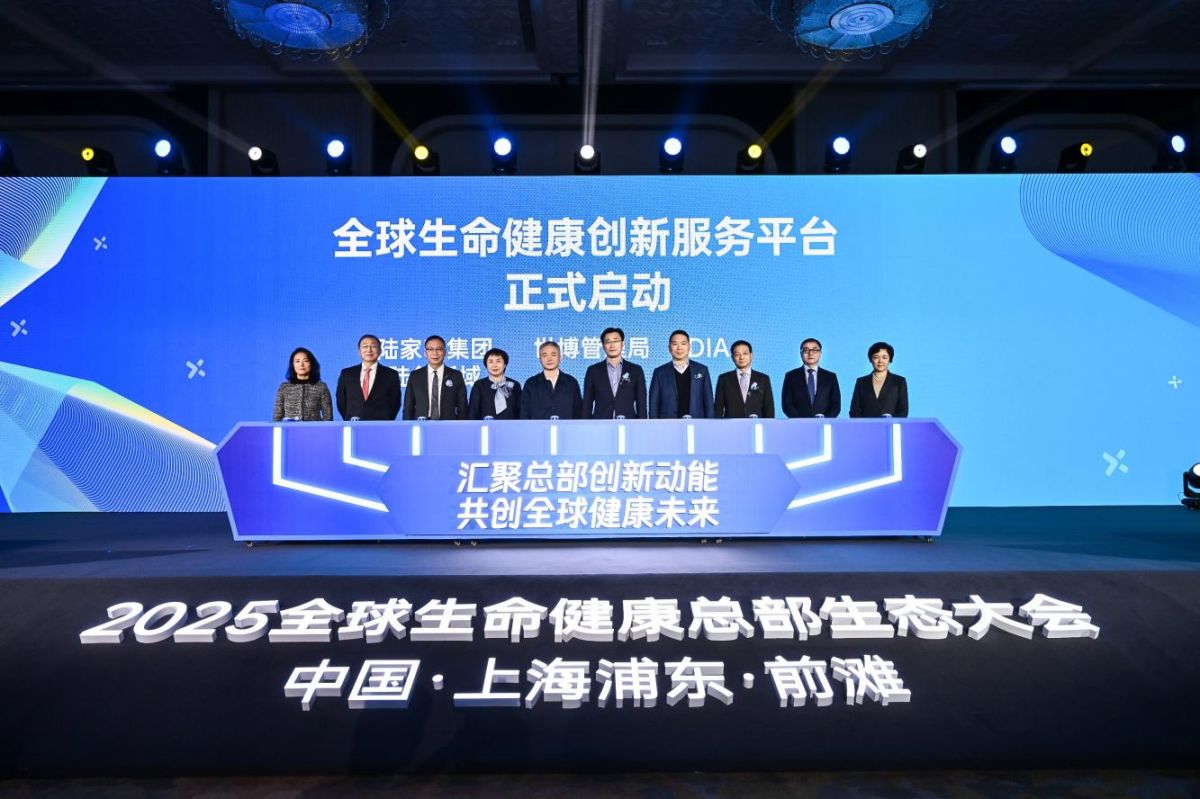
Witnessed by all attending guests, the World Expo Administration, Lujiazui Group’s “Lu Innovation Domain” industrial ecosystem service platform, and DIA jointly initiated the construction of the “Global Life and Health Innovation Service Platform.” The launch of this platform is not only a key outcome of this conference but also marks a crucial step for Qiantan in building an international life and health industrial ecosystem and strengthening its hub function for the headquarters economy.
As a collaborative innovation platform that brings together government, enterprise, and association forces, its core goal is to construct a high-level international cooperation network spanning key areas such as policy research, AI+ technology empowerment, regulatory collaboration, and market access. It aims to accelerate the transformation of innovative achievements and their global deployment, comprehensively enhancing Qiantan’s capabilities in resource allocation and ecosystem empowerment within the global life and health