
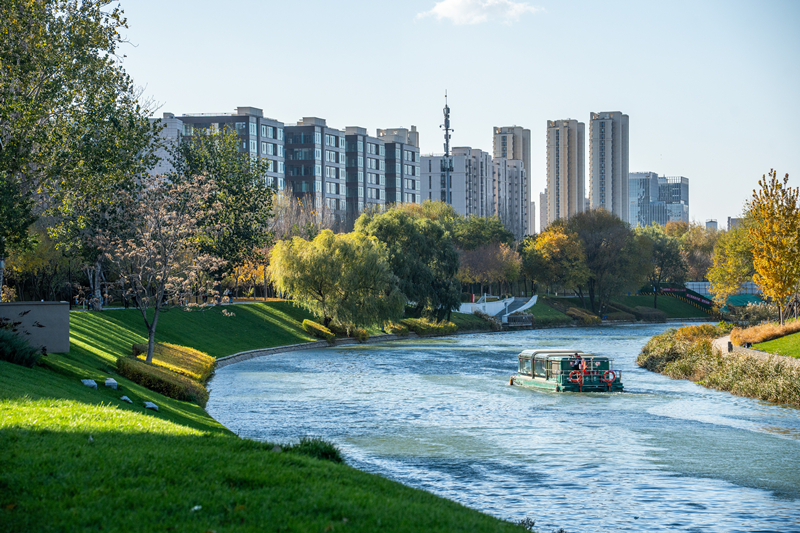
Recently, at the 2025 French Design Awards ceremony, the Ba River waterfront space construction project (from Jiuxianqiao Road to Langyuan section) stood out among numerous global entries and won the gold medal.
The Ba River originates from the Northeast Moat in Dongcheng District and flows from west to east into the Wenyu River at the eastern suburban boundary of Chaoyang District. It belongs to the North Canal water system and spans 21.7 kilometers. The 2.3-kilometer waterfront section from Jiuxianqiao Road to Langyuan connects INDIGO, Langyuan Station, Jiangfu Park, Tuofangying Park, and riverside park green spaces through water conservancy and ecological engineering, slow-traffic connectivity, and landscaping. It serves residential communities including Jingdu International, Shangdong County, and Riverside One, creating a vibrant waterfront that integrates ecological, cultural, tourism, and commercial functions, painting a beautiful picture of harmonious integration between water, greenery, and the city.
This year, Chaoyang District completed the construction of a 6.7-kilometer flood storage zone along the Ba River from the Second Airport Expressway to the Wenyu River section. Recently, with the trial navigation of the Ba River to North Canal route, the 15-kilometer Ba River waterway has become navigable, and the 21-kilometer waterfront slow-traffic system on both banks has been fully connected. Walking paths and cycling lanes form an interconnected network, bringing nature back to the city and allowing residents to enjoy waterfront recreation.
As one of the core projects of this transformation, the Ba River Estuary Flood Storage Zone, after 1 year and 3 months of construction, officially opened on September 30 this year. The project adheres to the integrated protection and systematic management of “mountains, waters, forests, farmlands, lakes, grasslands, and deserts,” leveraging environmental advantages to create a vibrant and resilient ecosystem. The 42.5-hectare core lake area serves not only as a “safety container” for flood control and storage but also as a thriving “urban green lung.”
Beautiful landscape lighting adds unique charm to the Ba River. Along the revetment, a line of water light connects, outlining a crystal-clear and beautiful waterfront contour. The starlight platforms on the slopes appear to float with highlights, intertwining starlight and water light, showcasing the beauty of coexistence between nature and design.
Today’s Ba River presents a natural scene of “swaying flowers and dancing tree shadows” during the day, transforming into a vibrant space where “human activity” and “starlight avenues” intertwine at night. Fitness, socializing, family play, tea drinking, dining, shopping, and performances… diverse scenarios offer residents numerous choices for leisure life.
From “beautiful to see” to “fun to experience,” from a single landscape to a vibrant hub, the Ba River’s design has activated new momentum for urban development. Using water as the connecting element, the river corridor strings together diverse formats such as dining, performances, and markets “like beads on a chain,” seamlessly linking the river channel, neighborhoods, and parks, making the waterfront space a hotspot for new cultural tourism and a golden link for new consumption.
Waterfront shops in Langyuan Station saw their rental rate jump from 30% to 100% within one month, with merchant annual sales increasing by 70%. Trendy water sports became popular even before official announcement, with first-day revenue far exceeding expectations. The 798 Art District and Lidu Business Circle are working in synergy. The rapidly developing Beijing Taikoo Li will become a world-class commercial landmark in the future, adding new vitality to waterfront consumption. This river is using its “water advantage” to generate “development momentum,” turning waterfront “flow” into urban “growth.”
During the next five-year plan period, the Ba River will achieve full connectivity of a 43.4-kilometer slow-traffic system linking the upper reaches to the North Moat and the lower reaches to the Qing River-Wenyu River and North Canal. Chaoyang District will use river revitalization to drive urban renewal, accelerating the construction of the “Two Rivers and One Belt” world-class waterfront economic zone, creating more ecological spaces where residents can access and enjoy the water.