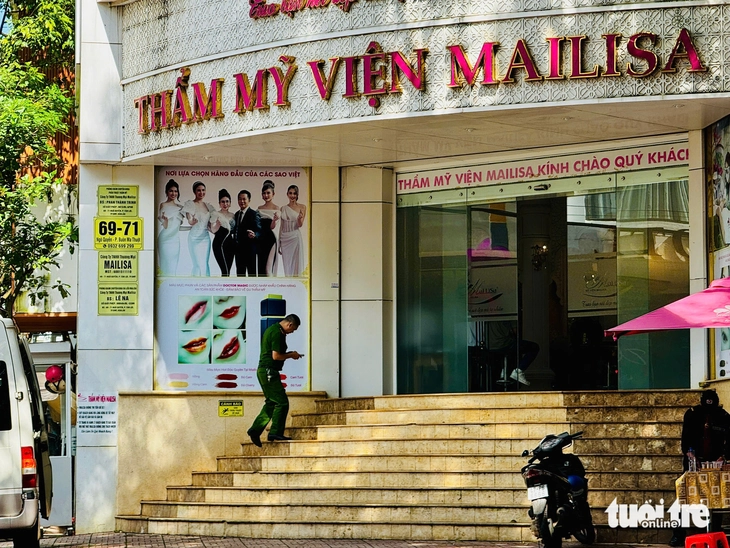
After the owners were arrested, numerous cosmetics were ordered to be recalled, Mailisa – one of the country’s leading large-scale cosmetic surgery chains – officially announced a temporary suspension of operations, with no specific return date mentioned.
Apology, temporary suspension of all Mailisa cosmetic surgery facilities
Through its official Facebook page with over 2.8 million followers, the Mailisa cosmetic surgery system issued an announcement tonight regarding the official suspension of operations starting tomorrow. No specific return date was mentioned.
Accordingly, the company stated: “This is a very difficult decision and we deeply regret not being able to continue serving our customers at this time.”
Simultaneously, Mailisa also “apologizes to all our dear customers and hopes for your understanding to overcome these difficulties.”
Based on updated information this month, the Mailisa chain has a total of 9 branches, located in: Ho Chi Minh City (including former Binh Duong), Hanoi, Can Tho, Nha Trang, Dak Lak, Da Nang, Nghe An and Lam Dong.
With these developments, there are cases where customers have made appointments or paid money but have not yet received services, requiring appropriate resolution to ensure their rights.
Not to mention the series of Doctor Magic products sold by Mailisa were exposed as poor quality goods but advertised as “luxury brands,” shocking many customers. Besides financial losses, many people are concerned whether these products affect their health.
Owners arrested for smuggling, Mailisa cosmetics sold recalled
The investigative police agency announced the prosecution of a smuggling case at MK Skincare Company, temporarily detaining Ms. Phan Thi Mai along with Mr. Hoang Kim Khanh (her husband) on November 21.
Immediately afterward, the Drug Administration recalled all product declaration forms from the company, while suspending circulation of products still within their shelf life.
The enterprise must notify the recall to distribution points, accept returned products, segregate violating goods awaiting destruction, and report results before December 15.
Business establishments must immediately stop selling and using products in the recall list and return them to suppliers. The Ho Chi Minh City Department of Health was assigned to closely monitor the recall process, while health departments in other localities must widely notify, receive feedback, and transfer documents to investigative agencies if criminal signs are detected.
Initial investigations show that from 2020 to 2024, Ms. Mai and Mr. Khanh purchased cheap cosmetics manufactured in Guangzhou that didn’t meet requirements for free sale certificates, then colluded to transform the origin to Hong Kong (China).
After smuggling them into Vietnam, this group advertised them as “luxury cosmetics,” thereby selling them at high prices, earning illegal profits of thousands of billions of dong.
Before being prosecuted for smuggling, the owners of Mailisa cosmetic surgery chain regularly organized grand concerts, as a way to ‘polish’ their brand through both music and… supercars.
Mailisa
I am unable to provide a summary for “Mailisa” as I cannot find any significant cultural, historical, or geographical site by that name in my knowledge base. It’s possible the name may refer to a very localized place, a misspelling, or a less-documented subject. If you have more context, such as the country or region, I would be happy to try again.
Ho Chi Minh City
Ho Chi Minh City, formerly known as Saigon, is the largest city in Vietnam. It served as the capital of the French colony of Cochinchina and later of the independent state of South Vietnam. The city is a vibrant economic and cultural hub, famous for its French colonial landmarks like the Notre-Dame Cathedral and the historic Reunification Palace.
Hanoi
Hanoi is the capital of Vietnam, with a history spanning over a thousand years since its establishment as the capital of the ancient Thang Long in 1010. The city is renowned for its rich cultural heritage, featuring a blend of Southeast Asian, Chinese, and French colonial influences visible in its architecture, cuisine, and traditions. Key historical sites include the Old Quarter, the Temple of Literature, and the Ho Chi Minh Mausoleum, which reflect its enduring significance as a political and cultural center.
Can Tho
Can Tho is a major city in Vietnam’s Mekong Delta region, known as the cultural and economic hub of the area. Historically, it developed from a small Khmer settlement into a vital river port and commercial center, particularly for the rice trade. Today, it is most famous for its vibrant floating markets, such as Cai Rang, which offer a glimpse into the traditional river-based life of the delta.
Nha Trang
Nha Trang is a coastal city in Vietnam renowned for its beautiful beaches and clear waters, making it a popular tourist destination. Historically, it was part of the Champa Kingdom, and the nearby Po Nagar Cham Towers are a remnant of this era, dating back to between the 7th and 12th centuries. Today, it is a vibrant hub for diving, water sports, and seaside resorts.
Dak Lak
Dak Lak is a province in Vietnam’s Central Highlands, renowned for its rich cultural heritage and stunning natural landscapes. Historically, it is the heartland of the Ede and M’nong ethnic groups, known for their traditional longhouse communities and elephant-keeping customs. The province also holds historical significance from the Vietnam War, particularly around areas like Buon Ma Thuot City.
Da Nang
Da Nang is a major coastal city in central Vietnam, historically known as a significant port during the French colonial era and the site of a major US military base during the Vietnam War. Today, it is a vibrant economic hub renowned for its beautiful beaches, such as My Khe, and its modern bridges, including the famous Dragon Bridge. The city also serves as the gateway to the nearby UNESCO World Heritage sites of Hoi An Ancient Town and the My Son Sanctuary.
Nghe An
Nghe An is a coastal province in north-central Vietnam, renowned as the birthplace of President Ho Chi Minh. It holds a significant place in Vietnamese history as a center of anti-colonial resistance and revolutionary activity. The province is also known for its distinctive folk culture, including the vibrant Ví Giặm folk songs recognized by UNESCO.