Witnessing the unrest in Iran since December 28, the international community cannot help but hope for stability to return in order and without further bloodshed in Iran, so that this nation of 88 million people can soon brighten up again like Persia of old.
Perhaps any ordinary person feels nostalgia and yearns for a “great Iran to return” when thinking of Iran’s current situation as well as over the past 47 years, since the Islamic Revolution led by Ayatollah Khomeini established a theocratic regime here.
Economic Recession
The theocratic regime in Iran advocates a state-controlled economy and a foreign policy that has led to international sanctions, including from the United Nations. These sanctions stem from allegations that Tehran is developing nuclear weapons as well as human rights violations, support for terrorism, and causing instability in the region.
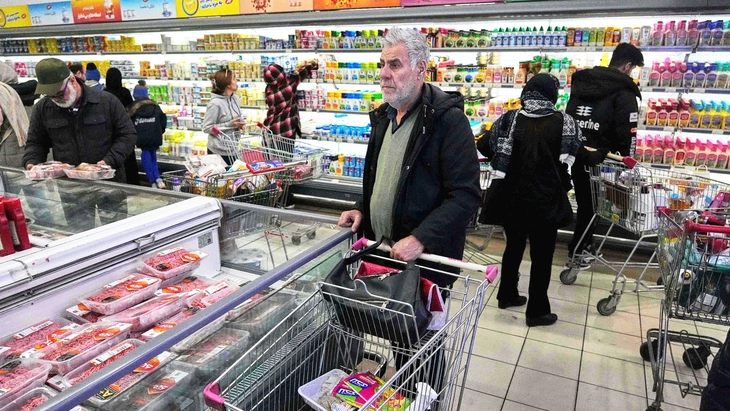
The desire for recovery, and then to “return to greatness,” begins with the economy, a common aspiration that the Iranian people along with many other nations are nurturing, including the people of France, Germany, and Poland who are now struggling to buy eggs for their daily meals.
RELATED NEWS
Iran’s economy continues to decline, people’s lives are increasingly difficult to the point that a regional media outlet on January 16 posed the question “Why is Iran’s economy in recession, leading to deadly protests?” and answered that “the collapse of the rial and soaring prices led to the first protest by shopkeepers in Tehran before protests against Iran’s ruling clergy spread.”
This television channel quoted a professor of economics: “Chronic corruption and poor economic management over decades have added to the misery of the majority of ordinary people.”
Specifically on a daily basis, Iranians face severe water shortages, power cuts, and serious air pollution, “factors that create a perfect economic storm,” the professor summarized.
The value of Iran’s rial, which nearly collapsed on December 28 when it fell to a record low against the dollar, sparked the protests. Economic and then political crises always provide an opportunity for foreign forces to intervene and subvert.
The currency crisis reveals mistakes in the Iranian government’s economic management. However, the Iranian authorities have recognized the problem, as the Supreme Leader stated on January 10 that the government is “trying to find ways to fix it.”
Allowing Foreign Intervention
One of the typical mistakes is Iran’s nuclear program, a factor directly leading to the UN Security Council imposing sanctions in December 2006. These measures focus on banning trade in nuclear technology and materials, while freezing the assets of individuals and organizations related to this field.
In subsequent years, the United Nations tightened sanctions and others followed suit. All this led to Iran signing a nuclear deal – the Joint Comprehensive Plan of Action (JCPOA) in 2015 with the US, UK, China, France, Germany, Russia, and the EU. Accordingly, Iran agreed not to enrich uranium and conduct nuclear research for 15 years.
The situation worsened further last September when UN sanctions against Iran were formally reinstated. This decision was made after the UN Security Council voted against permanently lifting economic sanctions on Iran.
Clashes between the Iranian government and the US began in 2018. The former US president reimposed all sanctions on Iran. Throughout his second term, Iran’s nuclear activities last year led the former president, as of mid-June 2025, to affirm more than a dozen times that Iran cannot be allowed to possess nuclear weapons.
Four days later, the US attacked three of Iran’s nuclear facilities. With this decisive move, the former president eliminated Iran’s nuclear threat and dispelled all concerns in considering decisions regarding Tehran.
The crackdown on protests over the past two weeks in Iran led to reactions from the former US president. On January 13, he wrote on his Truth Social account: “Patriots of Iran, keep protesting. Take back your institutions” along with a pledge that “help is coming.”
With the presence of a US aircraft carrier strike group in nearby waters, along with the assessment that Iran has lost its nuclear threat capability, Washington seems to be sending a signal guaranteeing the ultimate victory of the protesters.