The drafting of the Special Urban Law aims to institutionalize the directives set out in Resolution 31-NQ/TW dated December 30, 2022 of the Politburo regarding the directions and tasks for the development of Ho Chi Minh City through 2030, with a vision to 2045. This represents an opportunity to transform political commitments into stable legal authority that cannot be revoked by sub-law documents. However, in order to truly “go beyond the framework of special mechanisms,” this draft law must address three fundamental legal issues. Defining the scope of “distinct authority” Resolution 66-NQ/TW dated April 30, 2025 of the Politburo reaffirms the principle that “localities decide, localities implement, and localities take responsibility.” To ensure this directive does not remain merely formal, the draft law must clearly distinguish between two models. Delegation is a mechanism whereby the central government grants authority on a temporary basis, which can be withdrawn at any time—this is the nature of Resolution 98/2023/QH15 on piloting specific mechanisms and policies for the development of Ho Chi Minh City, as well as the “conditional permission” mechanism under the 2025 Law on Organization of Local Government. Substantive decentralization, by contrast, establishes for localities “distinct authorities”—areas in which the central government no longer […]
Ho Chi Minh City
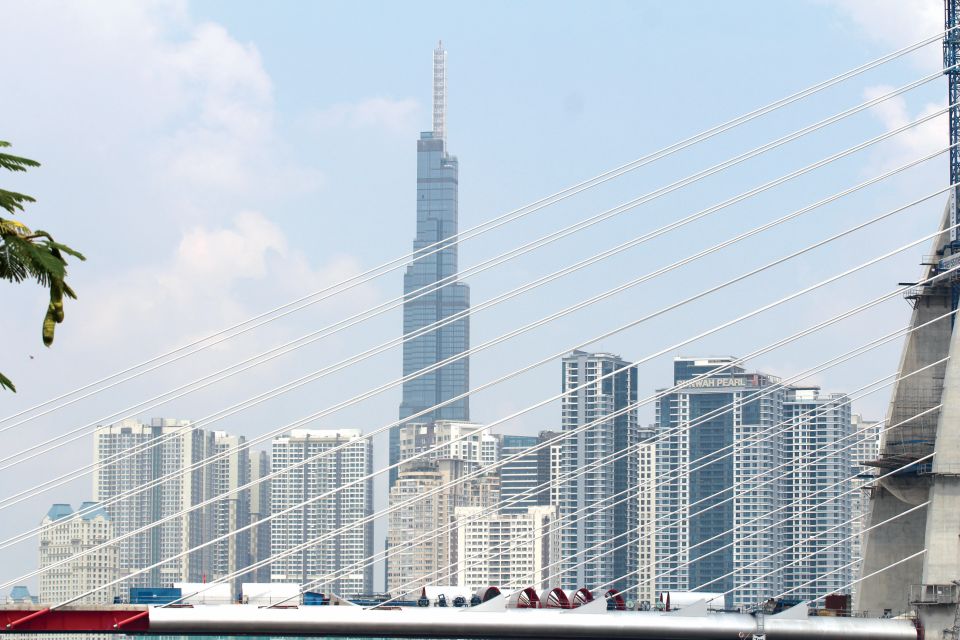
Ho Chi Minh City, formerly known as Saigon, is Vietnam’s largest city and economic hub. It was the capital of French Indochina and later the capital of South Vietnam, playing a central role in the Vietnam War before being renamed in 1976 after the country’s reunification. Today, the city blends historic French colonial architecture with modern skyscrapers, reflecting its dynamic past and rapid growth.
Resolution 31-NQ/TW
Resolution 31-NQ/TW is a resolution issued by the Communist Party of Vietnam’s Politburo, focusing on the development of the Southeast region, including Ho Chi Minh City, through 2030 with a vision to 2045. Adopted in 2022, it outlines strategic directions for economic growth, infrastructure, and regional connectivity, aiming to transform the area into a modern industrial and service hub. The resolution reflects the Party’s long-term planning to leverage the region’s potential for national development.
Resolution 66-NQ/TW
Resolution 66-NQ/TW is a landmark resolution issued by the Communist Party of Vietnam, formally titled “On Strengthening the Party’s Leadership in the Protection and Promotion of the Values of Vietnamese Cultural Heritage.” Adopted in 2023, it outlines a comprehensive strategy to safeguard and develop Vietnam’s cultural identity amid globalization and modernization. The resolution emphasizes the integration of cultural heritage preservation with sustainable development, reflecting the Party’s long-standing commitment to national cultural sovereignty.
Resolution 98/2023/QH15
Resolution 98/2023/QH15 is a Vietnamese legislative document, specifically a resolution passed by the National Assembly of Vietnam in 2023. It pertains to piloting specific mechanisms and policies for the development of Ho Chi Minh City, aimed at granting the city greater autonomy in areas such as finance, investment, and urban management to boost its economic growth. This resolution builds on earlier pilot programs and is part of Vietnam’s ongoing efforts to decentralize governance and foster regional development.
<div class="my-
Ho Chi Minh City
Ho Chi Minh City, formerly known as Saigon, is Vietnam’s largest city and economic hub. It played a central role during the Vietnam War, serving as the capital of South Vietnam until its fall in 1975, after which it was renamed in honor of revolutionary leader Ho Chi Minh. Today, the city blends historic French colonial architecture with modern skyscrapers, and landmarks like the War Remnants Museum and Notre-Dame Cathedral reflect its complex history.
Resolution 31-NQ/TW
Resolution 31-NQ/TW is a significant policy resolution issued by the Central Committee of the Communist Party of Vietnam. Adopted in 2022, it focuses on the development and protection of the Mekong Delta region, addressing challenges such as climate change and sustainable economic growth. This resolution outlines strategic directions for infrastructure, agriculture, and environmental management to ensure the region’s long-term resilience and prosperity.
Resolution 66-NQ/TW
Resolution 66-NQ/TW is a resolution issued by the Central Committee of the Communist Party of Vietnam, focusing on strengthening the Party’s leadership in the field of culture. Adopted in 2021, it outlines strategies to preserve and promote Vietnamese cultural values, while adapting to modernization and international integration. The resolution reflects the Party’s ongoing commitment to cultural development as a key pillar of national progress.
Resolution 98/2023/QH15
Resolution 98/2023/QH15 is a Vietnamese legislative resolution, passed by the National Assembly in 2023, that establishes special mechanisms and policies for the development of Ho Chi Minh City. It grants the city greater autonomy in areas such as finance, land management, and investment, aiming to boost its economic growth and address long-standing urban challenges. This resolution builds on previous pilot programs and is seen as a key step in modernizing Vietnam’s largest economic hub.