On the afternoon of January 23, at the closing session, a report was heard on the election results for the Politburo, the General Secretary, the Secretariat, the Central Inspection Commission, and the Chairman of the Central Inspection Commission.
Accordingly, the first meeting of the 14th Central Committee of the Party (held on the morning of January 23) elected 19 Politburo members; elected 3 Secretariat members; and elected the 14th Central Inspection Commission consisting of 23 people.
With an absolute majority of votes, the 14th Central Committee of the Party elected General Secretary To Lam to continue serving as General Secretary of the 14th Central Committee of the Party.
Prior to this, the 14th Party Congress had also elected 200 members to the 14th Central Committee of the Party. And at the closing session, the 14th Central Committee of the Party was introduced to the congress.
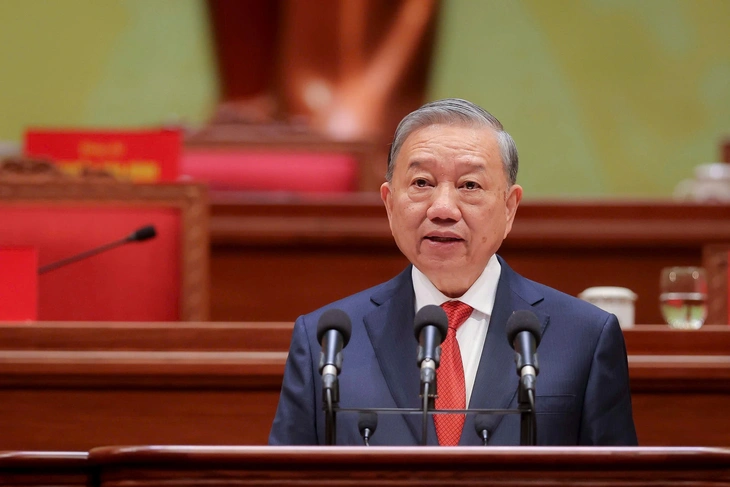
Subsequently, General Secretary To Lam delivered a speech thanking the congress for its trust in electing 200 people to the 14th Central Committee of the Party.
On behalf of the newly elected members, he expressed profound gratitude for the trust and confidence that the Congress has placed in the collective of the 14th Central Committee of the Party.
“This is both an honor and a heavy responsibility for us before the Party and the People. We will exert our utmost effort, dedicating our hearts and strength to serve the noble cause of the Party, the revolution, and the People,” the General Secretary emphasized.
Before the Congress, the General Secretary emphasized: “The Party Central Committee pledges absolute loyalty to the Party’s goals and ideals, placing national and ethnic interests above all else; maintaining independence and sovereignty, resolutely defending the Fatherland and protecting the People.”
Furthermore, the General Secretary promised: “The Central Committee will work with the highest exemplary spirit, matching words with actions; seeing tasks through to completion, working for the people, acting swiftly, correctly, and effectively through organizational and implementation capacity; the effectiveness of serving the people is the measure of the capability, prestige, and honor of each member of the 14th Central Committee.”
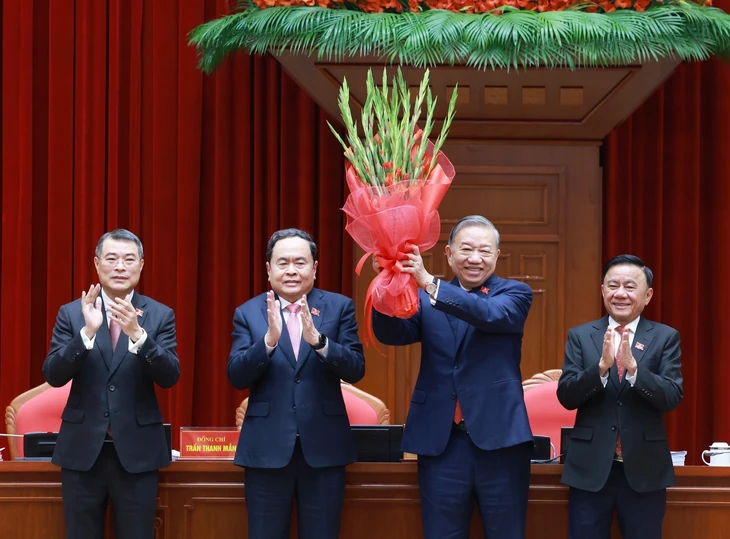
To express gratitude for the contributions of 13th Central Committee members who did not continue for re-election, General Secretary To Lam and other 14th-term leaders presented flowers and congratulations.
The General Secretary emphasized that the 14th Party Central Committee will persistently build a clean and strong Party; maintain unity and solidarity within the Party. Simultaneously, it will strengthen Party discipline; law and order; complete the mechanism for controlling power; resolutely prevent and combat corruption, waste, and negativity; practice thrift and oppose ostentation.
Furthermore, the 14th Party Central Committee will do well in personnel work, selecting the right people for the right jobs, evaluating based on results, measuring by prestige among the People, promoting those with both virtue and talent, who dare to act, know how to act, and get things done. At the same time, it will remove from the system those who are opportunistic, shirk responsibility, whose words do not match their actions; and resolutely combat negativity.
“The 14th Central Committee expresses deep gratitude to the 13th Central Committee members who did not stand for re-election, especially key cadres, Politburo members, and Secretariat members. The comrades have devoted their enthusiasm and intellect, consolidating and fostering confidence, leading our entire Party, army, and people to successfully fulfill the Resolution of the 13th Party Congress. We hope the comrades will continue to show concern, offer frank and constructive comments, continue to pass on experience to the next generation, and continue to join forces for the revolutionary cause of the Party and the People. The companionship of the comrades is a great source of spiritual encouragement for the 14th Central Committee to fulfill its tasks in the new term,” the General Secretary said.