National Assembly delegate believes Ho Chi Minh City must first clearly identify its greatest competitive advantage.
Sharing his views, a National Assembly delegate stated that Ho Chi Minh City must first clearly identify what its greatest advantage is (it cannot compete with high-rise buildings, shopping centers, or modern infrastructure, as many cities in the region have already surpassed it in those aspects). According to him, Ho Chi Minh City needs to build a modern urban tourism ecosystem.
First, there must be a global urban strategy. Ho Chi Minh City should be presented as an engaging story. It is a city of creative freedom, historical memory, aspirations for growth, youthful energy, Southern affection, and international integration.
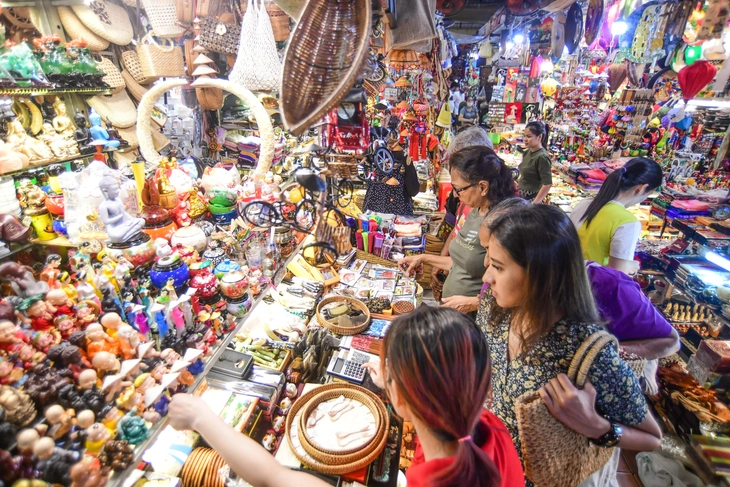
Every relic, river, market, street, art space, dish, and festival can become part of that story.
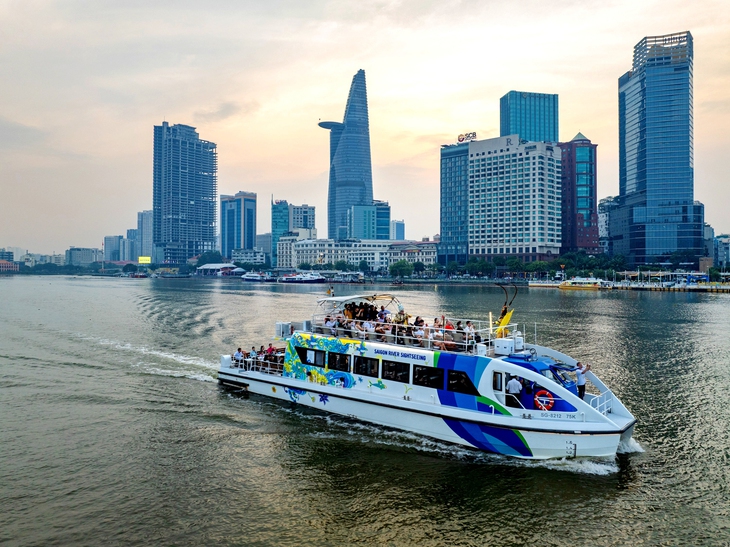
Second, Ho Chi Minh City needs to invest heavily in internationally competitive tourism products: MICE tourism, culinary tourism, river tourism, medical tourism, shopping tourism, creative tourism, music and festival tourism, film tourism, etc. A global city must have a year-round event calendar and festivals with its own brand.
Third, Ho Chi Minh City must elevate quality to international standards. It needs to provide experiences of convenience, safety, cleanliness, civility, friendliness, multilingualism, digital connectivity, smooth transportation, and professional services. From airports, seaports, metro, taxis, restaurants, hotels, public restrooms, signage, to the behavior of residents—all are part of the city’s image.
Fourth, culture must be considered the soul of tourism. If tourism relies solely on services, it may attract many visitors but struggles to create depth. If tourism is supported by culture, it will have identity, memory, emotion, and the ability to make visitors want to return.
“But above all, I still want to emphasize the two words ‘affection.’ This is a very unique and beautiful quality of Ho Chi Minh City. It is tolerance toward immigrants, sharing in times of hardship, openness to new things, and the generosity of Southern people… In the process of modernization and globalization, we must preserve that spirit of affection as a core value,” he added.
Resolution 09 of the Politburo has set many important goals for developing Ho Chi Minh City in the new era, emphasizing tasks to develop world-class tourism so that the city becomes a top destination in Asia.
Implementing green administrative mandates
Another delegate believes that to turn the city into a destination for Asia and a global city, Ho Chi Minh City needs macro-level solutions, applying science and technology, innovation, and thorough digital transformation. Most importantly, there must be determination in implementing green administrative mandates.
Currently, the decline in air quality and the issue of urban waste are raising red alerts for public health and the city’s image. With a massive volume of domestic waste reaching nearly 10,000 tons per day, continuing to rely on sanitary landfill technology, which accounts for over 60% as it does now, is a waste of land resources and poses a serious threat to groundwater sources.
Therefore, the city must undergo a major overhaul of its environmental infrastructure, resolutely closing.
Ho Chi Minh City
Ho Chi Minh City
Ben Thanh Market
Related news
Bonuses based on value-added ratio: A lever to increase labor productivity

Do state agencies need public defenders?
Former President Yoon Suk Yeol could face the death penalty or life imprisonment.

Khánh Như surprisingly chosen for Miss International 2026 instead of Ý Nhi.