A transnational cockfighting ring led by a married couple was dismantled; police have indicted 196 suspects and seized numerous related pieces of evidence.
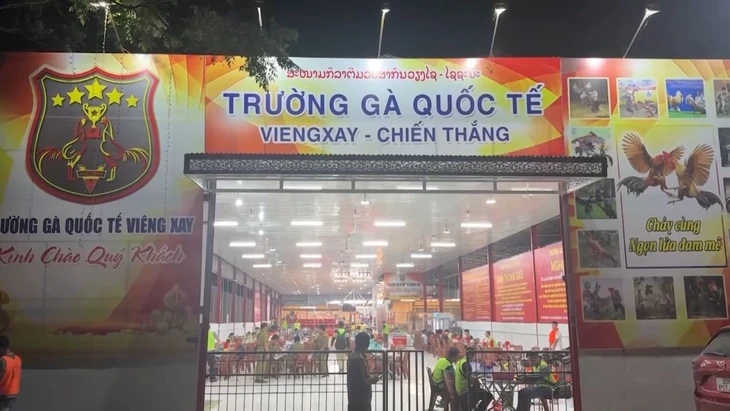
On the afternoon of April 24, the Thanh Hoa Provincial Police announced that the Criminal Police Department of the Ministry of Public Security, the representative of the Vietnamese Ministry of Public Security in Laos, and this province’s police had coordinated with the authorities of the Lao People’s Democratic Republic to dismantle the ‘Vieng Xay international cockfighting arena.’
This is a large-scale gambling and gambling operation under the guise of cockfighting, operating transnationally with a total transaction volume exceeding 1,200 billion VND.
Police investigation results show that the Vieng Xay international cockfighting arena in Houaphanh Province (Laos), bordering Thanh Hoa Province, was an organized crime ring operating with sophisticated methods, a professional nature, and transnational reach, gathering many criminal elements.
Although this cockfighting arena operated outside Vietnamese territory, it attracted a large number of Vietnamese gamblers to cross the border to gamble. The suspects organized the gambling and betting in a secretive manner.
To date, police have determined that the Vieng Xay international cockfighting arena was led by a 47-year-old man residing in Ha Dong ward, Hanoi city, along with his wife, who collaborated with other suspects to organize and operate it.
To attract players, the suspects invested in building dining areas and multiple rest rooms within the premises to cater to the needs of participants.
When players won bets, the organizers collected a 5% commission to maintain operations and distribute profits.

This ring was organized and operated using a multi-tiered model, with specific task assignments among different departments.
In this structure, the wife was the general manager, directly overseeing the reception, cashier, accounting, filming and commentary, security, and canteen departments.
According to the cash flow analysis results, police have so far determined that the gambling transaction volume at the Vieng Xay international cockfighting arena exceeded 1,200 billion VND.
Police seized numerous pieces of evidence and documents related to the case, including: 36 cars, 186 mobile phones, various electronic devices and documents, 23 fighting cocks, 208 passports and travel documents, over 205 million VND in cash, and froze more than 5 billion VND in related accounts.