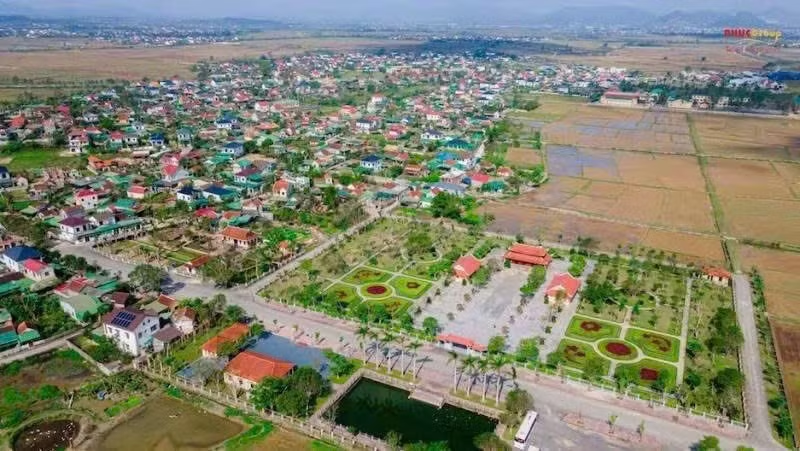
In May, the ripe rice fields stretch across the entire commune of Hung Nguyen Nam. These days, farmers are busy with the spring rice harvest. The sound of harvesters blends with cheerful voices, creating a lively working atmosphere in every field. After months of hard cultivation, the joy of a bountiful harvest is clearly visible on the faces of the local people.
Not only are they engaged in productive labor, but May is also the season for cultural and artistic activities dedicated to beloved President Ho Chi Minh. In offices, units, and schools across the commune, the atmosphere is vibrant as people practice and participate in the 2026 “Sen Village Singing” Contest. Songs praising the glorious Party, beloved Uncle Ho, and the renewed homeland resonate deeply, expressing the profound feelings and gratitude of every official and citizen towards him.
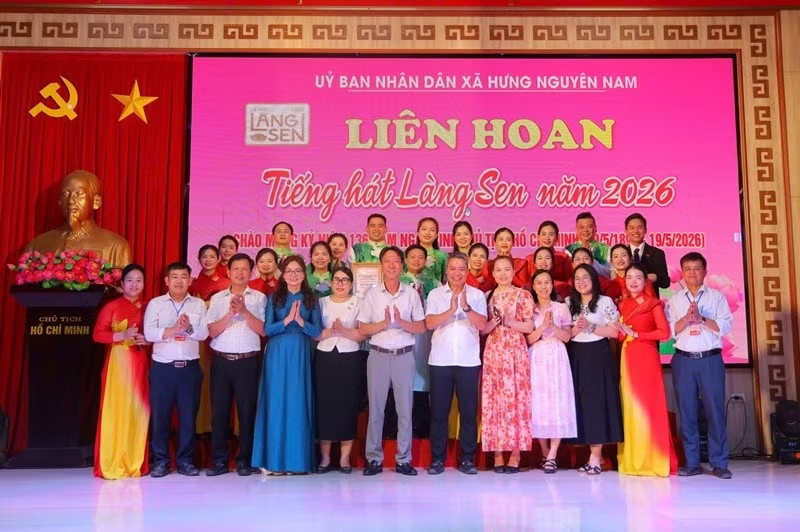
Student Nguyen Thi Mai, a participant in the 2026 “Sen Village Singing” Contest, emotionally shared: “Every time I sing songs about Uncle Ho, I understand more about his life and sacrifices for the nation. We always remind each other to study and train well to be worthy of the previous generations.”
Hung Nguyen Nam commune was established from the merger of Hung Linh, Long Xa, Xuan Lam, and Thong Tan communes. The commune’s Party Committee currently has 1,780 members, active in 55 grassroots Party organizations.
Immediately after the Party Congresses at all levels for the 2025-2030 term, the Commune Party Committee’s Standing Board focused on leading and directing the thorough implementation of resolutions and action programs from the Central and provincial levels, linked to socio-economic development tasks, ensuring national defense and security, and building the political system in the area. The Central’s key resolutions were implemented synchronously, creating positive changes in the awareness and actions of officials and Party members. At the same time, inspection and supervision work was given due attention.
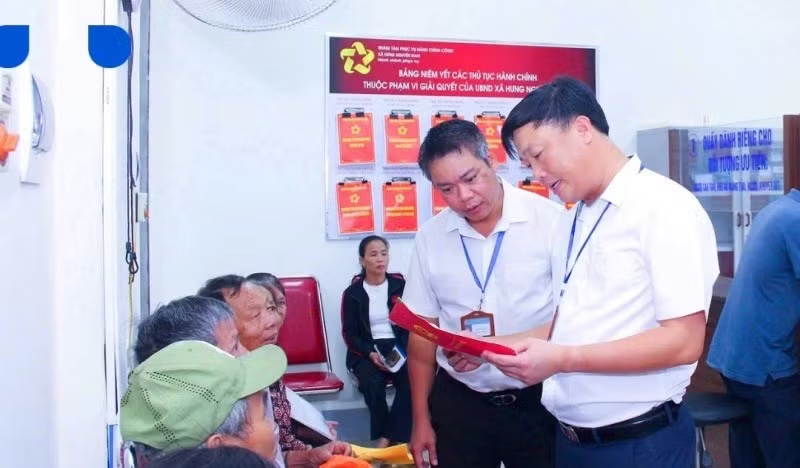
During his lifetime, he once advised: “Do everything that benefits the people, avoid everything that harms them.” This simple yet profound teaching remains fully relevant today, becoming the guiding principle for the officials and Party members of Hung Nguyen Nam commune in performing their duties and serving the people.
Imbued with Uncle Ho’s ideology, the officials and Party members in the commune always uphold a high sense of responsibility, promote their pioneering and exemplary roles; stay close to the people, listen to their legitimate thoughts and aspirations to resolve issues promptly at the grassroots level. From administrative reform and new rural development to improving people’s lives, patriotic emulation movements are increasingly deepening, creating clear changes in awareness and