
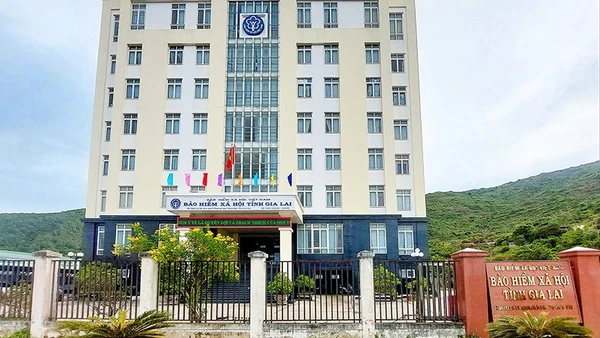
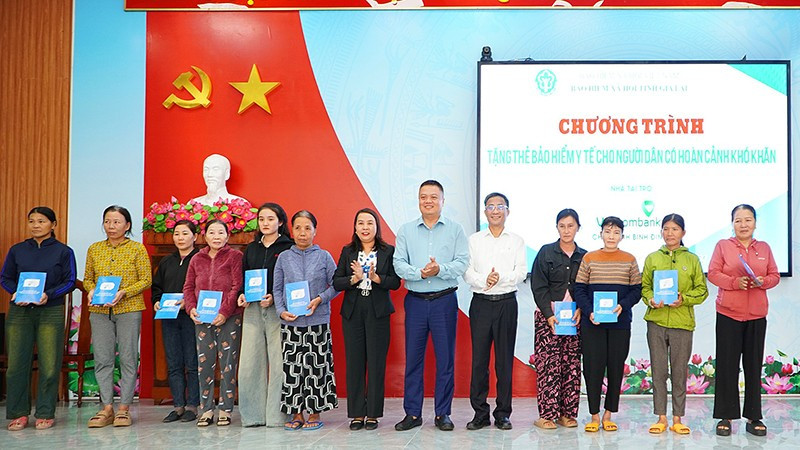
Recently, the provincial sector has implemented the program “Giving health insurance cards to people in difficult circumstances – Bringing a warm Tet to the poor for the Binh Ngo Lunar New Year.”
To date, over 6,000 cards have been delivered to people in need in areas severely affected by natural disasters. This is a practical gift, helping to reduce the burden of medical costs and creating opportunities for people to access healthcare services.
From now until the end of the year, the Gia Lai Provincial Social Insurance will continue to coordinate with departments, agencies, sectors, and local authorities to review and provide additional insurance cards for people in difficult circumstances, ensuring the spirit of “leaving no one behind.”
Furthermore, in the context of continuous floods causing difficulties for the lives of people, social insurance participants, and beneficiaries, the Gia Lai Provincial Social Insurance has implemented proactive and humane solutions – particularly the lump-sum payment of pensions and social insurance allowances – serving as a support to help people overcome natural disasters, stabilize their lives, and prepare for the upcoming Lunar New Year.
Specifically, implementing the Government’s directive in Resolution No. 380/NQ-CP dated November 25, 2025, on solutions to overcome the consequences of natural disasters and restore production in central region localities, and Document No. 3145/BHXH-TCKT dated November 27, 2025, from Vietnam Social Insurance regarding the lump-sum payment of three months of pensions and social insurance allowances (December 2025, January and February 2026), the Gia Lai Provincial Social Insurance urgently issued directive documents, developed plans, and coordinated with the Provincial Post Office to implement the lump-sum payment of three months of pensions and social insurance allowances.
The review of lists, preparation of funds, and organization of payments were carried out quickly, accurately, and in accordance with regulations. Beneficiaries receiving payments via personal accounts were paid from December 1, while those receiving cash were paid from December 5 at post office payment points, ensuring maximum convenience for people.
In this payment round, the entire province made payments to over 71,800 beneficiaries with a total fund of over 1,377.6 billion VND, of which nearly 43,300 people received payments via accounts with over 932.6 billion VND and over 28,500 people received cash payments with approximately 445 billion VND.
Not only focusing on pension and social insurance allowance payments, the Gia Lai Provincial Social Insurance also implemented many practical measures to ensure health insurance examination and treatment rights under conditions where floods caused damage to documents and travel disruptions.
All procedures for issuing new or replacement health insurance cards for people who lost or damaged their cards were prioritized and resolved on the same day, ensuring 100% of eligible people had cards for timely use.
In addition, the Gia Lai Provincial Social Insurance coordinated with the Department of Health and medical facilities to allow people to receive health insurance examination and treatment even without a physical card, through verification via VssID, VNeID, or citizen identification cards.
This flexible solution helps people in flood-affected areas avoid disruptions in healthcare, clearly demonstrating the spirit of “serving the people.”
The lump-sum pension payment, ensuring uninterrupted health insurance benefits, and supporting health insurance cards for the poor have clearly shown the accompanying role of the provincial social insurance, maintaining the “social safety net” in the context of natural disasters and helping people stabilize their lives promptly. Thereby, it continues to spread the humanitarian value of social insurance and health insurance policies, becoming a support for people to firmly rebuild and look towards the future.
Information from Gia Lai Statistics indicates that in November, Typhoon No. 13 (Kalmaegi) and the historic flood from November 19-20 caused significant human and material damage, greatly affecting the lives of residents in the province.
The Chairman of the Gia Lai Provincial People’s



![[Infographic] Quy mô kỳ thi tuyển sinh vào lớp 10 năm học 2026-2027 của Hà Nội](https://asiacity.news/wp-content/uploads/2026/05/1-150x150.jpg)