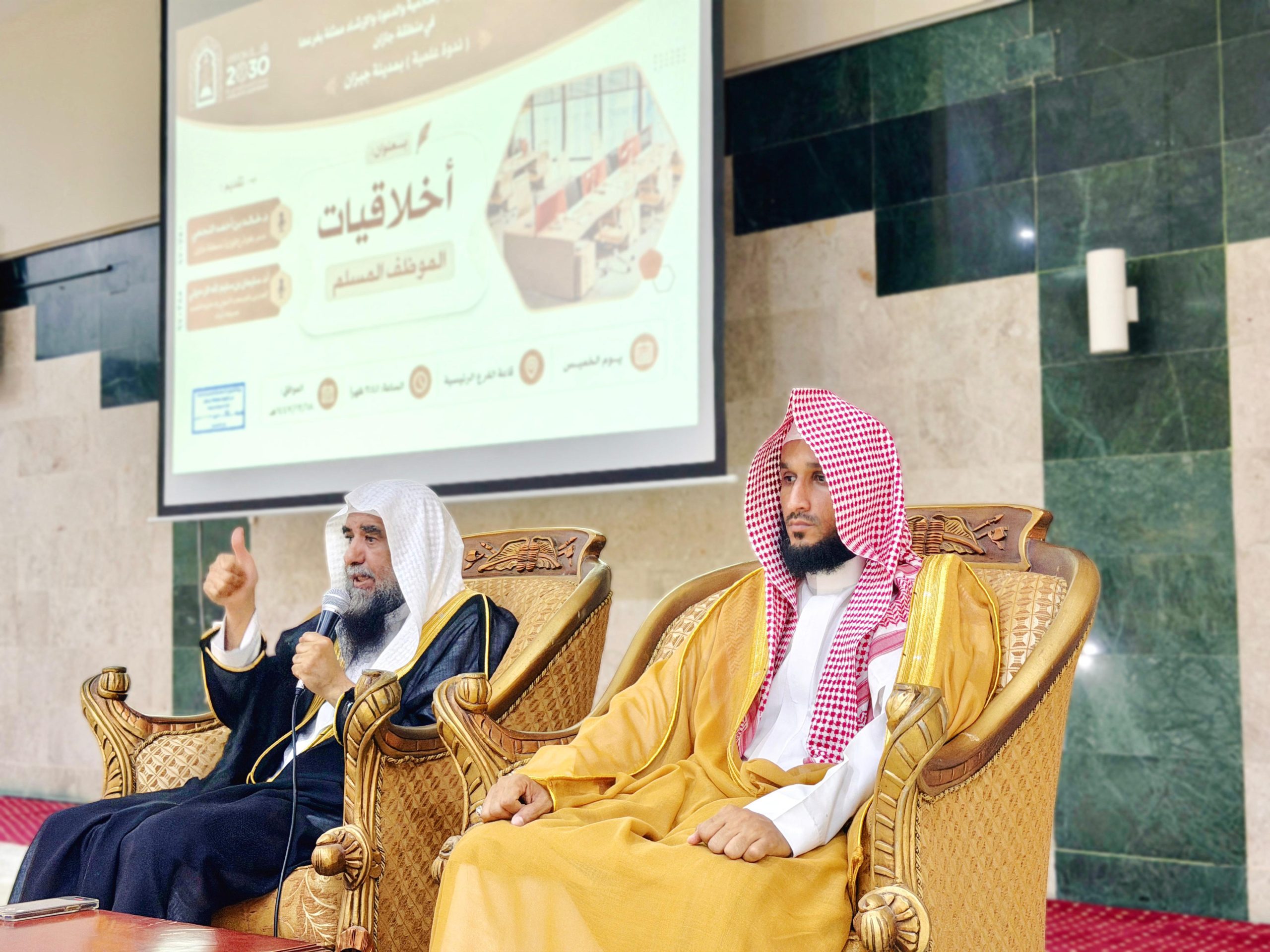
The Ministry of Islamic Affairs, Dawah and Guidance, represented by its branch in the Jazan region, organized a scientific symposium titled “Ethics of the Muslim Employee” on the evening of Thursday, 18 Dhu al-Hijjah 1447 AH. The event was attended by a number of mosque supervisors, male and female preachers, and was held in the main hall at the branch’s headquarters. It was presented by Sheikh Professor Dr. Suleiman bin Suleim Allah Al-Ruhaili, a teacher at the Prophet’s Mosque and the imam and preacher of Quba Mosque in Medina.
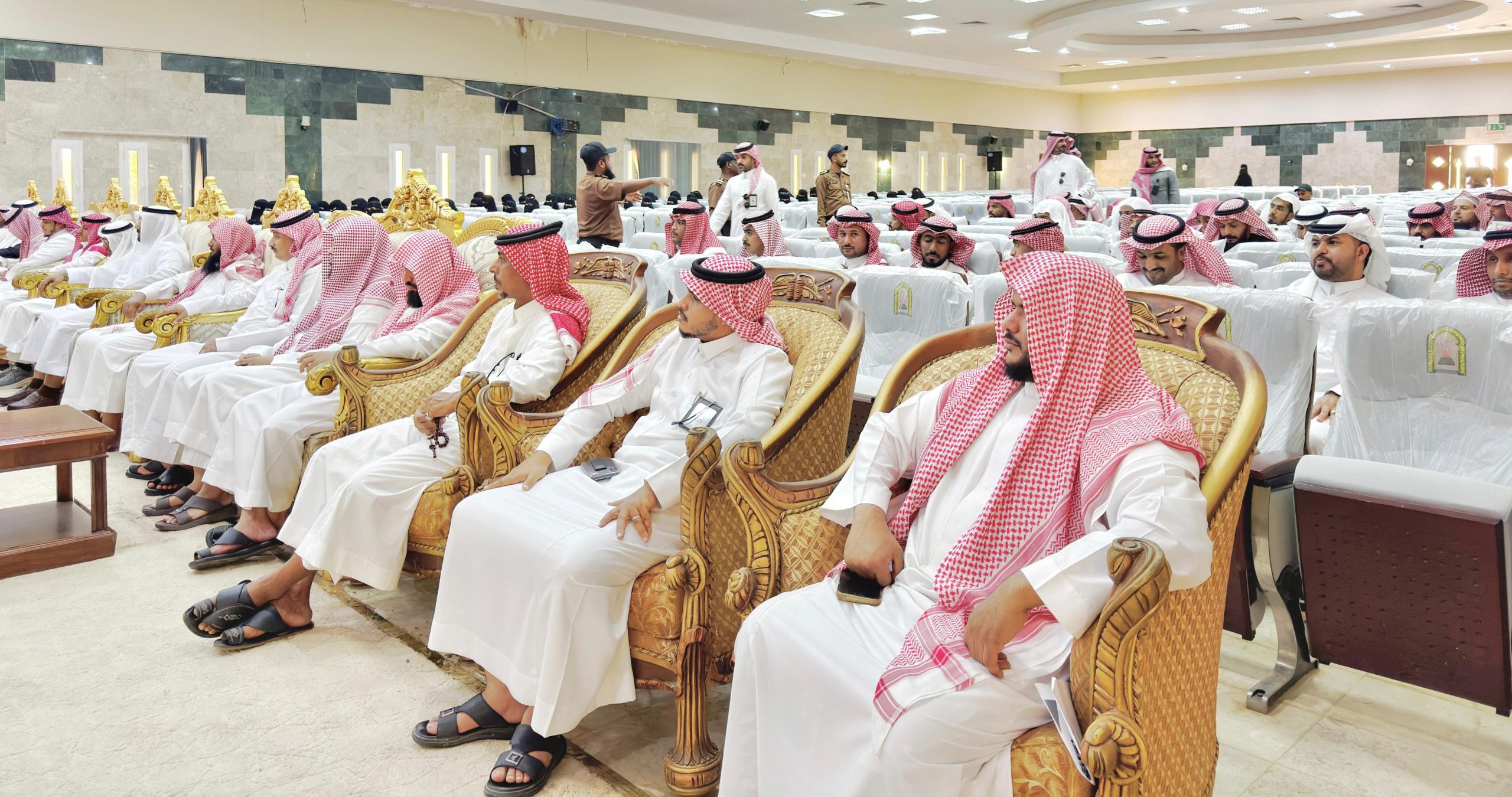
The symposium addressed a number of values and ethics that a Muslim employee should embody in the work environment, most notably sincerity in performing duties, a sense of responsibility, maintaining trust, adhering to regulations and instructions, and promoting a culture of professional discipline.
The symposium also reviewed the importance of punctuality, preserving public property, establishing principles of justice and fairness, and fostering positive professional relationships within the work environment, thereby contributing to raising the level of efficiency and productivity and achieving institutional goals.
This symposium is part of the scientific and awareness programs implemented by the ministry’s branch in the Jazan region, aimed at enhancing awareness of Islamic values and professional ethics and contributing to building a positive work environment.