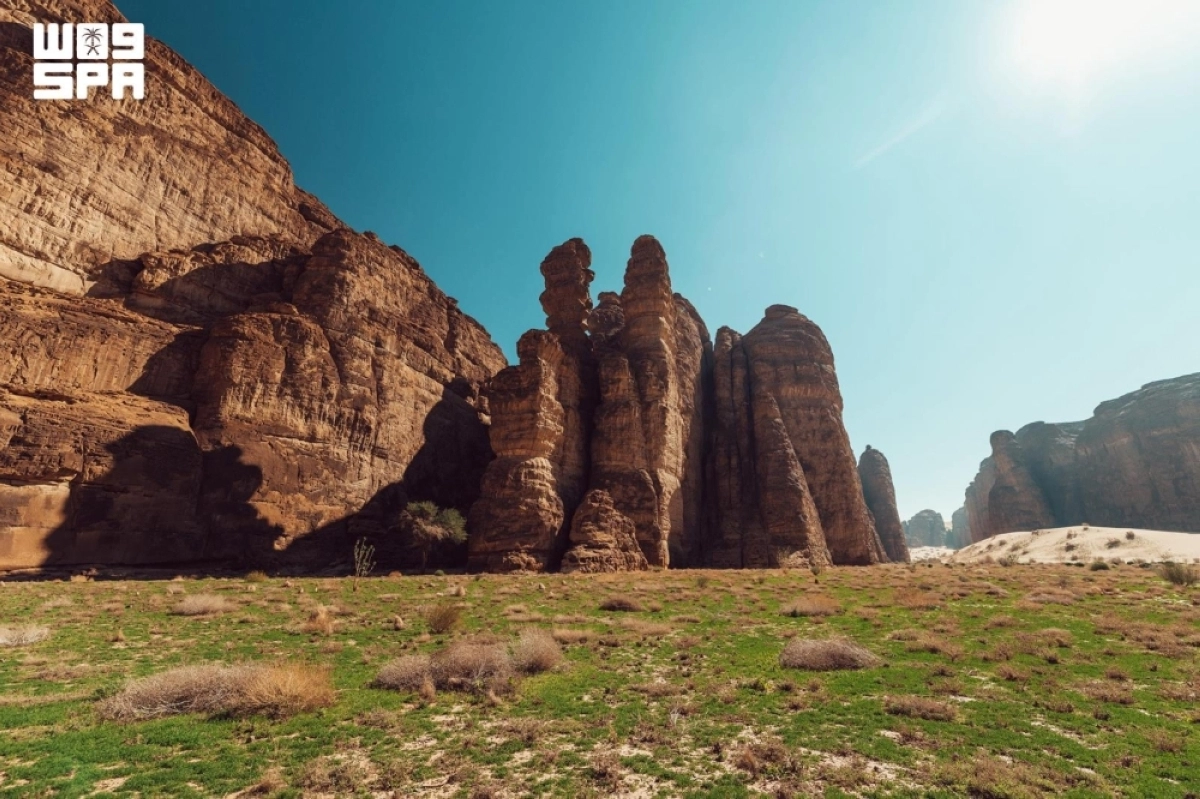
AlUla Governorate protects its environmental diversity through six nature reserves, which work together to safeguard wildlife habitats, restore natural balance, and strengthen its status as one of the most prominent natural environments in the northwest of the Kingdom.
According to the Royal Commission for AlUla Governorate, these reserves are distributed across five reserves within the governorate’s borders: Sharaan, Al-Gharameel, Harrat Al-Zabin, Harrat Uwayrid, and Wadi Al-Nakhlah, in addition to the Khaybar Reserve, which falls under the supervision of the Royal Commission for AlUla Governorate. The reserves contribute to preserving biodiversity, protecting natural habitats, supporting ecosystem restoration programs, rehabilitating degraded lands, and developing vegetation cover with native species. These efforts align with the targets of the “Saudi Green Initiative,” with approximately 50% of AlUla’s area designated as protected zones so far, alongside the implementation of programs to rehabilitate degraded lands and cultivate native plant species, contributing to the development of vegetation cover and the sustainability of natural resources. The Sharaan Reserve stands out as an advanced model in restoring wildlife, covering an area of 1,543 square kilometers.
AlUla Governorate
AlUla Governorate is a historically and culturally significant region in northwestern Saudi Arabia, known for its stunning desert landscapes and ancient archaeological sites. It was once a key hub on the incense trade route and is home to Hegra (Madain Saleh), a UNESCO World Heritage site featuring well-preserved Nabataean tombs dating back over 2,000 years. Today, AlUla is being developed as a major cultural and tourism destination, showcasing its rich heritage and natural beauty.
Sharaan
Sharaan, also known as Al-Sharaan, is a stunning natural reserve and cultural site in northwestern Saudi Arabia, featuring dramatic sandstone cliffs, canyons, and ancient rock formations. The area holds deep historical significance as part of the Nabataean civilization, with archaeological evidence of tombs, inscriptions, and trade routes dating back over 2,000 years. Today, it is celebrated for its breathtaking landscapes and efforts to preserve both its natural beauty and cultural heritage.
Al-Gharameel
Al-Gharameel is a historical village located in the Asir region of southwestern Saudi Arabia, known for its distinctive traditional stone architecture and terraced agricultural fields. Its history dates back centuries, serving as a fortified settlement that utilized the mountainous terrain for defense and farming. Today, it stands as a cultural heritage site, offering insight into the region’s pre-modern way of life and architectural ingenuity.
Harrat Al-Zabin
Harrat Al-Zabin is a historic neighborhood in the old city of Jeddah, Saudi Arabia, known for its traditional architecture and narrow alleyways. It dates back several centuries and was once a thriving residential and commercial area, reflecting the rich cultural heritage of the Red Sea port city. Today, it is part of the Al-Balad district, a UNESCO World Heritage site, and is recognized for its preserved coral-stone buildings and wooden lattice windows.
Harrat Uwayrid
Harrat Uwayrid is a large volcanic field in northwestern Saudi Arabia, known for its dramatic basalt landscapes and lava flows. It holds significance as part of the region’s volcanic history and is also associated with ancient trade routes and human activity, with archaeological evidence suggesting past settlements and interactions. Designated as a protected area, it serves as an important natural habitat for wildlife and a site of geological interest.
Wadi Al-Nakhlah
Wadi Al-Nakhlah is a historic valley located in the Taif region of Saudi Arabia, known for its lush palm groves and natural springs. It holds religious significance as it is mentioned in Islamic tradition; according to some accounts, the Prophet Muhammad visited the area during the early years of his prophethood. Today, it remains a popular site for visitors seeking to experience its scenic beauty and cultural heritage.
Khaybar Reserve
Khaybar Reserve is a protected natural area in Saudi Arabia, located northwest of Medina, known for its volcanic landscapes, basalt plateaus, and rich biodiversity. Historically, the region is famous for the Battle of Khaybar in 629 CE, where early Muslims under Prophet Muhammad conquered the Jewish-inhabited oasis. Today, the reserve aims to preserve the area’s unique ecology and archaeological heritage, including ancient forts and agricultural terraces.
Saudi Green Initiative
The Saudi Green Initiative is a national environmental project launched in 2021 by Saudi Arabia’s Crown Prince Mohammed bin Salman. Its primary goals are to combat climate change, increase vegetation cover, and reduce carbon emissions by planting billions of trees and restoring vast areas of degraded land. The initiative reflects the Kingdom’s broader Vision 2030 plan to diversify its economy and promote sustainability.