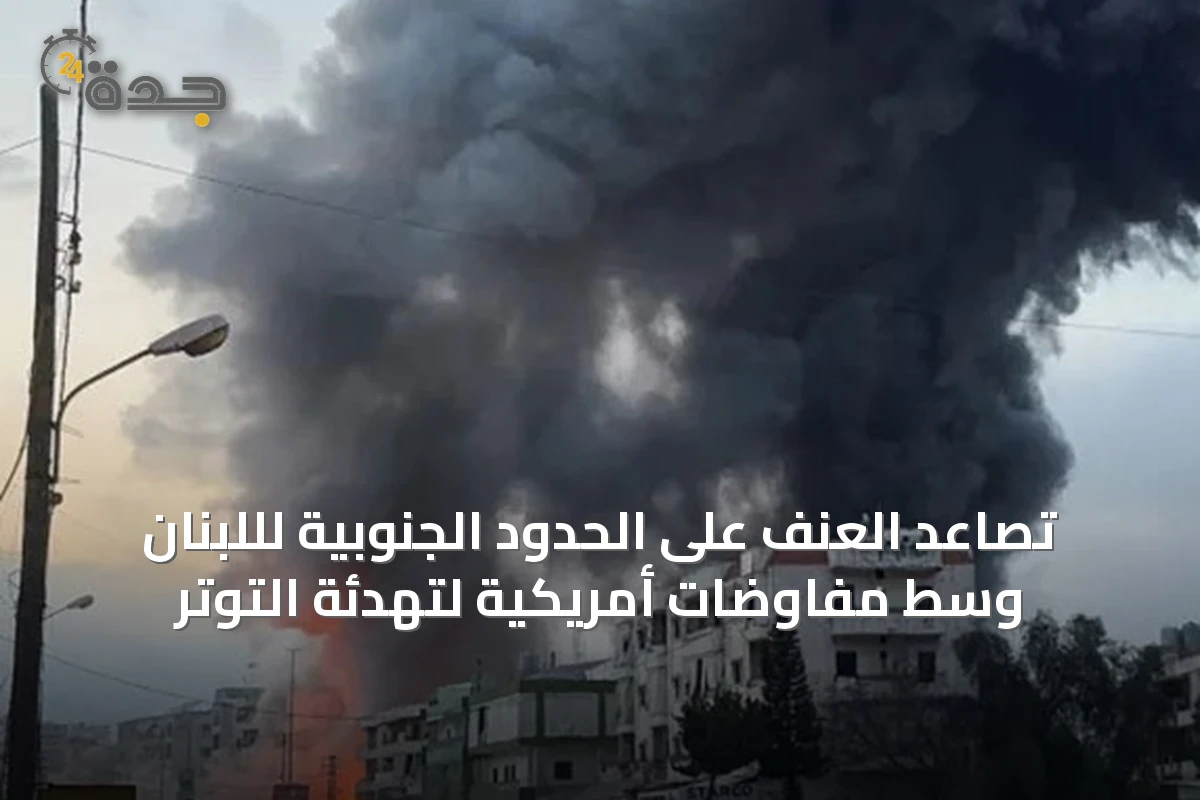
Yesterday, Wednesday, a new wave of clashes erupted in southern Lebanon and around the capital Beirut, resulting in deaths and injuries. These developments come as a round of indirect negotiations between Lebanon and Israel continues in the US capital Washington, under the auspices of the United States, seeking to establish security arrangements aimed at containing tensions and restoring stability to border areas.
Casualties among Lebanese forces
The Lebanese army reported that an officer and a soldier were wounded during an Israeli attack on a military vehicle, part of a series of strikes targeting sites and vehicles in the south. No further details have been released yet regarding the nature of the vehicle or the extent of the damage.
Strike targets ambulance, injuring medical workers
The Lebanese Ministry of Health announced the deaths of two paramedics and the serious injury of a third, as a result of an Israeli airstrike targeting an ambulance belonging to the "Al-Risala" association affiliated with the Amal movement in southern Lebanon. The strike heavily destroyed the vehicle, with remaining medical equipment scattered around it. According to ministry statistics, the death toll among medical workers has risen to one hundred and thirty since the start of clashes in March.
Victims of multiple nationalities in the Houche area near Tyre
A medical source reported the deaths of six people in two Israeli strikes targeting the Houche area near the city of Tyre. The victims included four Syrians and two Palestinians. No official statements have yet been issued by the Israeli side regarding these strikes.
Drone strikes in Beirut and other areas
The capital Beirut and other areas recorded a series of drone strikes and attacks. Among them was a strike on a car on the Khaldeh road at the southern entrance to the capital, in addition to strikes in Deir Zahrani, Habouch, and Kfar Tibnit, one of which resulted in civilian injuries, according to Lebanese official media.
Meanwhile, the Israeli army announced it had intercepted a drone launched from Lebanese territory heading towards northern Israel, reflecting the ongoing exchange of attacks across the southern border.
The path of US negotiations and security prospects
A new round of Lebanese-Israeli negotiations is taking place in Washington under US sponsorship. The US State Department has affirmed its commitment to what it described as "historic negotiations," emphasizing the goal of reaching a comprehensive agreement that guarantees Lebanon’s sovereignty and Israel’s security. Reports from Washington indicate that discussions focus on establishing long-term security arrangements in southern Lebanon, along with sensitive issues including the future of Hezbollah’s weapons and redefining rules of engagement on the border. The parties are also proposing a transitional plan lasting sixty days, which includes a gradual withdrawal of Israeli forces from some areas in southern Lebanon.
These efforts coincide with ongoing differences between the two sides; Lebanon insists on a ceasefire and rejects any internal confrontation with Hezbollah or direct security coordination with Israel, while Israel demands tightening security measures south of the Litani River and expanding the role of the Lebanese army in controlling the situation.
Lebanon
Lebanon, a country in the Middle East on the Mediterranean coast, has a rich history dating back thousands of years as a crossroads of civilizations, including the Phoenicians, Romans, and Ottomans. It is known for its cultural diversity, with landmarks like the ancient ruins of Baalbek and the vibrant capital Beirut. Despite periods of conflict, Lebanon remains celebrated for its cuisine, natural beauty, and resilient heritage.
Beirut
Beirut, the capital of Lebanon, is one of the oldest continuously inhabited cities in the world, with a history dating back over 5,000 years. It was a major cultural and economic hub in the ancient Phoenician and Roman empires, later flourishing under Ottoman rule. Despite being heavily devastated by the Lebanese Civil War (1975–1990) and the 2020 port explosion, the city remains a resilient center of Middle Eastern culture, known for its vibrant arts scene, diverse architecture, and historic landmarks.
Washington
Washington, D.C., the capital of the United States, was established in 1790 as a planned city to serve as the nation’s seat of government. Its history is deeply tied to key American events, including the War of 1812 when British forces burned the city, and the Civil War era. Today, it is renowned for iconic landmarks like the White House, the U.S. Capitol, and the National Mall, which honor the country’s political heritage and cultural legacy.
Tyre
Tyre is an ancient Phoenician city located in present-day Lebanon, known for its significant role in maritime trade and colonization across the Mediterranean. Founded around 2750 BCE, it was a major center for the production of purple dye and was famously besieged by Alexander the Great in 332 BCE. Today, its rich history is preserved in UNESCO World Heritage sites, including a Roman hippodrome and extensive ruins.
Deir Zahrani
Deir Zahrani is a village in southern Lebanon, known for its historical and archaeological significance, including ancient ruins and a notable Roman temple. Its name is derived from the nearby Zahrani River, and the site has been inhabited since at least the Phoenician and Roman periods. Today, it remains a quiet rural community, with remnants of its past still visible among its landscape.
Habouch
Habouch is a small village in southern Lebanon, known for its ancient olive groves and traditional stone houses. Its history dates back to the Phoenician and Roman periods, with archaeological remains indicating continuous settlement. Today, it remains a quiet agricultural community, preserving its cultural heritage and rural charm.
Kfar Tibnit
Kfar Tibnit is a small village in southern Lebanon, historically linked to the ancient Phoenician city of Tyre. The site is known for its archaeological remains, including a Roman-era temple and a medieval church, reflecting layers of settlement from the Phoenician through the Byzantine periods. Its name may derive from the Phoenician word for “good,” indicating its long-standing agricultural significance in the region.
Litani River
The Litani River is the longest river in Lebanon, stretching approximately 140 kilometers from the fertile Beqaa Valley to the Mediterranean Sea north of Tyre. Historically, it has been a vital water source for agriculture and irrigation, and its strategic importance has made it a focal point in regional disputes, particularly during conflicts between Israel and Lebanon. The river also holds significance in ancient history, as it was known to the Romans as the *Leontes*.