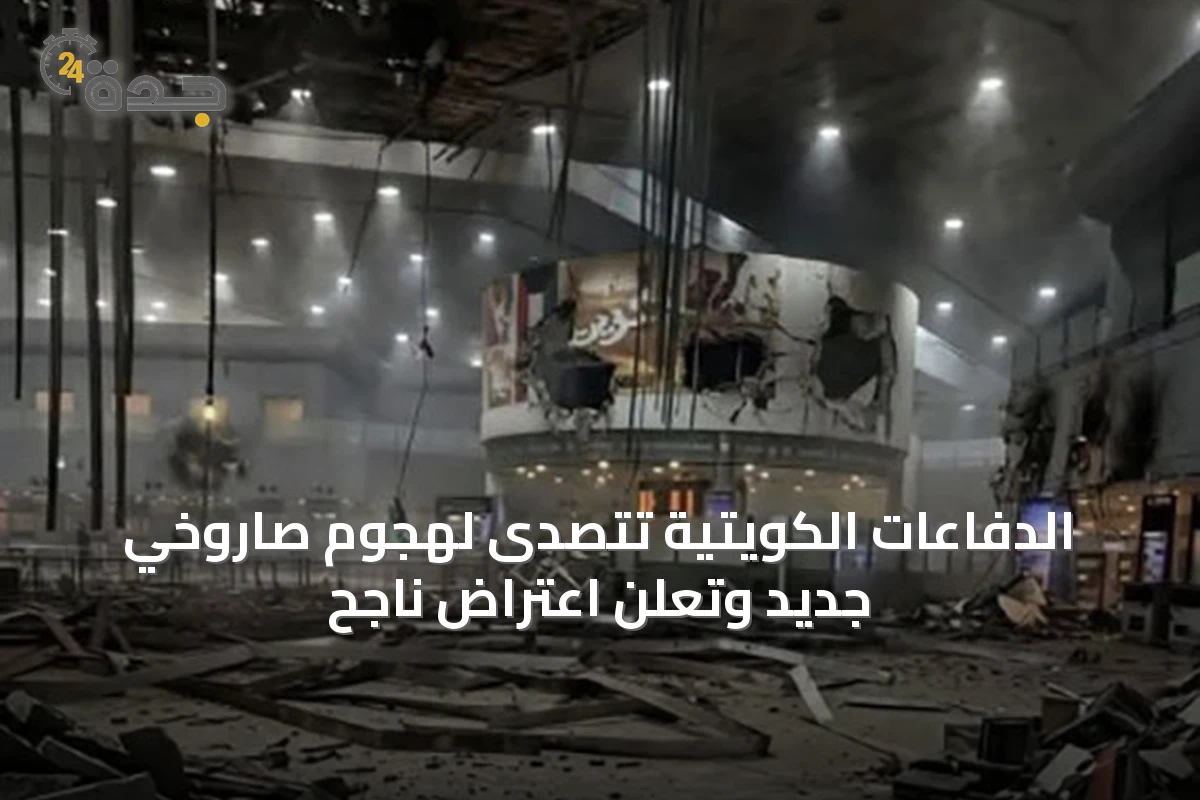
Kuwaiti air defenses intercepted a new missile and aerial attack targeting the country’s territory at dawn on Saturday, highlighting the ongoing military escalation in the Gulf region and the expanding repercussions of the confrontation between Iran on one side, and the United States and Israel on the other.
Details of the Response to the Attack
The General Staff of the Kuwaiti Army stated that air defense systems effectively dealt with the hostile attacks, noting that the sounds of explosions heard in several areas resulted from interception operations carried out by the defenses. It called on citizens and residents to adhere to safety and security instructions issued by the competent authorities.
Announcements from Iran and the United States
For its part, Iran’s Revolutionary Guard announced it had targeted American bases in the region, confirming missile strikes against enemy positions as part of the ongoing escalation between Tehran and Washington. In response, the U.S. military revealed that Iran launched seven ballistic missiles toward Kuwait and Bahrain, six of which were intercepted, while the seventh failed to reach its target. The U.S. military command confirmed no casualties among its forces and denied Iranian claims that the Fifth Fleet headquarters in Bahrain had been damaged.
Background and Previous Developments
These developments came hours after the U.S. military announced it had targeted radar sites inside Iran, a step Washington described as self-defense following the downing of four Iranian drones that posed a threat to maritime navigation in the region. Kuwait had been subjected a few days earlier to a large-scale attack involving about 30 missiles and drones, targeting civilian and vital facilities, including Kuwait International Airport, which temporarily halted operations. The attack resulted in the death of an Indian resident and injuries to at least 63 people, including passengers and airport workers, some of whom suffered serious injuries including fractures, head injuries, brain hemorrhages, limb amputations, and injuries from explosions and smoke inhalation.
Kuwaiti Diplomatic Moves
On the diplomatic front, the Kuwaiti Ministry of Foreign Affairs renewed its condemnation of the Iranian attacks, describing them as brutal assaults that constitute a violation of sovereignty and a threat to security and stability. It announced the summoning of the Iranian chargé d’affaires and the delivery of a formal protest note containing a decision to reduce the number of staff at the Iranian embassy in Kuwait, declaring two of its diplomats persona non grata, and demanding they leave the country within 24 hours.
For its part, Iran’s Revolutionary Guard denied responsibility for targeting Kuwait Airport, claiming that the damage to the airport resulted from falling American interceptor missiles after they failed to stop Iranian missiles. It asserted that its target was the Ali Al Salem Air Base, which houses American forces and equipment. However, the U.S. Central Command (CENTCOM) rejected this account, confirming that the attack on the civilian Kuwait Airport was carried out directly and deliberately by Iranian drones, describing the Iranian claims as false and aimed at evading responsibility.