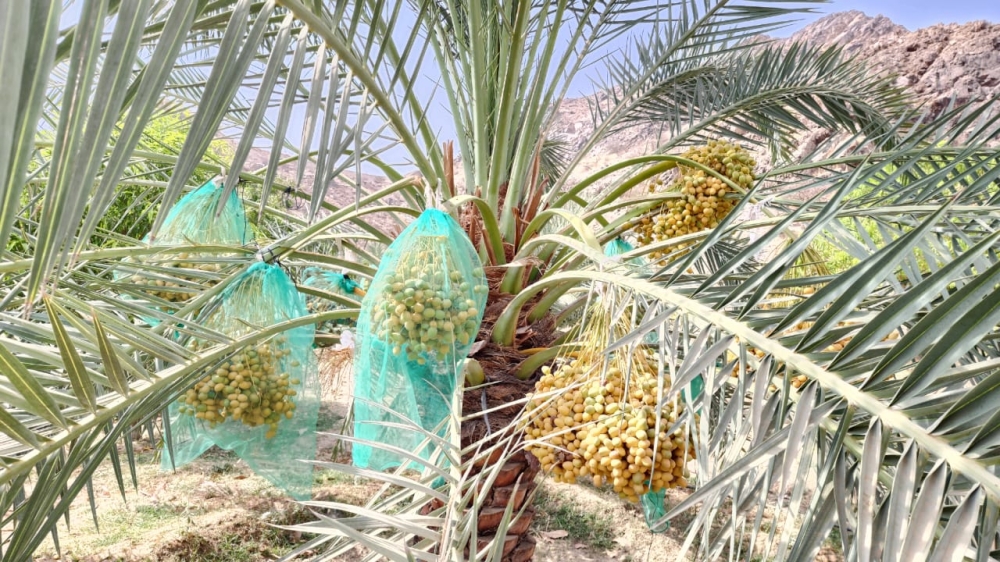
The National Center for the Prevention and Control of Plant Pests and Animal Diseases emphasized the importance of early detection of the date palm fruit mite pest, known as “dust mite,” as it is a priority plant pest threatening the productivity and quality of date palm fruits across various regions of the country.
It stressed the need to monitor infected date palm trees from the previous season and inspect new leaves of neighboring trees within the farm, which helps limit the spread of infestation and enhances control efficiency.
The center explained that the date palm fruit mite pest is widespread in all regions of the country, and its severity is exacerbated by several environmental and agricultural factors, most notably drought, low rainfall, dust-laden winds, as well as the presence of infected agricultural residues and weeds surrounding the palm trees, in addition to the use of equipment and agricultural labor not adhering to hygiene and prevention measures.
Thickening of the fruit skin
The center stated that the most prominent symptoms of infestation include scratches and color changes on the fruits tending toward red, with increased thickening and blistering of the fruit skin, as well as hardening and stiffening of the fruits, leading to poor growth and incomplete ripening, which negatively affects crop quality and economic value.
The center pointed out that sources of pest spread include transmission through equipment and agricultural labor, infected trees or fruit bunches, as well as crop residues.
Winds also help spread the dust mite, especially during dry periods, necessitating increased readiness and monitoring within farms.
Dear farmer .. Identifying infected date palm trees from the previous year and monitoring new leaves on neighboring trees in the farm helps in early detection of the date palm fruit mite pest.
Raising farmer awareness
The center called on farmers to adhere to a set of preventive and integrated control measures, including regular inspection of date palm trees, removal of weeds and agricultural residues, use of clean equipment, as well as preventive spraying with micronized sulfur and adding appropriate adhesives.
If infestation is detected, it is recommended to use specialized acaricides under the supervision of experts, with preventive spraying of infected trees during the following season, especially in winter after the harvest period.
The center emphasized that raising farmer awareness and applying proper agricultural practices represent the first line of defense to protect palm trees and preserve national plant wealth, in line with the country’s food security and agricultural sustainability goals.
National Center for Plant Pest and Animal Disease Prevention and Control
National Center for the Prevention and Control of Plant Pests and Animal Diseases
Related news

Education Minister: The Success of the Hajj Season Confirms the Kingdom’s Efficiency in Crowd Management

More than a thousand people evacuated in northwestern Spain due to wildfires

The Grand Mosque witnesses a service transformation with the third expansion.

Statement on expected temperatures and weather phenomena across the kingdom’s cities