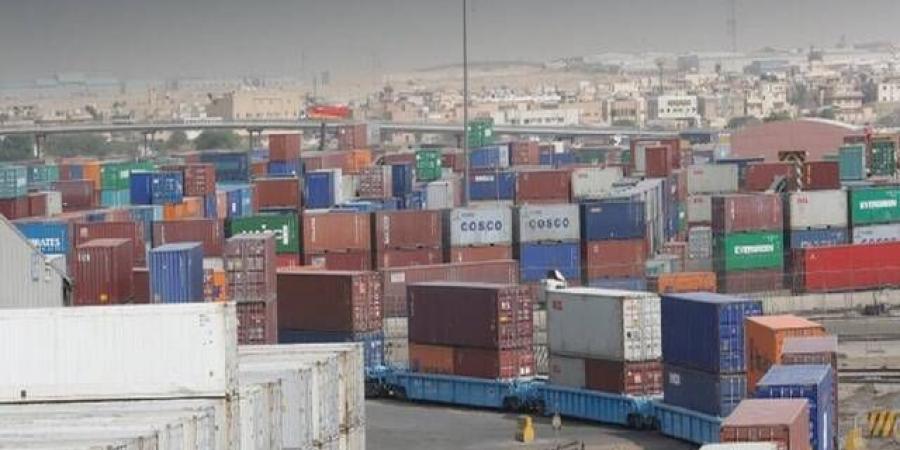
“SAR” extends free storage period for goods and containers at Riyadh Dry Port.
“SAR” extends the free storage period for goods and containers at the Riyadh Dry Port
Riyadh: Saudi Railway Company “SAR” announced the extension of the free storage period for various goods and transit containers at the Riyadh Dry Port to 30 days, instead of 7 days, a step that enhances the competitiveness of SAR’s logistics corridors and improves the efficiency of freight movement between the east and west.
SAR explained that this initiative follows the recent launch of five new logistics routes that supported the flow of goods and containers through an interconnected network linking ports in the eastern region with ports in the western region and countries north of the Kingdom, in addition to strengthening connections with border crossings and regional markets, as part of an integrated transport system combining rail, road, and sea modes. This contributes to accelerating shipping operations and providing more flexible and reliable transport options.
The Riyadh Dry Port represents a key operational hub within this system, serving as a focal point for shipping operations by receiving containers and goods arriving via ports and redirecting them efficiently to their final destinations inside and outside the Kingdom, thereby enhancing smooth movement and improving supply chain efficiency.
The initiative contributes to raising the efficiency and flexibility of operational processes and providing a longer time frame for managing shipments, which helps improve the efficiency and flexibility of supply chains and enhances the Kingdom’s attractiveness as a major regional and international transit point.
It also supports the goals of the National Transport and Logistics Strategy and the aspirations of Saudi Vision 2030 to establish the Kingdom’s position as a global logistics hub connecting three continents.
Riyadh Dry Port
Riyadh Dry Port is a major inland customs and logistics hub located in the Saudi capital, serving as a key gateway for containerized cargo entering the country. Established to alleviate congestion at sea ports, it was developed in partnership with the private sector and began operations in the early 2000s. The port plays a vital role in facilitating trade by handling customs clearance and distribution for goods arriving via the King Abdulaziz Port in Dammam.
Saudi Railway Company “SAR”
The Saudi Railway Company (SAR) is the state-owned operator of Saudi Arabia’s rail network, established to develop and manage modern railway infrastructure. Its history dates back to the early 2000s, with the launch of major projects like the North-South Railway (completed in 2011) and the Haramain High-Speed Railway, which connect key industrial, mining, and religious sites across the kingdom. SAR plays a vital role in Saudi Vision 2030 by promoting efficient transport, reducing road congestion, and supporting economic diversification.
National Transport and Logistics Strategy
The National Transport and Logistics Strategy is a comprehensive policy framework aimed at modernizing and integrating a country’s transportation networks and supply chain systems. It typically outlines long-term goals for infrastructure development, sustainability, and efficiency, often building on historical trade routes and logistics challenges. The strategy seeks to enhance economic competitiveness by reducing costs, improving connectivity, and supporting national growth objectives.
Saudi Vision 2030
Saudi Vision 2030 is a transformative economic and social reform plan launched in 2016 by Crown Prince Mohammed bin Salman to reduce Saudi Arabia’s dependence on oil and diversify its economy. The initiative aims to develop public service sectors such as health, education, infrastructure, and tourism, while also empowering women and expanding entertainment opportunities. Rooted in the nation’s long-term goals, it represents a historic shift from the country’s traditional oil-based economy toward a more sustainable and globally integrated future.