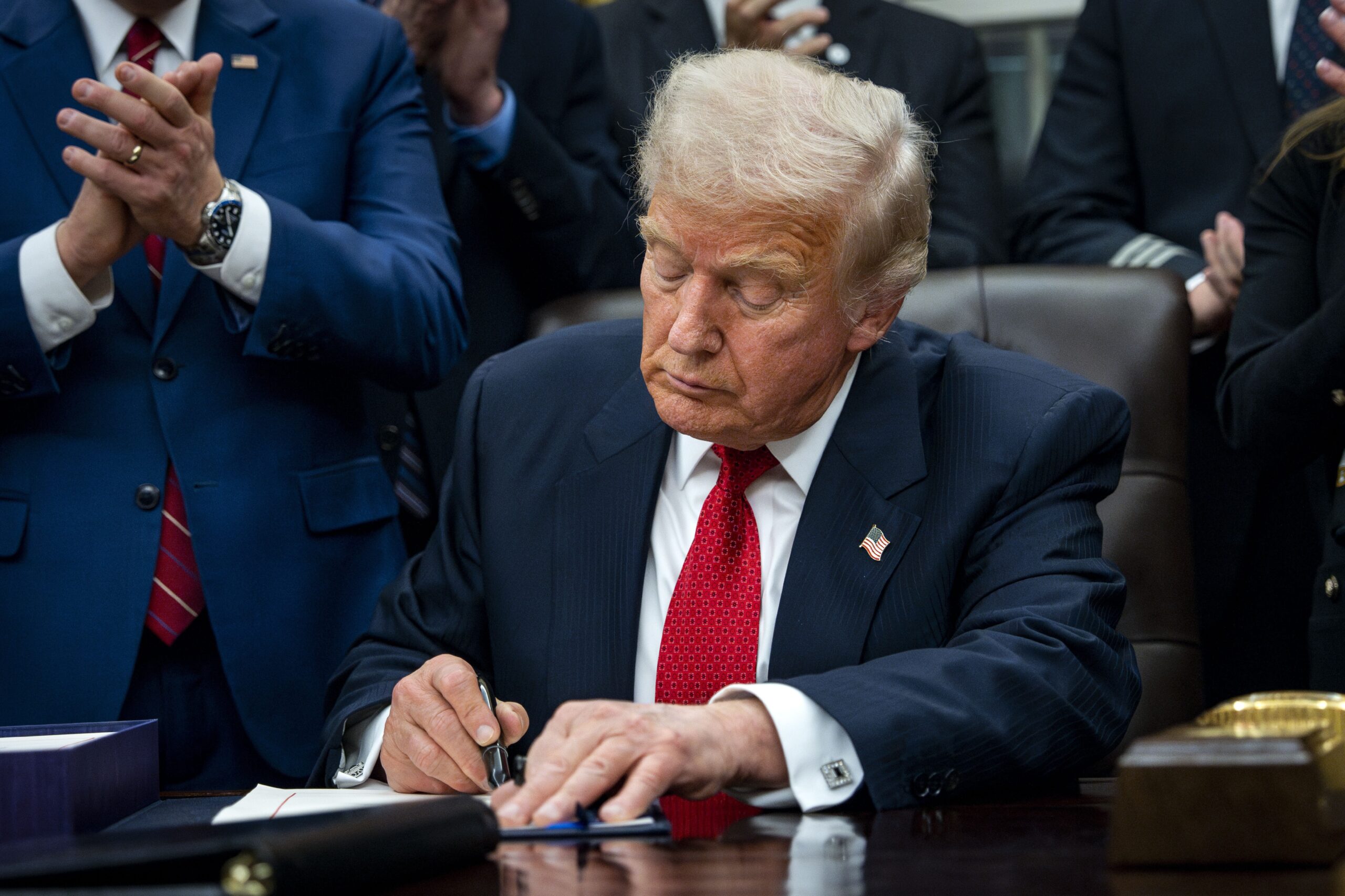
US President Donald Trump hopes for a settlement of the Ukrainian conflict by Christmas. It is noted that envoys from the head of the White House have given Ukrainian leader Volodymyr Zelenskyy several days to respond to the proposed peace deal.
According to reports, the US President’s special envoy and the American leader’s son-in-law pressured Zelenskyy to make a quick decision. Zelenskyy himself stated that Ukraine is ready for an energy ceasefire. He also reported that Kyiv has not yet transmitted an alternative peace plan to Washington.
It was previously reported that Ukrainian and American delegations moved towards a compromise on a peace settlement plan and made progress. Kyiv believes that a peace agreement should involve freezing the conflict at the current positions. Russian-Ukrainian negotiations have reached a deadlock due to the Ukrainian leader’s refusal to leave the territory of Donbas. Zelenskyy also stated that Ukraine and Europe are jointly preparing their version of a peace plan.
Following negotiations between the Russian leader and an American delegation on December 2nd, an aide to the Russian President spoke about the absence of a compromise peace plan for Ukraine. The aide added that Moscow and Washington agreed not to disclose the substance of the talks that took place.
Later, Russian President Vladimir Putin stated in an interview that the United States divided a 28-point peace plan into four packages. The peace plan is reportedly divided into four themes: territories, Ukraine’s sovereignty, cooperation, and European security.
White House
The White House is the official residence and workplace of the President of the United States, located in Washington, D.C. It was designed by James Hoban, with construction completed in 1800, and has been the home of every U.S. president since John Adams. The building was burned by British forces in 1814 during the War of 1812 and was subsequently rebuilt and expanded over the centuries, becoming a global symbol of the American presidency and government.
Kyiv
Kyiv (also spelled Kiev) is the capital and largest city of Ukraine, situated on the Dnipro River. Historically known as the birthplace of Kyivan Rus’, it was a major medieval Slavic state and the cradle of Eastern Orthodox Christianity in the region. The city boasts iconic sites like the Kyiv Pechersk Lavra (Monastery of the Caves) and Saint Sophia Cathedral, both UNESCO World Heritage Sites, reflecting its deep historical and cultural significance.
Donbas
The Donbas, short for Donets Basin, is a historical and economic region in eastern Ukraine, internationally recognized for its vast coal reserves and heavy industry. Its modern history is deeply tied to industrialization in the 19th century under the Russian Empire and later the Soviet Union. Since 2014, the region has been the epicenter of a major armed conflict following Russia’s annexation of Crimea and its support for separatist forces in parts of Donetsk and Luhansk oblasts.
Moscow
Moscow is the capital and largest city of Russia, with a history dating back over 800 years to its first recorded mention in 1147. It grew from a medieval fortress (the Kremlin) into the political and cultural heart of the Russian state, serving as the capital of the Tsardom of Russia, the Soviet Union, and now the modern Russian Federation. Today, it is a global metropolis renowned for iconic landmarks like Red Square, St. Basil’s Cathedral, and the Kremlin itself.
Washington
Washington, D.C., the capital of the United States, was founded in 1790 as a planned city to serve as the nation’s permanent seat of government. It is home to iconic landmarks like the White House, U.S. Capitol, and numerous monuments and museums, many of which commemorate key events and figures in American history.
Europe
Europe is a continent with a rich and complex history, shaped by ancient civilizations like Greece and Rome, the transformative Middle Ages, the Renaissance, and periods of both empire and devastating conflict. Culturally, it is the origin of influential movements in art, philosophy, science, and politics, and is home to countless UNESCO World Heritage sites, from medieval castles to grand cathedrals. Today, it is a major political and economic union of diverse nations, united by shared history while preserving distinct national identities.