1/3
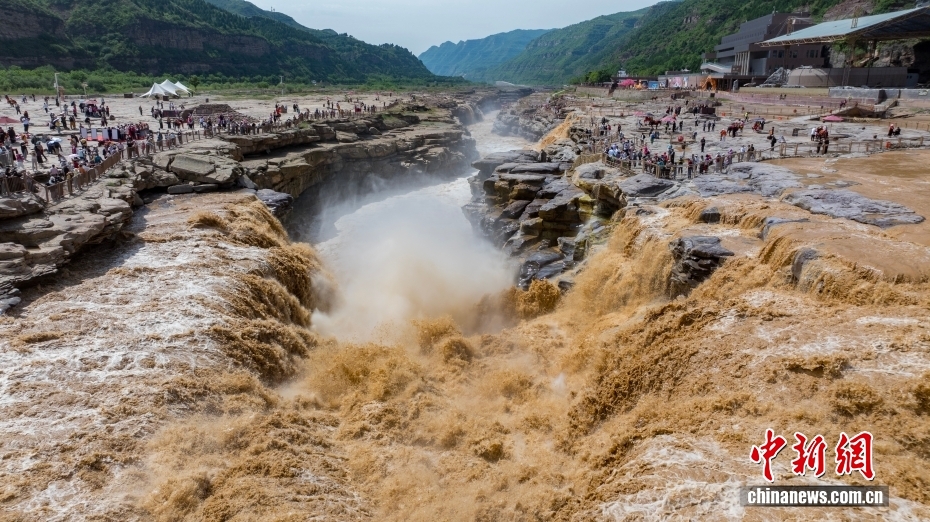
On May 18, in Yichuan, Shaanxi, due to rainfall in the upper reaches of the Yellow River, the Hukou Waterfall in the Qin-Jin Grand Canyon entered its golden waterfall viewing period. (Drone photo)
Yichuan
Yichuan is a county located in Luoyang, Henan Province, China, with a history dating back over 2,000 years to the Zhou Dynasty. It is renowned as the hometown of the ancient philosopher Cheng Yi and his brother Cheng Hao, key figures in Neo-Confucianism during the Song Dynasty. Today, Yichuan is also famous for the Longmen Grottoes, a UNESCO World Heritage site, and its rich cultural heritage.
Shaanxi
Shaanxi, located in central China, is a province rich in history as the cradle of Chinese civilization, serving as the capital for 13 dynasties including the Qin, Han, and Tang. Its most famous cultural site is the Terracotta Army, built to guard Emperor Qin Shi Huang’s tomb, alongside the ancient capital Xi’an, home to the historic Silk Road starting point and the well-preserved City Wall. The province’s profound heritage makes it a key destination for understanding China’s imperial past and cultural evolution.
Yellow River
The Yellow River, known as the «Mother River» of China, is the country’s second-longest river and the cradle of ancient Chinese civilization, with settlements dating back over 4,000 years. Its fertile floodplains supported the rise of early dynasties like the Xia and Shang, but its frequent, devastating floods also earned it the nickname «China’s Sorrow.» Today, the river remains a vital water source and a powerful symbol of Chinese heritage and resilience.
Hukou Waterfall
Hukou Waterfall, located on the Yellow River in Shaanxi and Shanxi provinces, is the second-largest waterfall in China and is known for its thunderous roar and golden-colored waters. Its name, meaning «mouth of a teapot,» comes from the narrow gorge that funnels the river into a dramatic 50-meter drop. Historically, the waterfall has been a significant natural landmark for centuries, often referenced in Chinese literature and art, and it remains a symbol of the Yellow River’s power and cultural importance.
Qin-Jin Grand Canyon
The Qin-Jin Grand Canyon, located along the border of Shaanxi and Shanxi provinces in China, is a dramatic natural gorge carved by the Yellow River. Historically, it served as a strategic passage for ancient trade and military movements between the Qin (Shaanxi) and Jin (Shanxi) regions, from which its name derives. Today, it is celebrated for its stunning cliffs, turbulent waters, and cultural significance, attracting tourists and historians alike.