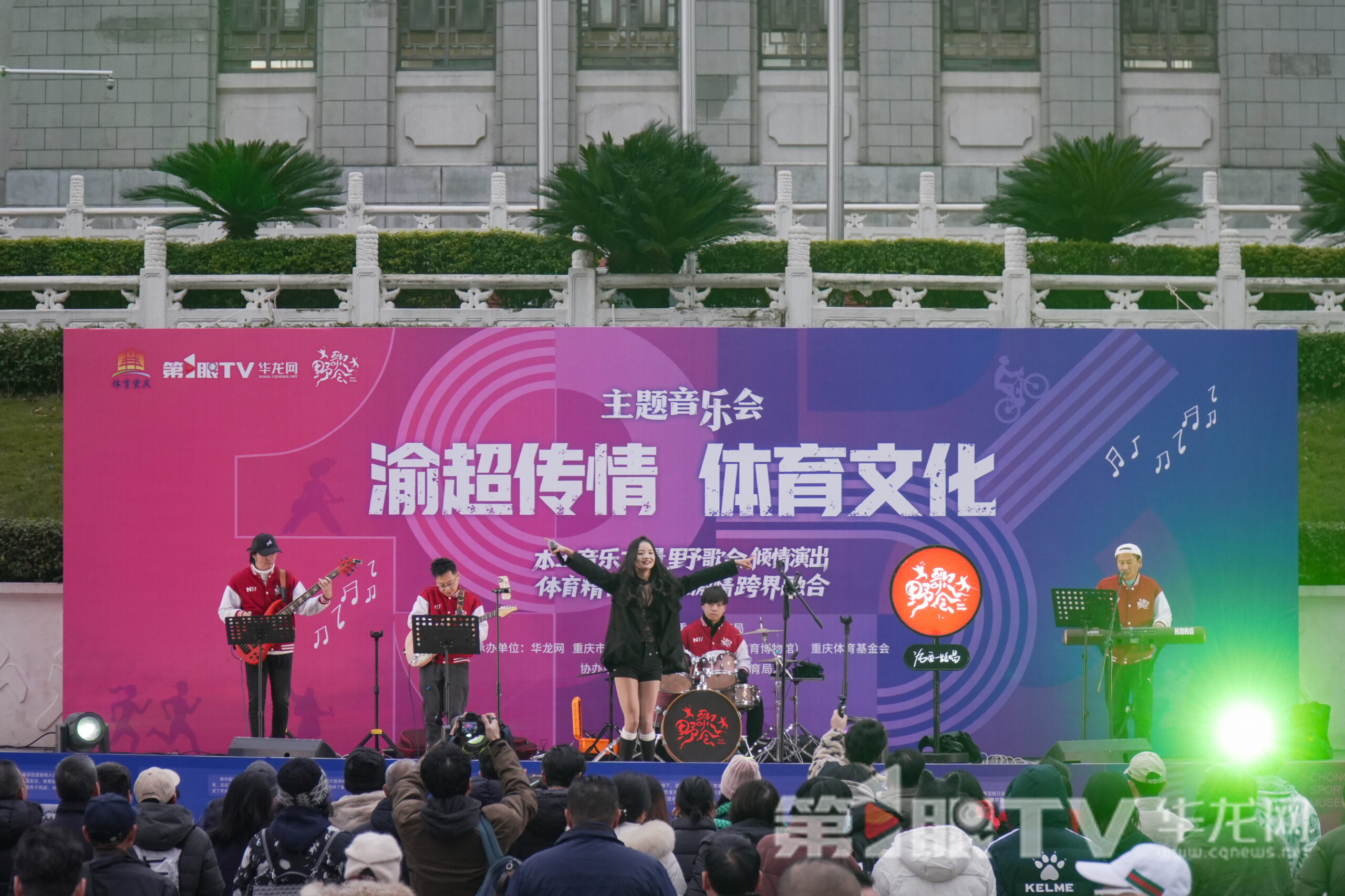
Video | On the Final Day of the New Year Holiday, a Passionate «Wild Singing Gathering» Takes Place Outside the «Chongqing Super League» Arena
News Article
Major Breakthrough in Renewable Energy Announced
A new solar panel technology has achieved a record efficiency of 30% in laboratory conditions, a significant leap forward for the industry. This advancement promises to make solar energy more affordable and widespread.
Key Details:
The new cells use a perovskite-silicon tandem structure.
Commercial production could begin within two years.
This efficiency could reduce the cost of solar electricity by an estimated 25%.
Experts in the field have hailed the development as a potential game-changer for global energy markets. The technology focuses on capturing a broader spectrum of sunlight, which has been a major challenge for traditional silicon panels.
Further large-scale testing is required before mass deployment. The research team is now working on improving the long-term stability of the panels to ensure they can withstand decades of outdoor use.
The successful lab results have already attracted significant interest from major energy companies looking to invest in next-generation renewable infrastructure.
solar farm
A solar farm is a large-scale installation of photovoltaic panels designed to generate electricity from sunlight. Historically, the concept grew from small experimental solar arrays in the mid-20th century, with utility-scale farms becoming prominent in the 2000s due to advancing technology and clean energy policies. These facilities now play a crucial role in the global transition toward renewable energy sources.
laboratory
A laboratory is a controlled environment designed for scientific research, experiments, and analysis. Its history dates back to ancient alchemical workshops, but the modern laboratory emerged during the Scientific Revolution of the 16th and 17th centuries, becoming the foundational workspace for discoveries in chemistry, biology, and physics. Today, laboratories are essential in fields ranging from medicine and technology to forensics and education.
perovskite-silicon tandem structure
A perovskite-silicon tandem structure is a cutting-edge type of solar cell that combines two different light-absorbing materials to achieve higher efficiency than traditional silicon cells alone. It emerged in the 2010s as researchers sought to overcome the theoretical efficiency limits of silicon by stacking a perovskite layer on top to capture different wavelengths of light. This technology represents a major frontier in renewable energy, promising more powerful and potentially cheaper solar panels for the future.
silicon panels
«Silicon panels» refer to photovoltaic solar panels, which are a modern technological development rather than a traditional cultural site. Their history is rooted in the 20th-century discovery of the photovoltaic effect and subsequent advancements in semiconductor manufacturing, primarily using silicon. Today, they are a global symbol of the transition to renewable energy and are often installed in large arrays known as solar farms.
global energy markets
Global energy markets are the worldwide systems of trade and exchange for primary energy sources like oil, natural gas, and electricity. Their modern history is largely defined by the 20th-century dominance of oil, shaped by events such as the 1973 OPEC embargo, which demonstrated the profound geopolitical influence of energy producers. Today, these markets are undergoing a significant transition, driven by the rise of renewable energy, climate change policies, and shifting geopolitical dynamics.
large-scale testing
«Large-scale testing» does not refer to a specific physical place or cultural site. Instead, it is a process, most commonly associated with public health initiatives like mass COVID-19 screening, or with technological development like beta testing software with many users. Historically, the concept gained significant global prominence during the 2020-2021 COVID-19 pandemic as a key strategy for monitoring and controlling the virus’s spread.
mass deployment
«Mass deployment» is not a specific place or cultural site. It is a military or logistical term referring to the rapid, large-scale movement of personnel, equipment, or resources (like software or technology) to a specific area or for a specific purpose.
Historically, the concept is often associated with major military mobilizations, such as the deployment of Allied forces in World War II, or in modern contexts, the widespread rollout of new technologies across a network.
renewable infrastructure
«Renewable infrastructure» refers to the systems and facilities that generate energy from naturally replenishing sources like sunlight, wind, and water. Historically, while water and wind power have ancient roots, modern large-scale infrastructure expanded rapidly in the late 20th and 21st centuries to address climate change and energy security. This shift represents a global transition from fossil fuels toward sustainable energy grids, including solar farms, wind turbines, and hydropower plants.
Здесь был дан «первый удар молотка» на земельных а...
Мы используем файлы cookie, чтобы обеспечить удобство работы с сайтом и анализировать трафик. Продолжая использовать сайт, вы соглашаетесь с нашей
[Политикой cookie]. 🍪