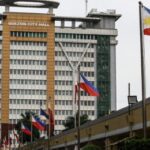
The Quezon City Government, in partnership with ANTHILL Fabric Gallery, has launched an intensive three-month weaving program to train 20 women artisans, marking a major step toward the opening of the ANTHILL-QC Textile Circularity Hub in April 2026.
Led by the city’s Climate Change and Environmental Sustainability Department (CCESD) and the Small Business and Cooperatives Development and Promotions Office, the initiative brings together sustainability and livelihood, empowering women while advancing circular textile production.
ANTHILL, known for championing traditional weaving communities across the Philippines, is guiding the program to blend heritage craftsmanship with modern circular design, transforming textile waste into valuable new materials.
The Textile Circularity Hub, unveiled in October 2025, is equipped with weaving looms, cutting machines, and dedicated production and showroom spaces, positioning Quezon City as a leader in sustainable urban innovation.
Women artisans from Barangay Payatas are now undergoing hands-on training in weaving techniques that emphasize zero-waste practices. From loom preparation and warping to plain weave methods and the use of retaso (fabric scraps), participants are learning how discarded textiles can be reimagined into high-quality woven products.
The mayor underscored the deeper impact of the initiative, calling it both an environmental and social investment.
“In Quezon City, caring for our environment means caring for our people. Our Textile Circularity Hub transforms what others discard into opportunity, giving textile waste new life while equipping women with skills and income for a more secure future. This is sustainability in action.”
The program began with an orientation on January 29–30 and formally opened on February 2. Training will run through April under the mentorship of master weavers from Argao, Cebu.
At the end of the program, 10 participants will be selected as full-time weavers based on skill, commitment to circularity, and overall performance. These artisans will play a vital role in operating the hub, producing upcycled, high-quality textile goods once it opens.
For inquiries on the hub and upcoming workshops, contact CCESD at 8988-4242 (locals 8348, 8349, 8359, or 8360) or email ClimateChange@quezoncity.gov.ph.
Quezon City
Quezon City, located in Metro Manila, Philippines, was established in 1939 and served as the country’s capital from 1948 to 1976. It was named after President Manuel L. Quezon, who envisioned it as a new national capital to replace Manila. Today, it is the largest city in Metro Manila by population and area, known for its cultural institutions like the Quezon Memorial Circle and the University of the Philippines Diliman.
ANTHILL Fabric Gallery
ANTHILL Fabric Gallery is a social enterprise based in the Philippines that preserves and promotes traditional Philippine textile arts. Founded in 2011 by Anya Lim and her team, it works directly with indigenous weavers from various communities to create sustainable livelihoods and revive ancient weaving techniques. The gallery serves as both a retail space and a cultural hub, showcasing handwoven fabrics and the stories of the artisans behind them.
ANTHILL-QC Textile Circularity Hub
ANTHILL-QC Textile Circularity Hub is a sustainable fashion initiative based in Quezon City, Philippines, that transforms post-consumer textile waste into handwoven, eco-friendly products. Founded by Anya Lim and a team of artisans, it merges traditional Filipino weaving techniques with modern circular economy principles, aiming to reduce environmental impact while empowering local communities. The hub also serves as an educational space, promoting zero-waste practices and preserving indigenous craftsmanship.
<div class="my-4 p-4 rounded-lg shadow-md bg-blue
ANTHILL Fabric Gallery
ANTHILL Fabric Gallery is a unique cultural and social enterprise located in Cebu, Philippines, that showcases handwoven textiles and traditional Filipino craftsmanship. Founded in 2011, it serves as a platform to preserve indigenous weaving techniques while empowering local communities, particularly women, through sustainable livelihoods. The gallery also features a museum and workshop space, highlighting the rich history and artistry of Philippine fabric-making.
ANTHILL-QC Textile Circularity Hub
ANTHILL-QC Textile Circularity Hub is a sustainable fashion and social enterprise based in Quezon City, Philippines, that repurposes textile waste into handcrafted products. Founded by Anya Lim and her team, it evolved from a pre-pandemic advocacy for zero-waste fashion into a community-driven hub that trains local artisans, particularly women and indigenous weavers. The hub promotes circular economy principles by upcycling discarded fabrics, reducing environmental impact while preserving traditional Filipino craftsmanship.
Quezon City
Quezon City, located in the Philippines, was named after President Manuel L. Quezon and served as the country’s capital from 1948 to 1976. It was established in 1939 to replace Manila as the national capital, aiming to decongest the city and create a new administrative center. Today, it is the largest city in Metro Manila by population and area, known for its vibrant cultural scene, universities, and landmarks like the Quezon Memorial Circle.
Barangay Payatas
Barangay Payatas is a densely populated district in Quezon City, Philippines, best known for its history as the site of a massive open dumpsite that operated from the 1970s until its closure in 2010. The community grew rapidly around waste scavenging and recycling, facing significant environmental and health challenges, but has since seen efforts toward rehabilitation and sustainable development. Today, Payatas symbolizes both the hardships of urban poverty and the resilience of its residents.
Argao, Cebu
Argao, a municipality in Cebu, Philippines, is known for its well-preserved Spanish colonial heritage, particularly its centuries-old stone houses and the historic Church of San Miguel Arcangel, which was built in the 18th century. The town played a significant role during the Spanish colonial period as a center for agriculture and trade, and it is also famous for its traditional woven products and the production of *torta*, a local delicacy. Today, Argao is celebrated for its cultural festivals, such as the *Sugat sa Argao*, which showcase its deep-rooted history and religious traditions.
Quezon Memorial Circle
The Quezon Memorial Circle is a national park and shrine located in Quezon City, Philippines, built to honor the country’s second president, Manuel L. Quezon. The site’s centerpiece is a 66-meter-tall Art Deco mausoleum containing Quezon’s remains, with the structure symbolizing the three main island groups of the Philippines. Originally part of a larger planned capital city, the circle was established in the 1940s and has since become a major public space, featuring gardens, a museum, and recreational areas.
University of the Philippines Diliman
The University of the Philippines Diliman, established in 1908 as the flagship campus of the University of the Philippines system, has grown into the country’s premier national university. Located in Quezon City, it played a pivotal role in shaping Filipino intellectual and political history, serving as a hub for activism during the Marcos dictatorship. Today, it remains renowned for its academic excellence, vibrant campus culture, and iconic landmarks like the Oblation statue and the Sunken Garden.
Metro Manila
Metro Manila, the national capital region of the Philippines, is a sprawling metropolis composed of 16 cities, including the historic capital Manila and the major business hub Makati. Its history is deeply rooted in Spanish colonization, with Manila founded in 1571 as the center of the Spanish East Indies, later experiencing American rule, Japanese occupation during World War II, and devastating battles like the 1945 Manila Massacre. Today, it is a vibrant, densely populated urban center blending colonial-era architecture, modern skyscrapers, and diverse cultural influences.