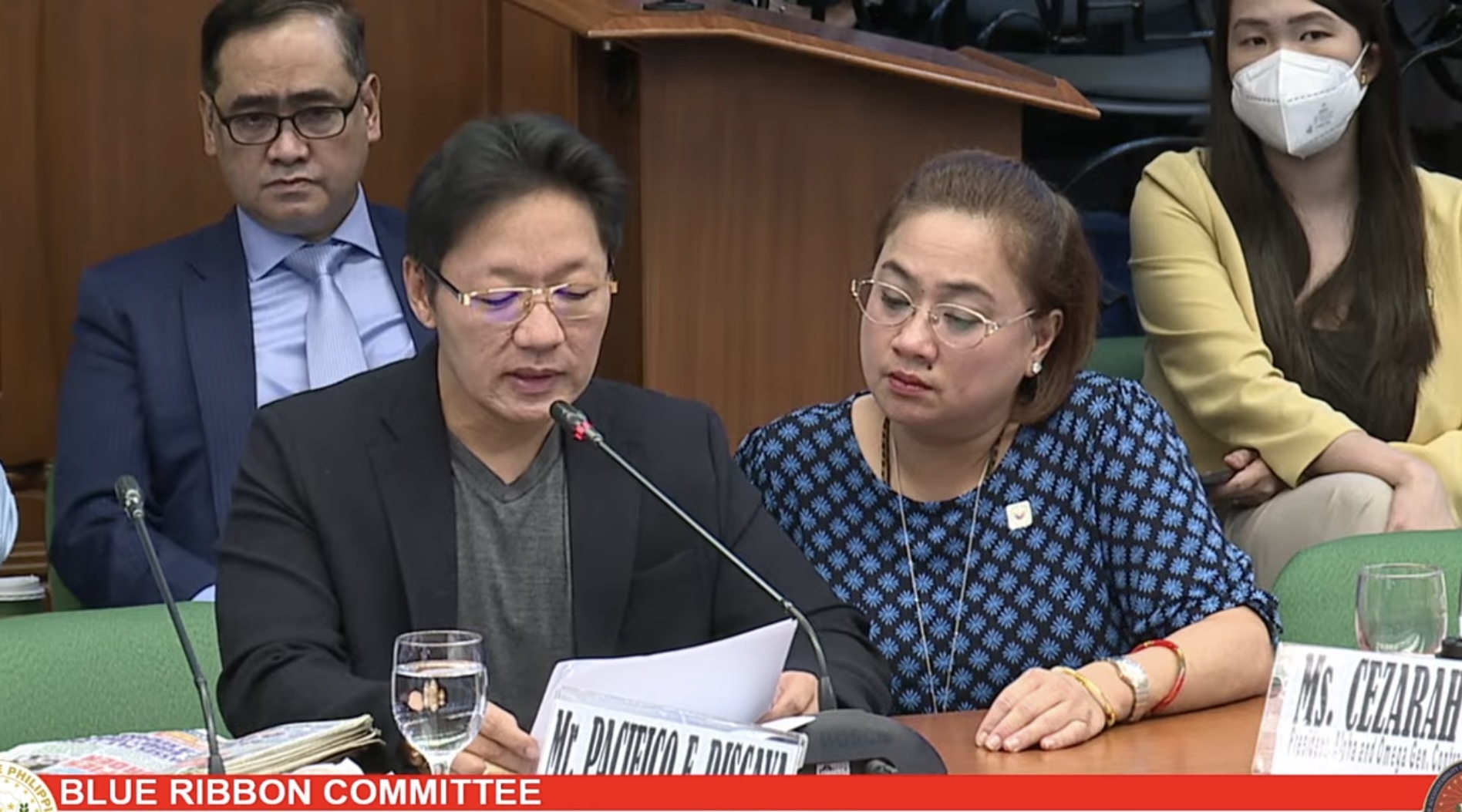
Nine accused in Bulacan flood control mess, including Discayas, now in custody.
Interior and Local Government Secretary Jonvic Remulla on Monday said nine of the 11 accused in the flood control mess in Bulacan are now in custody following the issuance of an arrest warrant against them.
In an ambush interview, Remulla identified the arrested individuals as:
Cezarah Rowena Cruz Discaya
Pacifico “Curlee” F. Discaya II
Merg Jaron Caparas Laus
Brice Ericson Diaz Hernandez
Jaypee De Leon Mendoza
Norberto De Leon Santos
Juanito Coronel Mendoza
Floralyn Yutuc Simbulan
Ma. Roma Angeline Discaya Rimando
Meanwhile, the two remaining accused in the P53.9-million flood control case who are still at large were identified as Ernesto Galang and Lorenzo Pagtalunan.
“Just wait for the commitment order from our judge on where they will be imprisoned, where Curlee will be imprisoned. But in all probability, they will also be imprisoned here in Bulacan,” Remulla said.
Remulla made the announcement after he personally oversaw the return of the warrants of arrest to the Regional Trial Court (RTC) Branch 20 in Malolos City.
The accused are facing one count of violation of Section 3(e) of the Anti-Graft and Corrupt Practices Act, and one count of Malversation of Public Funds or Property Through Falsification of Public Documents under the Revised Penal Code.
Bulacan
Bulacan is a province in the Philippines known for its rich history and cultural heritage, playing a key role in the country’s fight for independence. It is home to the historic Barasoain Church in Malolos City, where the First Philippine Republic was established in 1899. The province is also famous for its vibrant festivals, traditional crafts like fireworks and pastries, and landmarks such as the Biak-na-Bato National Park.
Regional Trial Court (RTC) Branch 20
The Regional Trial Court (RTC) Branch 20 is a judicial body in the Philippines, typically part of a larger RTC system established under the country’s Judiciary Reorganization Act of 1980. Its specific history is tied to the local jurisdiction it serves, handling both civil and criminal cases. As a trial court, it plays a key role in the Philippine legal system by adjudicating disputes at the first instance level.
Malolos City
Malolos City, located in the province of Bulacan, Philippines, is historically significant as the site of the First Philippine Republic, established in 1899. It served as the capital of the revolutionary government under President Emilio Aguinaldo, where the Malolos Constitution was drafted. Today, it is a bustling urban center known for its well-preserved heritage sites, including the Malolos Cathedral and the Barasoain Church.
Bulacan
Bulacan
Bulacan is a province in the Philippines, historically significant as a key center of the Philippine Revolution against Spanish colonial rule. It is home to the Barasoain Church in Malolos, where the First Philippine Republic was established and the Malolos Constitution was drafted in 1899. Today, Bulacan is known for its rich cultural heritage, festivals, and thriving industries.
Barasoain Church
Barasoain Church, located in Malolos, Bulacan, Philippines, is a historic Roman Catholic church renowned for its role in the country’s political history. Built in 1888, it served as the site of the First Philippine Republic’s inauguration and the drafting of the Malolos Constitution in 1899. Today, it stands as a national shrine and a symbol of Filipino democracy and independence.
Malolos City
Malolos City, located in the province of Bulacan, Philippines, is historically significant as the site where the First Philippine Republic was established in 1899. It served as the capital of the revolutionary government under President Emilio Aguinaldo, and the Malolos Constitution, the first republican constitution in Asia, was drafted and ratified here. Today, it is known for its well-preserved heritage sites, including the Malolos Cathedral and the Barasoain Church, which commemorate its pivotal role in Philippine history.
Biak-na-Bato National Park
Biak-na-Bato National Park, located in Bulacan, Philippines, is a historic site known for its natural limestone caves and rock formations. It served as the headquarters of the Philippine revolutionary forces during the struggle for independence from Spain, where the Pact of Biak-na-Bato was signed in 1897. Today, it is a protected area offering hiking, spelunking, and a glimpse into the country’s revolutionary past.
Regional Trial Court (RTC) Branch 20
The Regional Trial Court (RTC) Branch 20 is a judicial court located in the Philippines, typically handling civil and criminal cases within its designated jurisdiction. It operates under the Philippine judicial system, which was established during the American colonial period and later reorganized under the 1987 Constitution. Branch 20, like other RTC branches, serves as a key venue for the resolution of legal disputes and the administration of justice in its local area.
Malolos Cathedral
Malolos Cathedral, officially known as the Minor Basilica of Our Lady of Immaculate Conception, is a historic Roman Catholic church in Bulacan, Philippines. Originally built in the 16th century, it was reconstructed in the 19th century and famously served as the site for the inauguration of the First Philippine Republic under President Emilio Aguinaldo in 1899. The cathedral remains an important national symbol of Filipino independence and religious heritage.
First Philippine Republic
The First Philippine Republic, also known as the Malolos Republic, was established on January 23, 1899, following the Philippine Declaration of Independence from Spanish colonial rule. It was the first constitutional republic in Asia, with Emilio Aguinaldo as its president and a government based in Malolos, Bulacan. However, the republic was short-lived, as it was soon confronted by and ultimately dissolved during the Philippine-American War, ending with Aguinaldo’s capture in 1901.
Malolos Constitution
The Malolos Constitution, formally known as the “Constitución Política de la República Filipina,” was the first republican constitution in Asia. It was drafted and ratified by the Malolos Congress in 1899 during the Philippine Revolution, establishing the short-lived First Philippine Republic under President Emilio Aguinaldo. Despite never being fully implemented due to the Philippine-American War, it remains a significant symbol of Filipino nationalism and democratic aspirations.