Jinggoy Estrada posts P90,000 bail for graft case tied to flood control scandal.
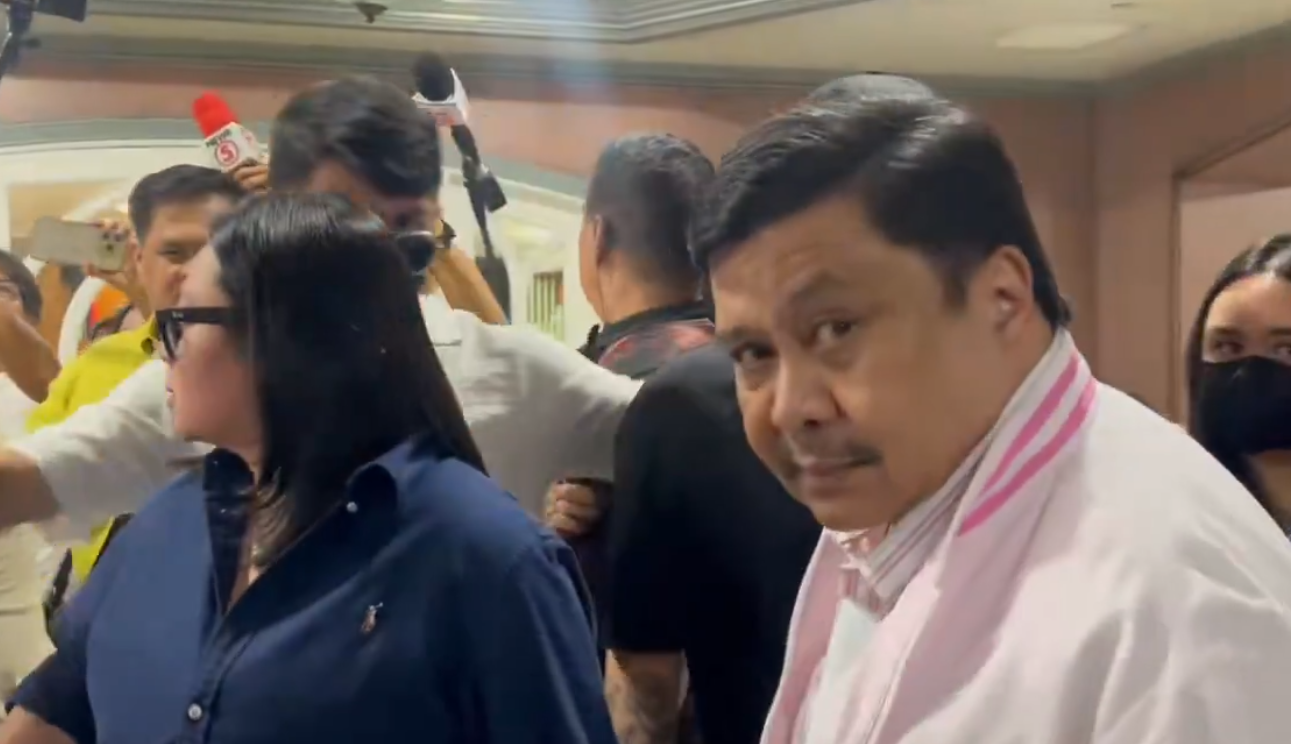
Senator Jinggoy Estrada on Friday posted a P90,000 bail with the Sandiganbayan for his temporary liberty amid a graft case filed against him over his alleged involvement in the flood control mess.
Estrada arrived at the Sandiganbayan with his daughters Janella and Julienne.
Senator Jinggoy Estrada arrives in the Sandiganbayan to post P90,000 bail for the graft charge leveled against him in connection with his alleged involvement in the flood control mess
He is also facing another graft and plunder case in the Fifth Division of the anti-graft court.
Estrada earlier filed an urgent motion to withdraw the issuance of warrant of arrest against him arguing that he is yet to be informed of the basis of the criminal charges leveled against him.
The counsel for Estrada told reporters that they filed the urgent motion to withdraw the issuance of warrant of arrest against Estrada before the Sandiganbayan Second and Fifth Divisions on Tuesday morning, or during the time that the anti-graft court is yet to issue any arrest warrant against Estrada.
“We filed it before lunch. We kind of understand that what we filed was extraordinary, but we hope the Sandiganbayan justices will understand that our client has yet to receive the Ombudsman and Department of Justice resolutions charging him of these crimes,” the counsel told reporters.
“How can we file a proper motion when we do not know the basis of these charges?” he added.
Sandiganbayan
The Sandiganbayan is a special appellate court in the Philippines established in 1978, primarily tasked with adjudicating criminal and civil cases involving graft, corruption, and other offenses committed by public officials. Its creation was part of the government’s effort to combat systemic corruption, and it operates with the same rank and privileges as the Court of Appeals. The court has played a pivotal role in high-profile cases, including the prosecution of former President Joseph Estrada for plunder.
Fifth Division
The Fifth Division is a historic military and cultural site in Chile, located in the city of Valparaíso. It originally served as a key military headquarters for the Chilean Army’s Fifth Division, playing a role in the country’s defense and regional administration. Today, the site is recognized for its architectural and historical significance, often visited as part of the city’s heritage tours.
Sandiganbayan
The Sandiganbayan is a special appellate court in the Philippines established to try criminal and civil cases involving graft and corruption, particularly those committed by public officials. It was created under Presidential Decree No. 1606 in 1978 during the administration of President Ferdinand Marcos, as part of a broader effort to combat corruption in government. The court’s name is derived from the Filipino word “sandigan,” meaning “pillar” or “foundation,” reflecting its role in upholding justice and accountability in public service.
Sandiganbayan
<div
Sandiganbayan
The Sandiganbayan is a special appellate court in the Philippines established in 1978 to handle criminal and civil cases involving graft and corruption committed by public officials, particularly those in high-ranking government positions. Its creation was part of the country’s efforts to combat systemic corruption, and it operates as a collegial court with multiple divisions. The court plays a crucial role in upholding accountability and the rule of law in the Philippine government.
Fifth Division
The Fifth Division is a historic military unit and cultural site, most famously associated with the Japanese Imperial Army’s 5th Division, which played a significant role in the Sino-Japanese and Russo-Japanese Wars. Its legacy is often commemorated at sites like the former headquarters in Hiroshima, Japan, which now serves as a museum detailing the division’s history and the broader context of Japanese militarism. Today, the location stands as a reminder of Japan’s wartime past and a place for reflection on peace and history.