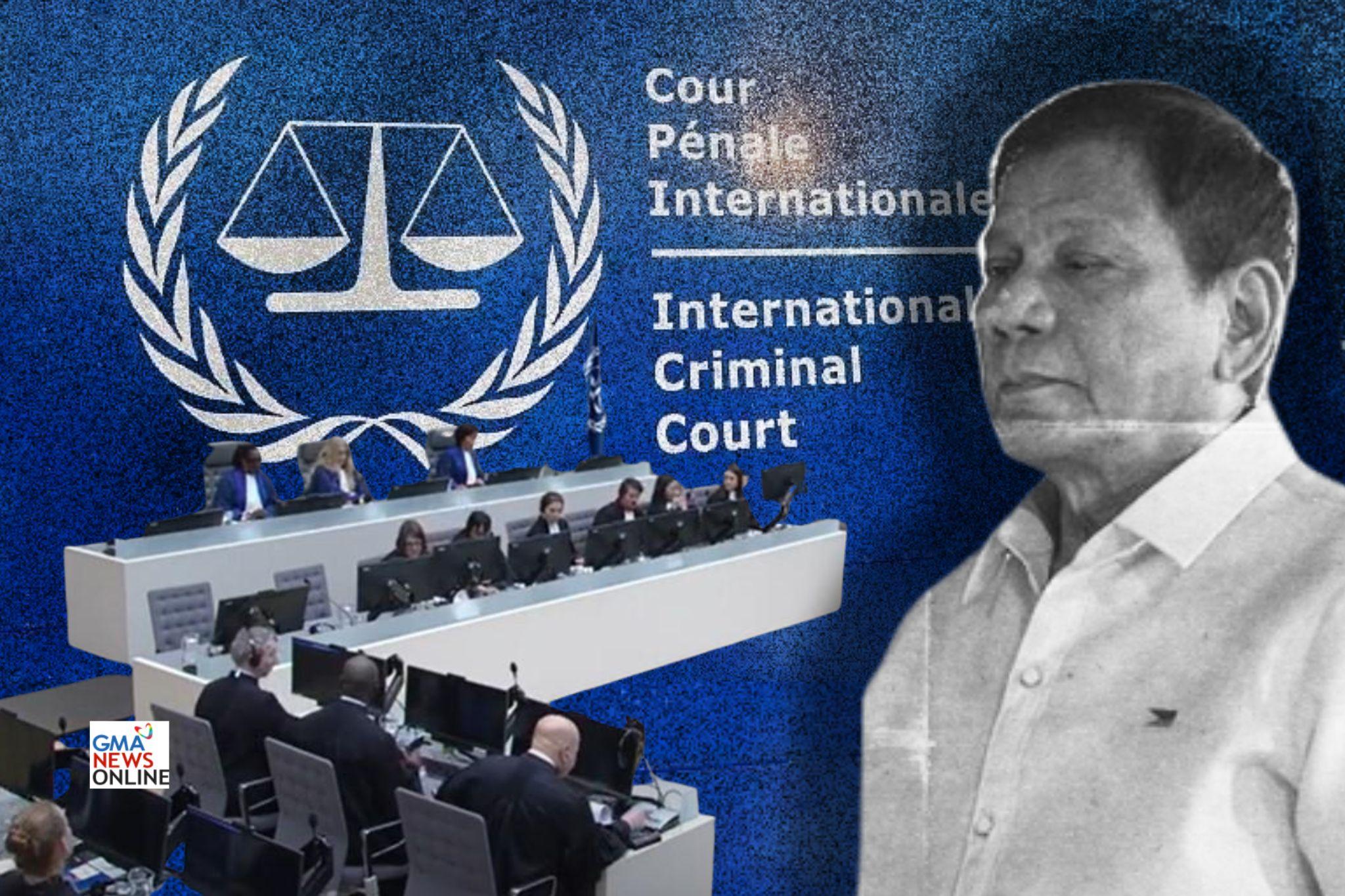
The International Criminal Court (ICC) Pre-Trial Chamber is proceeding against former President Rodrigo Duterte.
Based on the documents submitted by his Defense team, the Office of the Prosecutor, the Office of the Public Counsel for Victims, and other materials published on the ICC Registry between March 2025 and February 2026, here is a look at the numbers defining the case against the former President.
The Charges and the Casualties
3 Counts of crimes against humanity (murder and attempted murder) charged against former President Duterte, defined “thematically” in the Document Containing the Charges (DCC):
- Count 1: Murders in or around Davao City during the Mayoral period by the Davao Death Squad
- Count 2: Murders of “high-value targets” during the presidential period
- Count 3: Murders and attempted murders in barangay clearance operations during the presidential period
(For Counts 2 and 3, the crimes are allegedly committed by members of the “national network,” referring to a network of perpetrators, composed of law enforcement officers, non-police assets, and hitmen)
49 Specific incidents of murder and attempted murder detailed, but currently redacted, in the DCC to support these counts.
78 Specific victims (76 murders, 2 attempted murders) listed in the DCC related to these 49 incidents. The Prosecution has clarified that these incidents and victims are a “non-exhaustive list” intended to provide examples of what it describes as a “widespread and systematic attack against the civilian population in the Philippines.”
1,700 The approximate number of people Mr. Duterte publicly claimed during a speech in December 2015 to have killed in Davao City during his time as Mayor.
5,281 The number of “drug personalities” who “died in anti-drug operations” between Jul 1, 2016 and Feb 28, 2019, as officially acknowledged by the Philippine Drug Enforcement Agency.
20,322 The estimated total killings suggested by government data (3,967 “drug personalities who died in anti-drug operations” + 16,355 “homicide cases under investigation”) between Jul 1, 2016 and Nov 27, 2017, reported as occurring under “fighting illegal drugs” in the Duterte administration’s 2017 Year-End Report.
The Evidence
5,145 The total number of items of evidence disclosed by the Prosecution, and is now “in possession” by the Defense as of Feb 5, 2026.
49,676 The total number of pages of evidence disclosed to the Defense as of Feb 5, 2026, excluding hours of audio-video material.
129,358 The total number of items in the Prosecution’s internal database as of Apr 2025.
108 The number of additional items the Defense requested approval to add to its List of Evidence on Feb 18. 2026, as granted by the Pre-Trial Chamber on Feb 20, 2026. This is up from the 78 items granted by the Pre-Trial Chamber to be added to the Defense’s list on Feb 6. The Defense originally disclosed 30 items on Sep 5-11, 2025.
1,303 The volume of items of evidence disclosed by the Prosecution specifically between July and December 2025, which includes the following classified items:
- 906 items, “INCRIM” or incriminating material
- 389 items, Rule 77 evidence that Defense can inspect
- 8 items, “PEXO” or potentially exonerating evidence
The Victims’ Participation
539 The total number of victims authorized by the Pre-Trial Chamber I to participate in the proceedings across two decisions:
- 39 admitted in the first decision (29 Group A + 10 Group C)
- 500 admitted in the second decision
The ICC Registry classifies applicants for the victim admission process into three categories: those who clearly qualify as victims (“Group A”); those who clearly do not qualify as victims (“Group B”); and those for whom the Registry could not make a clear determination for any reason (“Group C”).
531 The total number of applications for victim participation in the pre-trial proceedings, as assessed by the Victims Participation and Reparations Section (V