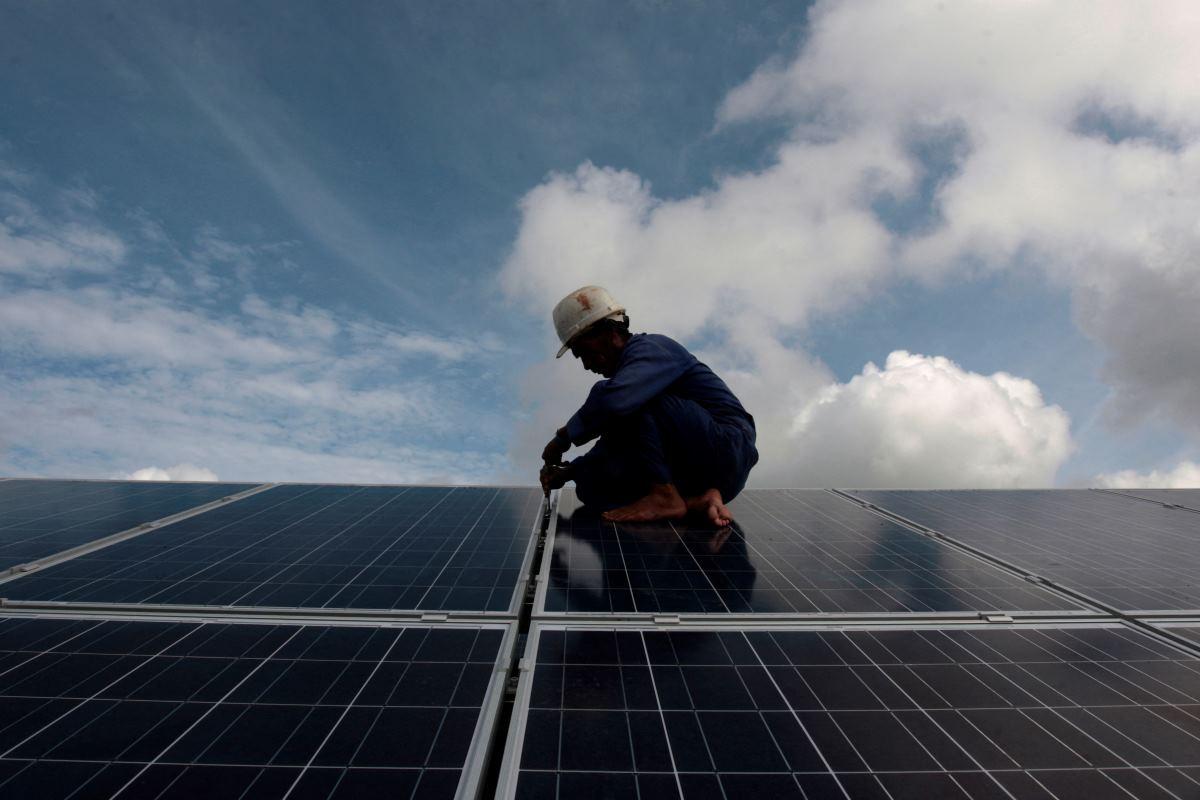
The Department of Energy (DOE) reported Saturday that five renewable energy projects with a combined capacity of 128.9 MW were now operational, citing these as early gains towards boosting the country’s green energy portfolio within April 2026.
Marked as newly operational facilities as of April 17 are solar and biomass projects in the following:
- 20.6 MW Hermosa Solar Power Project of Solana Solar Alpha Inc.
- 17.5 MW Taft Solar Power Project of Taft Solar Energy Corporation
- 8 MW Biomass Cogeneration Plant (Expansion Project) of Central Azucarera de San Antonio
- 52.8 MW Cordon Solar Power Project of Greenergy For Global, Inc.
- 30 MW Arayat 3A Solar Power Project of Citicore Solar Pampanga 1, Inc.
These projects are part of the DOE’s push to have 25 renewable energy storage projects, with a combined capacity of 1,471 MW, up and running by the end of the month.
The 20 other projects have entered the final phases and are targeted for operations also within April 2026.
The DOE said it is coordinating with the National Grid Corporation of the Philippines (NGCP), the Energy Regulatory Commission (ERC), and the Independent Electricity Market Operator of the Philippines (IEMOP) to ensure the timely completion of all 25 projects.
Their collaboration seeks to address outstanding transmission, interconnection, inspection, registration, and metering requirements, and to prevent avoidable delays in commercial operations.
“We commend the developers and all concerned agencies for moving these projects forward with urgency… Every renewable energy project brought online strengthens our path toward energy independence, reduces our exposure to imported fuel volatility, and helps secure a cleaner and more resilient power system,” Energy Secretary Sharon Garin said.
“At a time of continuing volatility arising from the developments in the Middle East, fast-tracking our country’s renewable energy capacity is a critical strategic action to protect the Filipino people and the Philippine economy,” she added.
Hermosa Solar Power Project
The Hermosa Solar Power Project is a large-scale solar energy facility located in southern Arizona, developed to harness the region’s abundant sunlight for clean electricity generation. Construction began in the 2010s, and it became operational to support renewable energy goals, contributing power to the local grid. The project represents a modern shift toward sustainable energy infrastructure, though it does not have a long historical background like ancient cultural sites.
Taft Solar Power Project
The Taft Solar Power Project is a large-scale solar energy facility located near Taft, California, in Kern County. Developed by First Solar, the project began commercial operations in 2015 and consists of multiple photovoltaic solar arrays that generate enough electricity to power thousands of homes. It represents a significant step in California’s transition to renewable energy, helping reduce reliance on fossil fuels while utilizing the region’s abundant sunshine.
Biomass Cogeneration Plant (Expansion Project) of Central Azucarera de San Antonio
The Biomass Cogeneration Plant (Expansion Project) of Central Azucarera de San Antonio in the Philippines is a facility that converts agricultural waste, primarily bagasse from sugarcane processing, into electricity and steam. This expansion project enhances the plant’s capacity to generate renewable energy, supporting the sugar mill’s operations and supplying excess power to the local grid. Historically, the plant builds on the mill’s long-standing role in the sugar industry, modernizing its energy infrastructure to promote sustainability and reduce reliance on fossil fuels.
</div
Hermosa Solar Power Project
The Hermosa Solar Power Project is a large-scale solar energy facility located in southern Arizona, near the town of Benson. Developed by EDF Renewables, it began commercial operation in 2018 and has a capacity of 100 megawatts, generating enough electricity to power approximately 30,000 homes. The project contributes to the region’s renewable energy goals while supporting the local economy through job creation and clean energy production.
Taft Solar Power Project
The Taft Solar Power Project, located in Kern County, California, is a large-scale photovoltaic solar farm that began commercial operations in 2016. Developed by First Solar and owned by Southern Power and Turner Renewable Energy, it has a capacity of 150 megawatts and helps provide clean energy to the local grid. The project is part of the broader expansion of solar energy in the region, leveraging California’s abundant sunlight to reduce reliance on fossil fuels.
Biomass Cogeneration Plant (Expansion Project) of Central Azucarera de San Antonio
The Biomass Cogeneration Plant Expansion Project at Central Azucarera de San Antonio (CASA) in the Philippines involves increasing the facility’s capacity to generate electricity from sugarcane waste (bagasse). Originally established in the early 20th century, the sugar mill has modernized to convert agricultural byproducts into renewable energy, supplying power both to its own operations and to the local grid. This expansion supports sustainable energy goals while preserving the site’s long history in the Philippine sugar industry.
Cordon Solar Power Project
The Cordon Solar Power Project is a large-scale solar energy facility located in the Atacama Desert of northern Chile, one of the sunniest regions on Earth. Developed by the Spanish company Solarpack, the project began operations in 2019 and has a capacity of 122 megawatts, helping to power the country’s growing renewable energy grid. Situated near the historic town of Calama, it contributes to Chile’s ambitious goal of generating 70% of its electricity from renewable sources by 2030.
Arayat 3A Solar Power Project
The Arayat 3A Solar Power Project is a large-scale solar energy facility located in Arayat, Pampanga, Philippines, developed to harness renewable energy and reduce reliance on fossil fuels. Operational since the late 2010s, it is part of the country’s efforts to expand clean energy capacity and meet growing electricity demands. The project contributes to local sustainable development by providing clean power and supporting national renewable energy targets.
National Grid Corporation of the Philippines (NGCP)
The National Grid Corporation of the Philippines (NGCP) is a privately owned company responsible for operating, maintaining, and developing the country’s power transmission network. It was established in 2008 after winning a 25-year concession to manage the state-owned transmission assets, following the passage of the Electric Power Industry Reform Act (EPIRA) in 2001. NGCP plays a critical role in ensuring reliable electricity delivery across the Philippine archipelago.
Energy Regulatory Commission (ERC)
The Energy Regulatory Commission (ERC) is a government agency in the Philippines responsible for regulating the country’s electric power industry. Established under the Electric Power Industry Reform Act (EPIRA) of 2001, it was created to promote competition, ensure consumer protection, and enforce rules for a transparent and efficient energy market. The ERC sets electricity rates, issues licenses, and oversees compliance to foster a reliable and affordable power sector.
Independent Electricity Market Operator of the Philippines (IEMOP)
The Independent Electricity Market Operator of the Philippines (IEMOP) is a private, non-stock corporation that serves as the central market operator for the country’s Wholesale Electricity Spot Market (WESM). Established in 2018, it took over operations from the Philippine Electricity Market Corporation (PEMC) to ensure independent, transparent, and efficient management of electricity trading. IEMOP plays a crucial role in the Philippines’ power sector by facilitating competition among generators and retailers, thereby helping to stabilize electricity prices and supply.