Exploring Green Ward’s charm beyond nature, the boundary line was the strongest!
“Does Yokohama’s Midori Ward have charms that rival other wards?”
First, I asked the team members.
“It’s rich in nature and has many parks!”
“Agriculture is thriving! I think ‘Hamanashi’ and ‘Hamabudo’ grapes, which aren’t found in markets, were produced in Midori Ward…”
“Factories! But I think there are more in Kohoku and Tsurumi wards.”
Let’s ask for Midori Ward’s charms on social media too!
We received comments, but most were about nature.
Would this curiosity, seeking charms beyond nature and factories, end up scrapped?
But I want to find Midori Ward’s charm.
Thinking this, I stared at a map of Yokohama City.
Then, I realized a new charm.
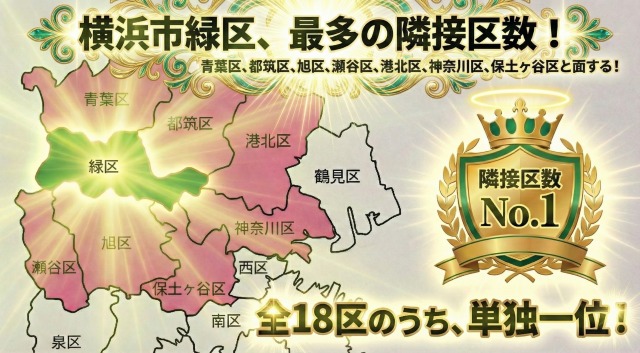
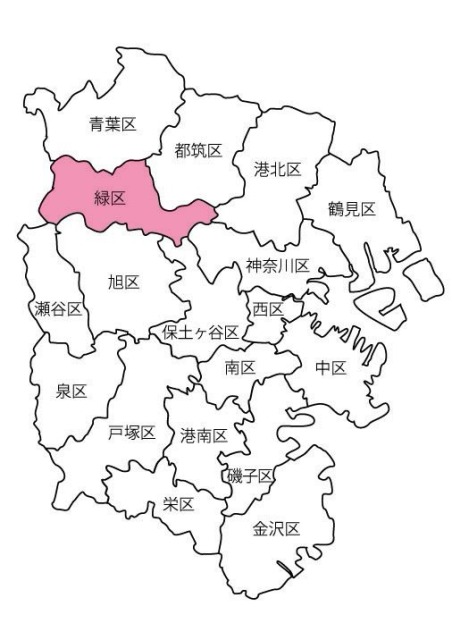
“Midori Ward borders the most other wards!!”
Indeed, Midori Ward borders:
・Aoba Ward
・Tsuzuki Ward
・Kohoku Ward
・Kanagawa Ward
・Hodogaya Ward
・Asahi Ward
・Seya Ward
A total of 7 wards.
Hodogaya Ward and Minami Ward, located in the center, each border 6 wards.
Without a doubt, Midori Ward has the most ward borders!
“This is it!!! Let’s go!! A border tour!!”
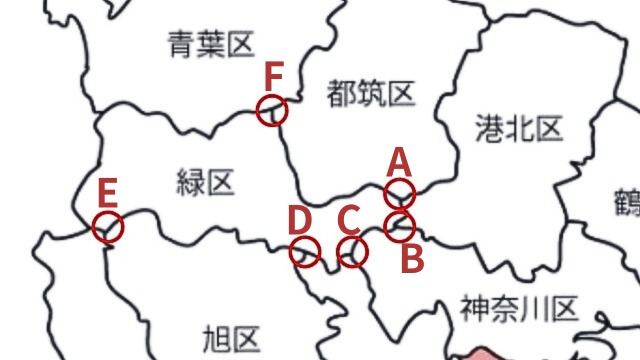
This time, we will investigate 6 border points where Midori Ward + 2 other wards meet, in order from A.
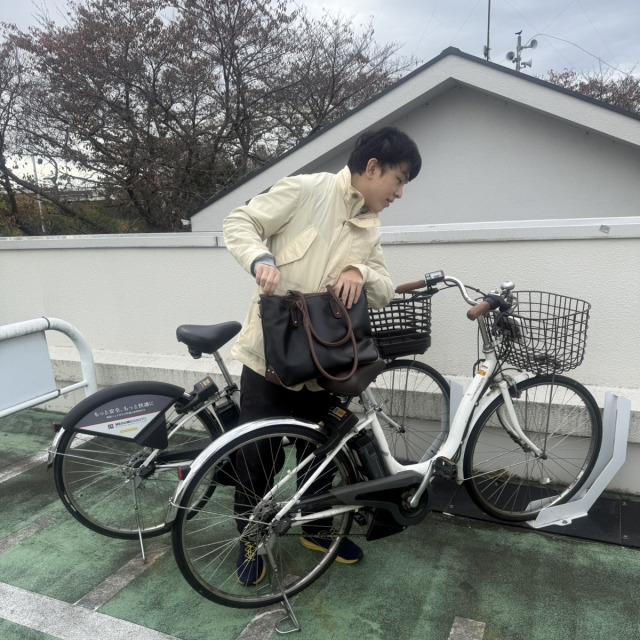
Considering slopes and narrow paths, our mode of transport is an electric-assist share bicycle!
We’ll race around Midori Ward.
Share bicycles are convenient, right?
Starting from Kamoi Station!
First, we head for border point A where Midori, Tsuzuki, and Kohoku wards meet.
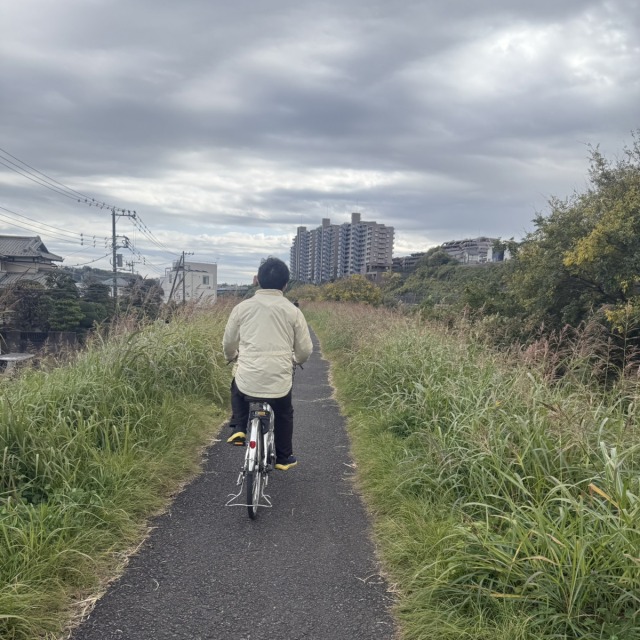
The person got off the bicycle and is sneakily taking a photo from behind.
Flowing on the right side is the Tsurumi River.
As you can see, it’s a lush, nature-rich area.
To not miss the boundary marker, I’m looking ahead but also conscious of the ground.
By the way, a “boundary marker” is a small stake or metal plate indicating administrative borders like wards or cities.
They are quietly embedded in the ground and easy to miss, but they are important landmarks.
Reference:
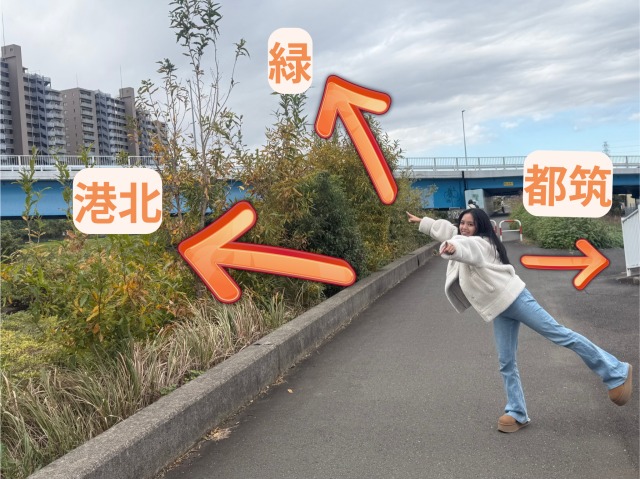
Arrived at Point A! The mysterious pose challenge has begun.
Unfortunately, the border at Point A was in the middle of the Tsurumi River, and we couldn’t find a boundary marker.
This is along the Tsurumi River between Kamoi Station and Kozukue Station.
Besides pedestrians, there were people playing in the river and runners.
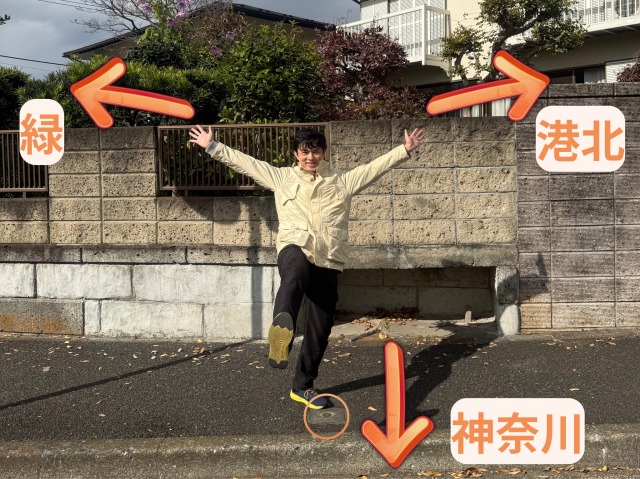
Next is border point B where Midori, Kohoku, and Kanagawa wards meet.
A Glico sign appeared in Yokohama City…
The orange circled object at our feet is the boundary marker.
It’s completely in a residential area.
Being on a slope, the view was great!
Midori Ward
Midori Ward is one of the 18 wards of Yokohama, Japan, established in 1969 through the merger of several towns and villages. It is primarily a residential area known for its green spaces, parks, and historical sites like the Negishi Forest Park, which was once part of a foreign settlement and a horse racing track in the late 19th century.
Aoba Ward
Aoba Ward is a modern administrative district of Yokohama, Japan, established in 1994 through a merger of several towns. While the ward itself is relatively new, the area has a long history as part of the ancient Kamakura Kaidō road and is known today for its residential neighborhoods, green spaces like the Mitsuzawa Park, and educational institutions.
Tsuzuki Ward
Tsuzuki Ward is one of the 18 wards of Yokohama, Japan, established in 1994 through the merger and reorganization of several towns and districts. It is primarily a modern residential suburb developed significantly during Japan’s late 20th-century economic growth, known for its planned neighborhoods, parks like the Tsuzuki Forest Park, and community facilities.
Kohoku Ward
Kohoku Ward is a modern administrative district in Yokohama, Japan, primarily developed as a major suburban residential and commercial center during the country’s rapid economic growth in the latter half of the 20th century. While it lacks ancient historical sites, its history is defined by large-scale land reclamation and urban planning, transforming former agricultural and waterfront areas into a bustling hub with extensive train networks, shopping centers, and parks.
Kanagawa Ward
Kanagawa Ward is a coastal administrative district within Yokohama City, Japan, historically significant as the location where Commodore Matthew Perry landed in 1853-54, leading to the opening of Japan to the West. Today, it is a major urban center featuring the Port of Yokohama, the iconic Osanbashi Pier, and the lively Chinatown, blending its pivotal history with modern maritime and commercial activity.
Hodogaya Ward
Hodogaya Ward is one of the 18 wards of Yokohama, Japan, historically significant as a major post station on the Tokaido road during the Edo period (1603-1868), where travelers would rest. Today, it is primarily a residential and commercial district, known for its parks and the Yokohama Sports Center.
Asahi Ward
Asahi Ward is one of the nine wards of Yokohama, Japan, established in 1969 through an administrative merger of several towns and villages. Historically a primarily agricultural and residential area, it has developed into a significant suburban district known for its parks, the Yokohama Country & Athletic Club, and the large-scale Kohoku New Town housing development.
Seya Ward
Seya Ward is a residential ward located in the northern part of Yokohama, Japan. Historically, it was primarily agricultural land before being incorporated into Yokohama in 1939 and experiencing significant residential development during Japan’s post-war economic growth. Today, it is known as a populous suburban area with numerous parks and local shopping districts.