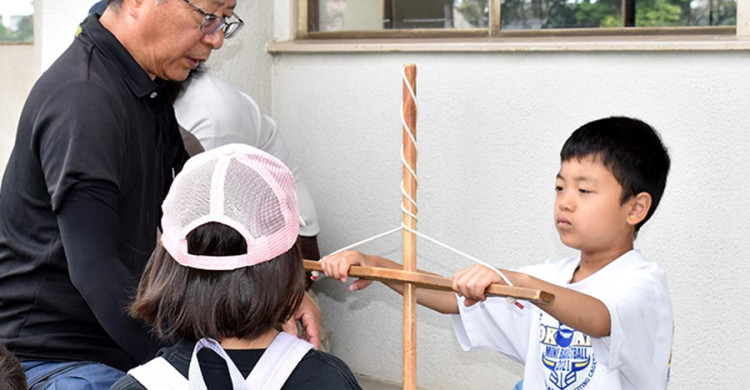
At the “Sandodai Site” (Isogo Ward, Yokohama City), where settlement remains from the Jomon, Yayoi, and Kofun periods are spread, an event was held on the 2nd to experience fire-starting from those times. Ten children challenged themselves to create a spark using a tool called a “fire drill bow.” When they succeeded in igniting the fire, they cheered with joy.
The fire drill bow is…
Sandodai Site
The Sandodai Site is an archaeological site in Japan, primarily known for its remains from the Jomon period (circa 14,000–300 BCE). Excavations have revealed pit dwellings, stone tools, and pottery, offering valuable insights into the daily life and culture of early hunter-gatherer communities in the region. The site is considered important for understanding the development of sedentary lifestyles and early pottery traditions in prehistoric Japan.
Sandodai Site
The Sandodai Site is an archaeological site in Japan, dating back to the Jōmon period (circa 10,000–300 BCE). It is notable for its well-preserved pit dwellings and artifacts, which provide valuable insights into the daily life, diet, and social structure of early hunter-gatherer communities in the region. The site has been designated a National Historic Site, helping to preserve its cultural and historical significance.
Isogo Ward
Isogo Ward is a coastal district in Yokohama, Japan, known for its scenic waterfront and residential areas. Historically, it developed as a fishing and industrial hub, with the Isogo area playing a role in Yokohama’s port expansion during the Meiji period. Today, it features parks like Isogo Central Park and offers views of Tokyo Bay, blending its working-class roots with modern suburban life.
Yokohama City
Yokohama City, located just south of Tokyo, is Japan’s second-largest city and a major port that played a pivotal role in the country’s modernization after the Meiji Restoration. It was one of the first Japanese ports opened to international trade in 1859, leading to a rapid influx of Western culture and technology, which is still reflected in its historic neighborhoods like the Yamate Bluff and the iconic Yokohama Chinatown. Today, the city is a vibrant blend of historic architecture, modern skyscrapers, and waterfront attractions such as the Minato Mirai district.
Sandodai Site
The Sandodai Site is an archaeological site in Japan, believed to date back to the Jomon period (around 10,000 to 300 BCE). It is known for yielding significant artifacts, including pottery and stone tools, that provide insight into early hunter-gatherer societies. The site helps researchers understand the development of prehistoric culture and settlement patterns in the region.
Isogo Ward
Isogo Ward is a district in Yokohama, Japan, known for its scenic coastal areas and historical significance as a former fishing village that developed into an industrial and residential hub. During the Meiji period, it became part of Yokohama’s expansion, blending traditional seaside culture with modern urbanization. Today, it features landmarks like the Isogo Central Park and the Negishi Forest Park, offering a mix of nature and city life.
Yokohama City
Yokohama City, located just south of Tokyo, is Japan’s second-largest city and a major port that played a pivotal role in the country’s modernization after it was opened to foreign trade in 1859. It rapidly developed from a small fishing village into a cosmopolitan hub, becoming a center for international commerce and Western influence during the Meiji period. Today, Yokohama is known for its vibrant waterfront, historic landmarks like the Sankeien Garden, and the iconic Landmark Tower, blending its rich history with modern urban culture.
Yamate Bluff
Yamate Bluff is a historic district in Yokohama, Japan, known for its Western-style houses and scenic views of the port. Developed in the late 19th century after the opening of Yokohama to foreign trade, it became a residential area for foreign diplomats and merchants. Today, it preserves this heritage with restored buildings and gardens, offering a glimpse into the city’s international history.
Yokohama Chinatown
Yokohama Chinatown is one of the largest Chinatowns in the world, located in Yokohama, Japan. Established in the mid-19th century after the port opened to foreign trade, it grew as Chinese merchants and immigrants settled there. Today, it is a vibrant cultural and culinary hub, known for its colorful streets, traditional architecture, and diverse Chinese restaurants.
Minato Mirai district
The Minato Mirai district in Yokohama, Japan, is a modern waterfront urban center built on former shipyard and railway yards, with development beginning in the 1980s. Its name, meaning “Port of the Future,” reflects its transformation into a hub for business, shopping, and entertainment, featuring iconic landmarks like the Landmark Tower. The area also preserves historical elements, such as the Nippon Maru sailing ship and the Yokohama Red Brick Warehouse, linking its past as a major port city to its contemporary role.
Isogo Central Park
Isogo Central Park is a public park located in Isogo Ward, Yokohama, Japan. Originally developed in the mid-20th century as part of the city’s post-war urban planning, the park features green spaces, walking paths, and recreational facilities for local residents. It serves as a community hub, offering a peaceful retreat within the urban landscape.
Tokyo Bay
Tokyo Bay is a major natural harbor in Japan, historically significant as the site where Commodore Matthew Perry’s “Black Ships” arrived in 1853, forcing Japan to open its borders to international trade. Today, it serves as a vital economic and transportation hub, surrounded by the bustling metropolis of Tokyo and featuring landmarks like the Rainbow Bridge and Odaiba. The bay’s development has transformed it from a feudal-era coastline into a modern center for commerce, industry, and tourism.