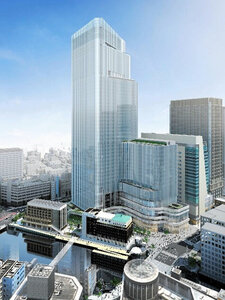
The redevelopment project around the Nihonbashi River area has officially named the district “Nihonbashi” and announced its opening in the autumn of 2027. The plan includes the development of four blocks, including a 284-meter main tower, which will house offices, a hotel, and luxury rental apartments.
The project covers the “Nihonbashi 1-chome Naka District.” The main tower, “Nihonbashi Nomura Mitsui Tower,” will have 52 floors above ground and 5 basement levels. In addition to offices, it will feature a large hall capable of accommodating 1,600 people for international conferences and large-scale exhibitions. The 39th to 47th floors will host the foreign luxury hotel “Waldorf Astoria,” while the upper floors from the 48th to 51st will offer luxury rental apartments under the same hotel brand. The currently operating “COREDO Nihonbashi” in the area will close in October of this year and reopen as the commercial zone of “Tokyo Midtown Nihonbashi.”
“Tokyo Midtown” will be the fourth location following others. Mitsui Fudosan states that “the difference from existing Midtown developments is that this project leverages the waterfront space of the Nihonbashi River and historical assets.”
Nihonbashi River
The Nihonbashi River is a historic waterway in Tokyo, Japan, flowing through the Nihonbashi business district. Originally a key hub for trade and transportation during the Edo period, it was part of a network of canals that supported the city’s commerce. Today, the river is best known for the Nihonbashi Bridge, which has served as a symbolic center for measuring distances to Tokyo since the 17th century.
Nihonbashi
Nihonbashi is a historic bridge and commercial district in Tokyo, originally built in 1603 during the early Edo period. It served as the starting point for the five major roads (Gokaido) connecting Edo (now Tokyo) to other regions, and was the center of Japan’s economic activity for centuries. Today, the area remains a bustling financial hub, with the iconic bridge and its nearby landmarks symbolizing Japan’s rich cultural and economic heritage.
Nihonbashi Nomura Mitsui Tower
The Nihonbashi Nomura Mitsui Tower is a modern skyscraper complex in Tokyo’s historic Nihonbashi district, completed in 2003. It integrates a 21-story office tower with a luxury hotel, integrating contemporary design on a site that has been a commercial hub since the Edo period. The building’s name reflects its construction by the Nomura and Mitsui corporations, blending modern commerce with the area’s centuries-old legacy as a center of trade and finance.
Waldorf Astoria
The Waldorf Astoria is a legendary luxury hotel in New York City, originally opened in 1893 on Fifth Avenue and later relocated to its iconic Park Avenue address in 1931. It is renowned for its Art Deco architecture, impeccable service, and historic significance, having hosted world leaders, celebrities, and the famous Waldorf-Astoria salad. The hotel closed for renovations in 2017 to convert much of the building into private residences, while preserving its landmark public spaces.
<
Nihonbashi River
Nihonbashi River is a historic waterway in Tokyo, Japan, that served as a vital commercial hub during the Edo period. It was the starting point for the five major highways connecting Edo (now Tokyo) to other regions, and the nearby Nihonbashi Bridge has been a symbolic center of Japan’s road network since the 17th century. Today, the river and its surroundings blend traditional heritage with modern urban life, reflecting Tokyo’s evolution over centuries.
Nihonbashi Bridge
Nihonbashi Bridge, located in Tokyo, is a historic landmark that served as the starting point for Japan’s major highways during the Edo period (1603–1868). Originally built in 1603, the bridge was a vital hub for commerce and travel, connecting the capital to the rest of the country. Today, the current stone bridge, reconstructed in 1911, remains a symbol of Tokyo’s heritage and is marked by the “Zero Kilometer” signpost from which all distances in Japan are measured.
Nihonbashi
Nihonbashi is a historic district in Tokyo, Japan, best known for its iconic bridge of the same name, which was built in 1603 during the early Edo period. It served as the starting point of the five major roads (Gokaido) connecting Edo (now Tokyo) to other regions, and the bridge’s center was marked as the zero-kilometer point for all distances in Japan. Today, Nihonbashi remains a bustling financial and commercial hub, with the original bridge preserved beneath a modern highway.
Nihonbashi Nomura Mitsui Tower
Nihonbashi Nomura Mitsui Tower is a modern skyscraper in Tokyo, completed in 2003, that integrates a high-rise office building and the Mandarin Oriental Hotel. The tower stands on the historic site of the former Mitsui Main Building, which was originally constructed in 1902 and later rebuilt in 1929 as a notable example of Western-style architecture. This location reflects the evolution of Nihonbashi as a traditional financial and commercial district since the Edo period.
Waldorf Astoria
The Waldorf Astoria is a legendary luxury hotel in New York City, originally established in 1893 when the Waldorf Hotel (built by William Waldorf Astor) merged with the adjacent Astoria Hotel (built by his cousin, John Jacob Astor IV) in 1897. It became an icon of elegance and innovation, famously introducing the Waldorf Salad and the Red Velvet Cake, and served as a gathering place for high society and world leaders. After closing for a major renovation in 2017, the building is being transformed into a mix of private residences and a revitalized hotel, preserving its historic Art Deco grandeur.
Tokyo Midtown Nihonbashi
Tokyo Midtown Nihonbashi is a modern commercial and cultural complex located in the historic Nihonbashi district of central Tokyo, an area that has been a key financial and commercial hub since the Edo period. Opened in 2018, the development integrates office spaces, retail, dining, and cultural facilities, designed to revitalize the neighborhood while preserving its historical significance. The site incorporates the restored Nihonbashi Bridge, a famous landmark built in 1911, which served as the starting point for Japan’s national highway network and remains a symbol of Tokyo’s heritage.
COREDO Nihonbashi
COREDO Nihonbashi is a modern commercial complex located in Tokyo’s historic Nihonbashi district, which has served as a financial and cultural hub since the Edo period. The complex incorporates the site’s heritage, including the preservation of the former Mitsui Main Building, a designated Important Cultural Property built in 1929. Today, it houses shops, restaurants, and offices, blending contemporary urban life with the area’s rich mercantile and architectural history.
Gokaido
The Gokaido were five major highways established during the Edo period (1603–1868) in Japan, connecting the capital of Edo (modern-day Tokyo) with other important regions. The most famous of these was the Tokaido, which linked Edo to Kyoto, and the routes were used for travel, trade, and official government business. These roads played a crucial role in unifying Japan and fostering cultural and economic exchange.