Dozens of local assemblies in Japan urge the government to uphold the ‘three non-nuclear principles’.
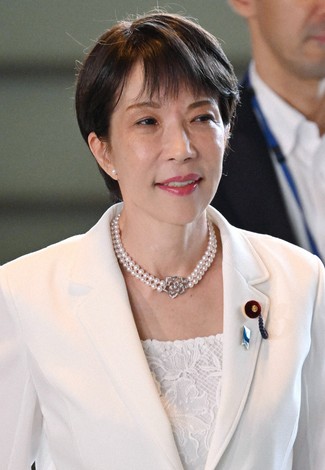
Prime Minister Sanae Takaichi arrives at her office in Tokyo’s Chiyoda Ward, June 8, 2026.
HIROSHIMA — At least 73 local assemblies in 24 prefectures have submitted formal opinions to the central government calling for the continued adherence to Japan’s “three non-nuclear principles” since the administration of Prime Minister Sanae Takaichi took office in October 2025.
The moves are seen as reflecting concern that the principles — not possessing, not producing and not permitting the introduction of nuclear weapons — could be debated during a review of the three key security-related documents including the National Security Strategy under Takaichi, who has argued for a reconsideration of the “not permitting introduction” principle.
Resolutions have been passed one after another across Japan, including in the atomic-bombed cities of Hiroshima and Nagasaki, and in assemblies such as those of Kanagawa and Nagano prefectures, as well as the cities of Chiba and Tottori. Seven municipal assemblies in Hokkaido, including Hakodate and Asahikawa, called not only for the principles to be upheld but also for them to be enshrined in law. The written opinions were addressed to the prime minister, the presidents of both Diet chambers, the foreign minister and the defense minister.
The Hiroshima Prefectural Assembly, led by a faction of the ruling Liberal Democratic Party (LDP), adopted its resolution unanimously in December 2025. It noted that discussions within the ruling party on revising the three security policy documents had raised concerns about potential changes to the non-nuclear principles. Referring to countries such as Russia, North Korea and Israel, the resolution stated that “while the international environment surrounding nuclear weapons is becoming increasingly severe, it is precisely because of such times that the three non-nuclear principles should continue to be upheld,” and urged the government to heed “the wishes of the atomic-bombed cities for the realization of a peaceful world without nuclear weapons.”
During her 2024 bid for the LDP presidency, Takaichi said, “If it is under U.S. extended deterrence, we must thoroughly discuss the ‘not permitting introduction’ part,” signaling an openness to review. Under the Democratic Party of Japan administration in 2010, then-Foreign Minister Katsuya Okada told the Diet that in a national crisis, “the government of the time would decide, staking the fate of the administration,” implying that exceptions could be made. Takaichi said during a lower house election debate in January this year that the Okada statement “remains the government’s position at this stage.”
The LDP plans to release policy recommendations in early June for revising the three key security documents by the end of 2026, reportedly without mentioning changes to the non-nuclear principles. However, some within coalition partner Nippon Ishin (the Japan Innovation Party) believe that the principles should be reviewed, drawing attention to how the debate will unfold.
Hiroshima
Hiroshima is a city in Japan best known for being the target of the first atomic bomb used in warfare on August 6, 1945, during World War II. The bombing caused unprecedented destruction and loss of life, but the city was later rebuilt as a symbol of peace and resilience. Today, Hiroshima is home to the Peace Memorial Park and Museum, which honor the victims and advocate for nuclear disarmament.
Nagasaki
Nagasaki, a city on the island of Kyushu, Japan, is historically known as a major port for international trade during the country’s period of national isolation, serving as the only gateway for European and Chinese merchants. It gained tragic global prominence on August 9, 1945, when the United States dropped an atomic bomb on the city, leading to immense destruction and loss of life. Today, Nagasaki is a peaceful city dedicated to remembrance and reconciliation, with sites like the Atomic Bomb Museum and Peace Park serving as powerful symbols of its history.
Kanagawa Prefecture
Hiroshima
Hiroshima is a Japanese city best known globally as the first target of an atomic bomb, which was dropped by the United States on August 6, 1945, during World War II. The bombing devastated the city, but Hiroshima was rebuilt and has since become a powerful international symbol of peace and nuclear disarmament. Today, the Hiroshima Peace Memorial Park and the preserved Atomic Bomb Dome serve as poignant reminders of the tragedy and a call for a world without nuclear weapons.
Nagasaki
Nagasaki is a port city on the island of Kyushu, Japan, with a rich history as a key center for foreign trade during Japan’s period of national isolation, when it was the only port open to Dutch and Chinese merchants. It is perhaps most widely known for being the target of the second atomic bomb dropped by the United States on August 9, 1945, which devastated the city and led to the end of World War II. Today, Nagasaki is a peaceful city that commemorates its past through museums, memorials, and rebuilt historical sites, serving as a symbol of resilience and a global advocate for peace.
Kanagawa Prefecture
Kanagawa Prefecture, located just south of Tokyo, is a historically significant region that served as the site of the 1853 arrival of Commodore Matthew Perry, which led to the end of Japan’s isolationist period. It is home to the historic port city of Yokohama, which rapidly developed into a major international trade hub, and the ancient capital of Kamakura, known for its iconic Great Buddha statue and samurai-era temples. Today, Kanagawa blends modern urban centers with cultural heritage and natural attractions like Mount Fuji views from Hakone.
Nagano Prefecture
Nagano Prefecture, located in central Japan’s Honshu island, is renowned for its mountainous terrain and was the host of the 1998 Winter Olympics, which boosted its global recognition. Historically, it was a key region during the feudal era, home to the powerful Takeda clan and the site of the famous Battle of Kawanakajima. Today, it is celebrated for its historic temples like Zenko-ji, hot springs, and as a gateway to the Japanese Alps.
Chiba
Chiba is a prefecture in Japan, located east of Tokyo and known for its coastal areas, including the popular Tokyo Disney Resort. Historically, it was part of the ancient province of Kazusa and Shimōsa, and later developed as a key agricultural and industrial region during the Edo period. Today, Chiba City serves as the prefectural capital, blending modern urban life with natural attractions like Naritasan Temple and the Boso Peninsula.
Tottori
Tottori is a prefecture in western Japan best known for the Tottori Sand Dunes, a rare and striking coastal desert landscape formed over thousands of years by wind and sediment from the Sendai River. Historically, Tottori Castle was a key feudal stronghold during the Edo period, though only ruins remain today. The area is also famous for its pears and as the setting of the classic manga *GeGeGe no Kitarō*.
Hakodate
Hakodate is a historic port city on Japan’s northern island of Hokkaido, known for its scenic harbor and the iconic star-shaped Goryokaku Fort. It was one of the first Japanese ports opened to international trade in 1854, leading to a blend of Western and Japanese architecture. The city’s night view from Mount Hakodate is also celebrated as one of Japan’s top three nightscapes.
Asahikawa
Asahikawa is the second-largest city in Hokkaido, Japan, known for its cold winters and as a gateway to the Daisetsuzan National Park. Its history dates back to the late 19th century when it developed as a key settlement for the Hokkaido development project, and it later became a major center for furniture and sake production. Today, the city is also famous for the Asahiyama Zoo, one of Japan’s most popular zoos, and its annual winter festival.