Following the continued price increases at privately operated crematoriums within Tokyo’s 23 wards, a study group consisting of experts and leaders of local municipalities held its first meeting on the 4th. The group aims to compile findings by March next year regarding the future of crematoriums.
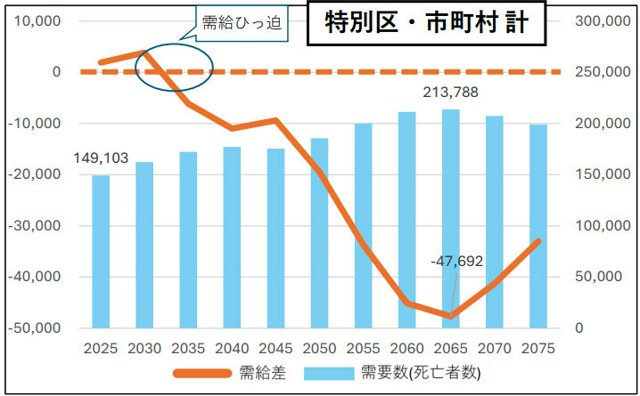
At the meeting, in addition to the issue of soaring cremation fees, the Tokyo Metropolitan Government released supply and demand projections for cremations. Due to an expected increase in the number of deaths, it was stated that by around 2035, smooth cremation operations would become difficult at the 26 crematoriums currently located within the wards.
Kenichi Yoshizumi, a ward mayor attending as a committee member, raised the issue that “the ward cannot intervene in the management of private crematoriums, including fee setting.” He proposed the addition of small-scale crematoriums operated by local governments.
Another ward mayor stated, “Cremation is a highly public service, so this is an opportunity to municipalize it,” suggesting that the Tokyo government or local municipalities should acquire privately operated crematoriums.
Regarding crematoriums, a private company operating six of the nine facilities within the 23 wards raised cremation fees by up to 90,000 yen, citing rising fuel costs. Nationwide, most crematoriums are publicly operated, with fees ranging from free to around 20,000 yen, leading to criticism that the burden on users in the 23 wards is excessively heavy.