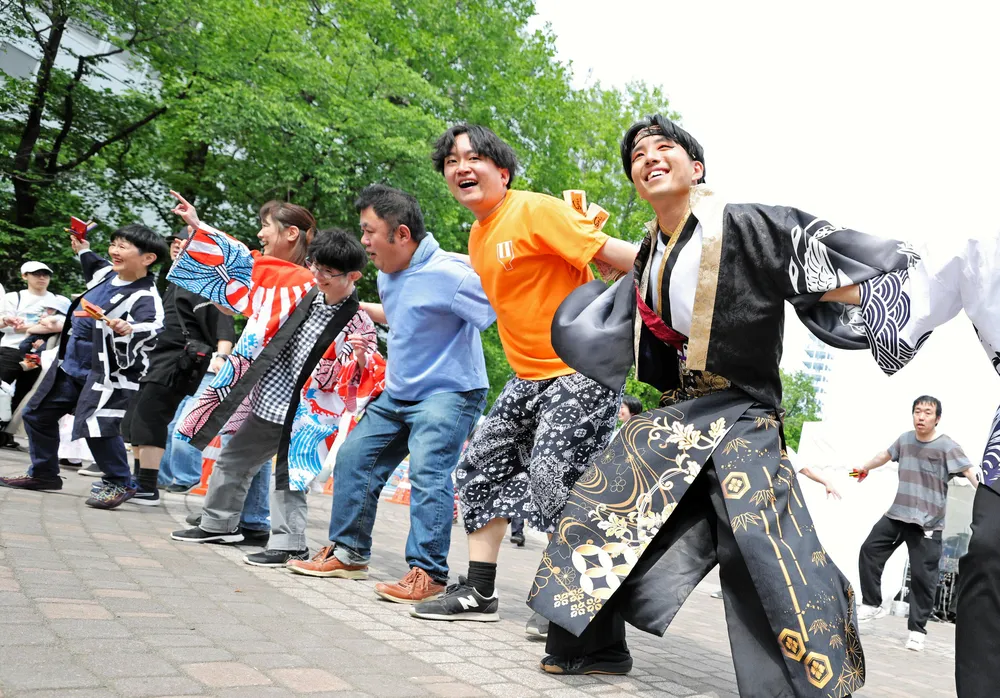
The 35th YOSAKOI Soran Festival will be held in Sapporo from June 10th to 14th. This year’s event is set to showcase the “Yosakoi culture” that has spread across the country and to all generations, featuring a collaborative stage with “Dynamic Ryukyu,” known as a high school baseball cheering song, and the return of the “Wao Dance Square,” where anyone can participate. Here are the highlights of the festival, which will be held at 17 venues across the city….
YOSAKOI Soran Festival
The YOSAKOI Soran Festival is a vibrant, modern dance festival held annually in Sapporo, Japan, since 1992. It creatively blends the traditional folk dance styles of Kochi’s Yosakoi Festival with the music and movements of Hokkaido’s traditional “Soran Bushi” fishing song. The event now features thousands of dancers in colorful costumes performing energetic, choreographed routines to modern music arrangements, transforming the city’s streets into a dynamic celebration.
Sapporo
Sapporo is the capital city of Hokkaido, Japan, founded officially in 1868 during the Meiji period as a planned modern settlement. It is now internationally famous for hosting the 1972 Winter Olympics and its annual Sapporo Snow Festival, which began in 1950. The city’s history is closely tied to the development of Hokkaido and is renowned for its beer brewing industry, which started in the late 19th century.
Dynamic Ryukyu
“Dynamic Ryukyu” is a cultural theme park and performance venue in Okinawa, Japan, that celebrates the history and traditions of the Ryukyu Kingdom (1429-1879). It features live reenactments of royal court dances, martial arts demonstrations, and craft workshops, offering visitors an immersive experience of the islands’ unique heritage before their annexation by Japan.
Wao Dance Square
Wao Dance Square is a public performance space in the city of Wenzhou, China, known for its vibrant community gatherings and cultural events. Historically, it has served as a modern hub for local residents to practice traditional and contemporary dance, reflecting the city’s dynamic urban culture. The square exemplifies how public spaces in China foster social interaction and preserve cultural practices in an evolving urban landscape.