
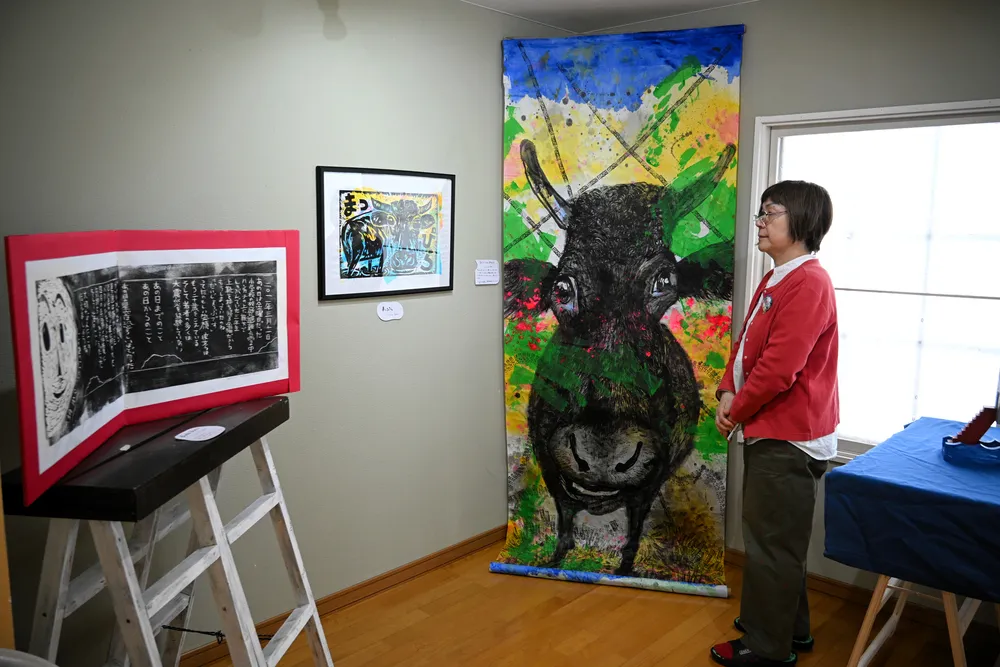

An exhibition titled “The 15th Year Since 3/11,” featuring works by writers on the theme of the Great East Japan Earthquake, began on the 17th at the gallery cafe “Pompiye House” (Minami 6, Nishi 24) in Chuo Ward, Sapporo.
Great East Japan Earthquake
The Great East Japan Earthquake refers to the catastrophic magnitude 9.0 earthquake that struck off Japan’s northeast coast on March 11, 2011, triggering a massive tsunami and the Fukushima Daiichi nuclear disaster. It is remembered as one of the most powerful earthquakes ever recorded and Japan’s worst post-war disaster, causing immense loss of life and long-term regional devastation. The event and its aftermath have profoundly shaped Japan’s disaster preparedness, energy policies, and collective memory, with numerous memorials and museums dedicated to preserving its history and lessons.
Hokkaido
Hokkaido is Japan’s northernmost main island, historically the homeland of the indigenous Ainu people. Its modern development accelerated in the late 19th century during the Meiji era, when the Japanese government officially established it as a prefecture and promoted large-scale settlement and agricultural development. Today, it is renowned for its vast natural landscapes, major cities like Sapporo, and distinct seasonal attractions.
Sapporo
Sapporo is the capital city of Hokkaido, Japan, founded officially in 1868 during the Meiji period as a planned modern settlement. It is now internationally famous for hosting the 1972 Winter Olympics and its annual Sapporo Snow Festival, which began in 1950. The city’s history is closely tied to its development as the political and economic center of Hokkaido, with its iconic grid layout and landmarks like the Sapporo Clock Tower symbolizing its early Western-influenced planning.
Chuo Ward
Chuo Ward is one of Tokyo’s 23 special wards, located at the heart of the city and serving as a major commercial and financial hub. Historically, it encompasses areas like Nihonbashi, which was the starting point of Japan’s historic Five Routes in the Edo period, and Ginza, a district that became a symbol of modernization after the Meiji Restoration. Today, it blends historic sites such as the Nihonbashi bridge with modern skyscrapers and luxury shopping districts.
Minami 6, Nishi 24
“Minami 6, Nishi 24” refers to a specific address in the grid-pattern layout of Sapporo, Japan, which was systematically planned in the late 19th century during the country’s modernization. While not a single famous site, this central district is home to landmarks like the historic Hokkaido University and the Sapporo Clock Tower, reflecting the city’s development as a pioneer settlement on Japan’s northern island.
Pompiye House
“Pompiye House” is a historic building in St. John’s, Newfoundland, Canada, built in 1899 for a merchant. It is a notable example of Second Empire
Great East Japan Earthquake
The Great East Japan Earthquake was a magnitude 9.0 undersea megathrust earthquake that struck off the coast of Japan on March 11, 2011. It triggered a devastating tsunami and the Fukushima Daiichi nuclear disaster, making it one of the most catastrophic natural disasters in the country’s history and leading to profound national recovery and safety reforms.
Hokkaido
Hokkaido is Japan’s northernmost and second-largest island, historically inhabited by the indigenous Ainu people before significant Japanese settlement began in the late 19th century during the Meiji era. Today, it is renowned for its vast natural landscapes, major cities like Sapporo, and distinct seasonal attractions, blending its unique cultural heritage with modern development.
Sapporo
Sapporo is the capital of Japan’s northern island of Hokkaido, founded in 1868 as a planned modern city during the Meiji era’s development of the region. It is now internationally famous for hosting the 1972 Winter Olympics and its annual Sapporo Snow Festival, as well as being the birthplace of Sapporo Beer, first brewed there in 1876.
Chuo Ward
Chuo Ward is one of Tokyo’s 23 special wards, located in the heart of the city. Historically, it encompasses the former Nihonbashi and Kyobashi districts, which were the commercial and financial center of Edo (old Tokyo) and remain a major business hub today. The ward is famous for landmarks like the historic Nihonbashi bridge, the upscale Ginza shopping district, and the Tsukiji Outer Market.
Minami 6, Nishi 24
“Minami 6, Nishi 24” refers to a specific address in the grid-pattern layout of Sapporo, Japan, which was systematically planned and developed in the late 19th century during the Meiji era. This area is part of the city’s historic downtown and is known for landmarks like the Old Hokkaido Government Office Building, reflecting Sapporo’s role as the modern capital of Hokkaido. Today, it remains a central business and administrative district, blending historical architecture with contemporary city life.
Pompiye House
“Pompiye House” is a historic home in St. John’s, Newfoundland, built in the 1870s for merchant James H. Munn. It is a well-preserved example of Second Empire architecture and is named after the ancient Roman city of Pompeii, reflecting the classical influences popular during that era. Today, it is recognized as a heritage property and serves as a private residence.
Fukushima Daiichi nuclear disaster
The Fukushima Daiichi nuclear disaster was a catastrophic nuclear accident in Japan that began on March 11, 2011, when a massive earthquake and subsequent tsunami disabled the power supply and cooling systems of the Fukushima Daiichi Nuclear Power Plant. This led to three nuclear meltdowns, hydrogen-air explosions, and the release of radioactive materials, making it the most severe nuclear disaster since Chernobyl in 1986. The event resulted in widespread evacuations, long-term environmental contamination, and a global reevaluation of nuclear energy safety.
Sapporo Clock Tower
The Sapporo Clock Tower is a historic wooden building constructed in 1878 as a drill hall for the Sapporo Agricultural College (now Hokkaido University). It is one of Japan’s oldest surviving clock towers, famous for its American-influenced architecture and the mechanical clock imported from Boston, which has kept time for the city since its installation. Today, it operates as a museum and is a beloved symbol of Sapporo’s modern founding during the Meiji era.
Related news

Nine Female Writers from Sapporo Hold Art Exhibition at Gallery Dododo & Dododo Cafe Until the 28th, Featuring Oil Paintings, Paper Cuttings, and Illustrations
Ms. Iida, who has been doing pottery for 40 years,...
Male body found in Kotoni-Hassamu River in Sapporo.
Around 3:30 PM on the 12th, a man walking near the...
Disability Art, Shining Individuality: Painting and Photography Exhibition in Sapporo
An exhibition titled "Hokkaido Art by Persons with...

“Bear footprints found in a field during farm work… Multiple bear tracks discovered in Chitose, Hokkaido”
On July 26, 2025, bear footprints were discovered ...
“I did it because I had no money” – Man in his 30s breaks into home and steals cash and three pendants worth 310,000 yen.
Sapporo Shiraishi Police Station arrested a 34-yea...