
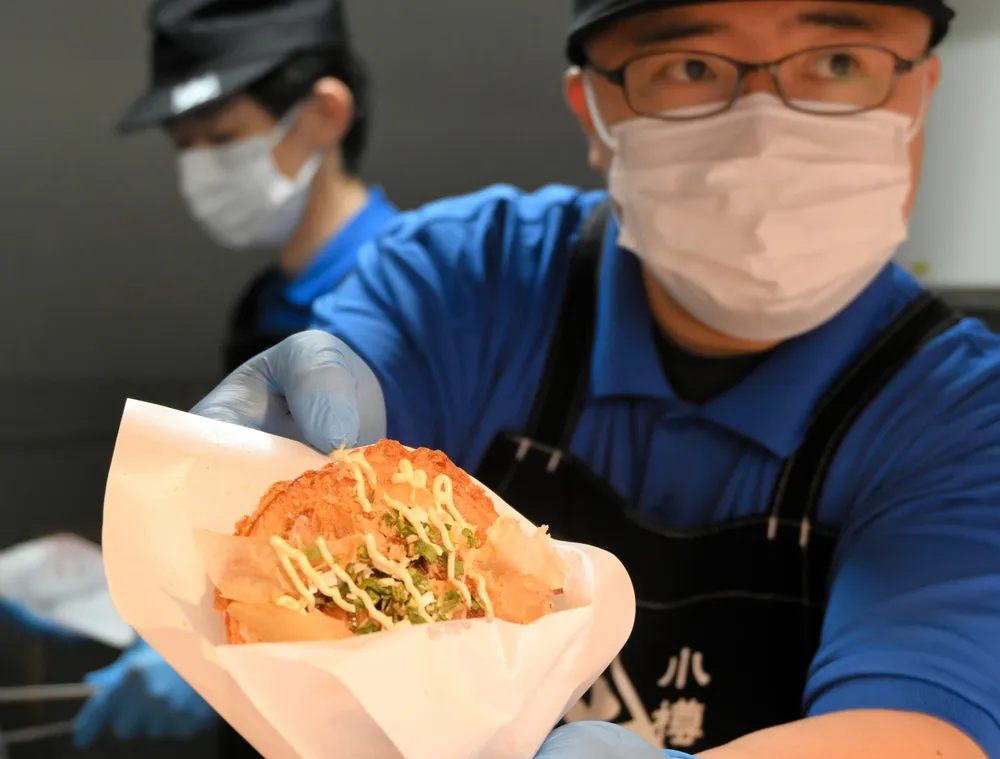
The Hokkaido Confectionery Group (Sapporo) food manufacturer “Kita no Food” (Otaru) opened a grilled rice ball specialty shop “Fisherman’s Nigirimeshi” on the 21st in Tanukikoji 4-chome, Minami 3 Nishi 4, Chuo-ku, Sapporo, using its flagship furikake (rice seasoning) product.
Tanukikoji
Tanukikoji is a famous covered shopping arcade located in the heart of Sapporo, Japan, stretching for about 200 meters. Originally established in the early Meiji period, it developed from a small market area into a bustling commercial hub, playing a key role in the city’s post-war reconstruction. Today, it is a popular tourist destination, featuring over 200 shops, restaurants, and entertainment venues that blend historic charm with modern attractions.
Sapporo
Sapporo is the largest city on Japan’s northern island of Hokkaido, known for its modern layout and annual Snow Festival. Originally developed in the late 19th century as a planned city after Hokkaido’s colonization, it grew rapidly with the arrival of the railway and government institutions. Today, it is famous for its beer, ski resorts, and as the host of the 1972 Winter Olympics.
Otaru
Otaru is a historic port city in Hokkaido, Japan, known for its well-preserved canal district and 19th-century European-influenced architecture. Originally developed as a key fishing and trading hub during the Meiji era, it gained prominence as the “Wall Street of the North” due to its booming herring industry and banking sector. Today, Otaru is a popular tourist destination, offering scenic canal walks, glassware workshops, and fresh seafood.
Chuo-ku
Chuo-ku is a central ward in Tokyo, Japan, historically known as the city’s commercial heart. It is home to the famous Ginza district, a major shopping and entertainment area that developed after a fire in the 1870s. The ward also includes the Nihonbashi district, which has been a key financial and trading hub since the Edo period, marked by the historic Nihonbashi Bridge.
Tanukikoji
Tanukikoji is a famous shopping arcade located in Sapporo, Japan, stretching for about one kilometer with over 200 shops, restaurants, and entertainment venues. Its history dates back to the late 19th century, when it began as a modest market area, and it later evolved into a bustling commercial district during the post-war reconstruction period. The name “Tanukikoji” means “Raccoon Dog Alley,” inspired by local folklore about mischievous tanuki (raccoon dogs) that were said to frequent the area.
Sapporo
Sapporo is the capital city of Hokkaido, Japan’s northernmost island, known for its modern urban design and natural surroundings. Originally a small Ainu settlement, it was developed by the Japanese government
Tanukikoji
Tanukikoji is a famous covered shopping arcade in Sapporo, Japan, stretching over seven blocks and featuring around 200 shops, restaurants, and entertainment venues. Its history dates back to the early Meiji period (around the 1870s), when it began as a small marketplace for local vendors, and it was named after the tanuki (raccoon dogs) that once inhabited the area. Over time, it evolved into a bustling commercial hub, surviving post-war reconstruction to become a beloved cultural landmark for both locals and tourists.
Sapporo
Sapporo, the largest city on the northern Japanese island of Hokkaido, was developed in the late 19th century following a government plan inspired by Western urban design. It is famous for hosting the 1972 Winter Olympics and for its annual Sapporo Snow Festival, which began in 1950 and attracts millions of visitors with its massive ice and snow sculptures. The city also serves as a cultural and economic hub, known for its beer, ramen, and the historic Clock Tower.
Otaru
Otaru is a port city in Hokkaido, Japan, known for its beautifully preserved canal district and historical buildings that reflect its prosperous past as a major trade hub during the late 19th and early 20th centuries. Originally developed as a fishing town, it grew rapidly with the herring industry and later became a key financial center, with many stone warehouses and banks still lining its streets. Today, the Otaru Canal and its adjacent heritage sites are popular tourist attractions, offering a nostalgic glimpse into the city’s vibrant mercantile history.
Chuo-ku
Chuo-ku is a central ward of Tokyo, Japan, known as the city’s historic commercial and financial hub. It includes the famous Ginza district, a high-end shopping area that developed after a fire in the 1870s, and the Nihonbashi district, which was a key mercantile center during the Edo period. Today, Chuo-ku blends its rich history with modern business and culture, featuring landmarks like the Kabukiza Theatre and the Tokyo Stock Exchange.
Related news

Sapporo’s autumn night illuminated by 18,000 large fireworks at Prest Dome.
The "Autumn Fireworks" event illuminated the autum...

Motorcyclist in her 30s unconscious after possibly failing to navigate curve and colliding with guardrail in Otaru.
A single-vehicle accident involving a large motorc...
Ensemble with 30 percussion instruments: Performance by Hokkaido University of Education Iwamizawa Campus graduate group
The percussion ensemble group "ROCHE," formed by f...
The importance of design: Learning from local products, a copywriter’s workshop for high school students in Sapporo
The web design and management company "Improveide"...
Family-oriented rental apartments in Sapporo: Unstoppable rent increases, on the verge of the 100,000 yen era.
Rents for family-oriented apartments in Sapporo co...