Promoting understanding and orderly inbound tourism during a visit to Nara Prefecture.
In 2026, the gaming industry continues to see great excitement with the successive releases of major titles such as Resident Evil Requiem, Pokémon Pokopia, and PRAGMATA. As attention gathers around Japanese game titles, interest in Japan naturally rises, and inbound tourism triggered by games will likely increase. The Committee for the Promotion of Orderly Inbound Tourism, operated by the non-profit organization Research Institute for Public Policy, implemented the Nara Prefecture Project on Friday, April 17, and Saturday, April 18, 2026. Chinese influencers Fu Yumeng and Midori participated to cover the attractions of Nara Prefecture.
Chinese Influencers Cover Nara’s History and Local Culture
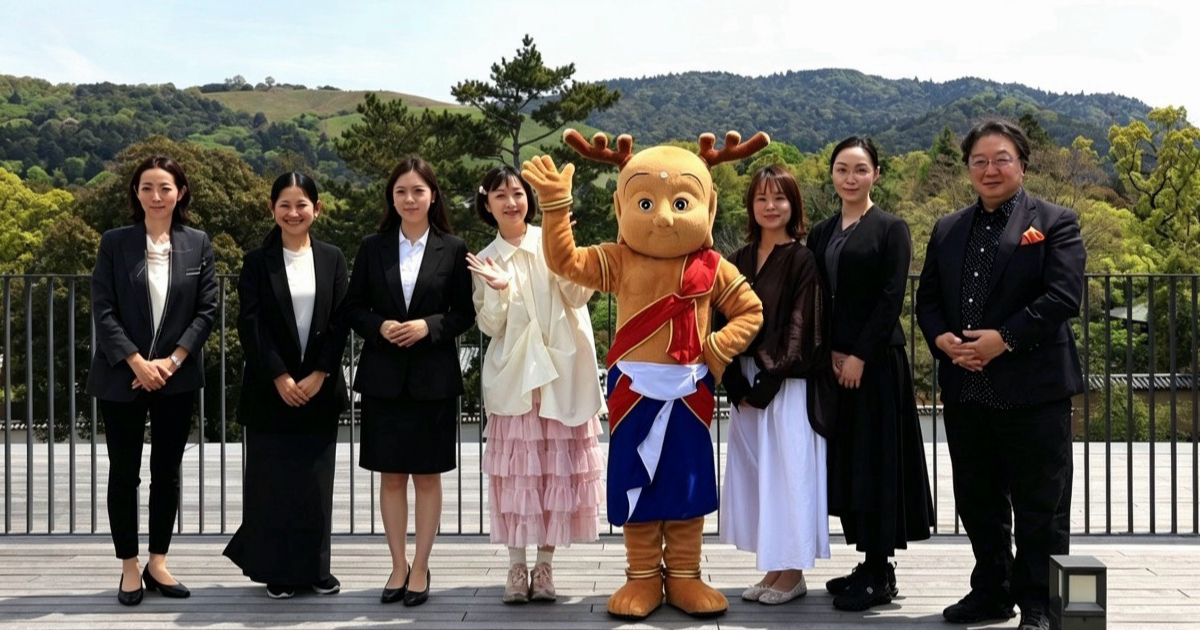
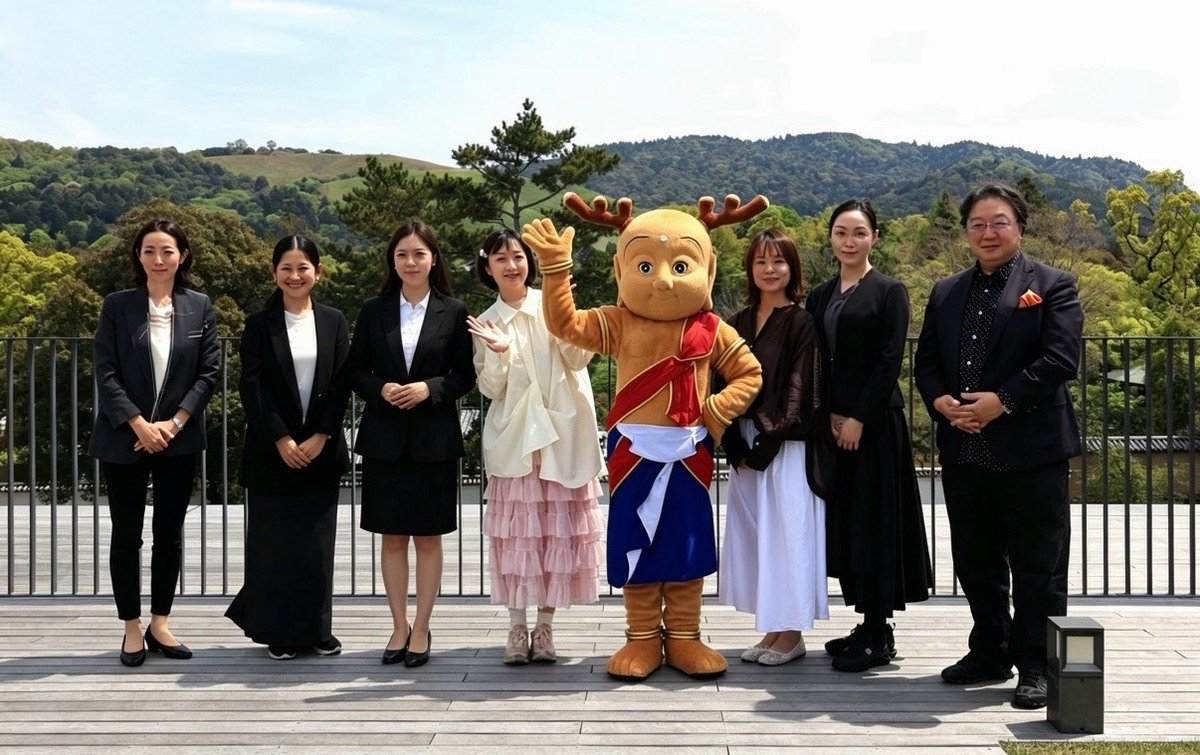
Committee members warmly welcomed by Sento-kun
Tourism to Japan continues to expand, and opportunities to see inbound tourists in cities have increased. While it is pleasing to see more people enjoying Japan’s unique charms, news of friction between tourists and residents due to a lack of understanding is often heard.
In response to such situations, the non-profit organization Research Institute for Public Policy established the Committee for the Promotion of Orderly Inbound Tourism in 2025. Up until now, they have worked with influencers in Chichibu, Nasu, and Yamanashi to promote the attractions and etiquette of those regions overseas.
This time, as the fourth installment, they implemented the Nara Prefecture Project from Friday, April 17, to Saturday, April 18, 2026, to communicate the charms, culture, and etiquette of Nara Prefecture through Chinese social media. With Fumihiro Sato, an expert in the inbound tourism field, joining as an advisor, Chinese influencers Fu Yumeng and Midori conducted reporting activities in Nara City and Yamatokoriyama City, which are rich in historical tourism resources.
Day 1: Encountering Nature, History, and Food Culture in Nara City
First, the reporting began at Nara Park and Kofukuji Temple. While deepening their understanding of coexistence with deer and tourism etiquette, they promoted the charm where nature and history intertwine.
Afterward, they moved to the Naramachi district to experience traditional streetscapes and food culture. In addition to observing a demonstration at Nakatanidou, famous for its high-speed mochi pounding, they visited Tsukihitei and other locations, where they enjoyed kaiseki cuisine using locally grown Yamato vegetables and other ingredients, relishing dishes that can only be tasted here.
Day 2: Experiencing Community Culture in Yamatokoriyama City
On the second day, they moved to Yamatokoriyama City to experience a historical atmosphere distinct from Nara City. They toured the historical sites of Yamatokoriyama Castle, the largest fortification in Yamato, built in 1580, and covered its history and origins. Afterward, they experienced the charm of tourism content utilizing local resources, including:
Atmospheric Japanese cuisine at Unagi Daimon
Koriyama Ai, which revived Yamatokoriyama’s authentic indigo dyeing
Toward a Positive Future for Both Visitors and Hosts
Fu YumengMidori
The influencers who encountered the history and culture in Nara City and Yamatokoriyama City shared their thoughts, with comments such as, “In addition to the depth of Nara’s historical streetscapes and temple and shrine culture, I truly felt the lifestyle culture rooted in the region and the warmth of the people.” and “I recognized the importance of understanding the unique cultural background of Japan, such as coexistence with deer and etiquette at temples and shrines.” Furthermore, they showed high motivation regarding their communications.
<div class="my-
Nara Park
Nara Park, located in the ancient capital of Nara, Japan, is a sprawling public park famous for its hundreds of freely roaming, tame deer, which are considered sacred messengers of the gods in Shinto belief. The park is home to several UNESCO World Heritage sites, including the iconic Tōdai-ji temple, which houses a massive bronze Buddha statue, and the Kasuga Taisha shrine, known for its thousands of stone and bronze lanterns. Established in the late 19th century, the park preserves the cultural and historical legacy of Nara, which served as Japan’s capital in the 8th century.
Kofukuji Temple
Kofukuji Temple is a historic Buddhist temple in Nara, Japan, originally established in 669 by the powerful Fujiwara clan. It served as their family temple and rose to prominence as one of the Seven Great Temples of Nara, wielding significant political and religious influence. Despite fires and wars over the centuries, the temple remains a UNESCO World Heritage site, famous for its five-story pagoda and National Treasure statues.
Naramachi
Naramachi is a historic district in Nara, Japan, known for its well-preserved traditional townhouses, called *machiya*, dating back to the Edo period (1603–1868). Once a bustling merchant quarter, it served as a key commercial hub for goods like sake and miso, and its narrow, winding streets still reflect the layout and atmosphere of that era. Today, Naramachi offers visitors a glimpse into Japan’s past, with many of the old buildings converted into museums, shops, and cafes.
Nakatanidou
Nakatanidou is a famous mochi-pounding shop located in the historic Higashiyama district of Kyoto, Japan. Known for its high-speed, rhythmic mochi-making performances, it has been a beloved local institution since the early Showa era (around the 1920s–1930s). Visitors gather daily to watch skilled artisans rapidly pound glutinous rice into fresh, warm mochi, a tradition that highlights Kyoto’s enduring culinary culture.
Tsukihitei
Tsukihitei is a historic Japanese villa and garden located in Kanazawa, Ishikawa Prefecture. Originally built in the late Edo period as a private retreat for a wealthy merchant family, it later became associated with the Maeda clan, the feudal lords of the Kaga domain. The site is renowned for its serene tea rooms, traditional architecture, and a beautiful pond garden that reflects the changing seasons.
Yamatokoriyama Castle
Yamatokoriyama Castle is a historic Japanese castle located in Nara Prefecture, originally built in the late 16th century by the warlord Toyotomi Hidenaga. It served as a strategic stronghold during the Azuchi-Momoyama period and was later expanded under the Tokugawa shogunate. Today, the castle is known for its well-preserved stone walls and moats, with the main keep reconstructed as a museum showcasing local history.
Unagi Daimon
Unagi Daimon is a famous eel restaurant located in Tokyo’s Tsukiji area, with a history dating back to the late Edo period (around 1830). Known for its traditional preparation of unagi (grilled eel), the restaurant uses a secret family recipe that has been passed down through generations. Despite the relocation of the Tsukiji fish market, Unagi Daimon continues to serve its beloved eel dishes, preserving a taste of old Tokyo.
Koriyama Ai
Koriyama Ai is a popular mascot character representing Koriyama City in Fukushima Prefecture, Japan, designed to promote local tourism and culture. Created in 2011, the character features a heart-shaped face and is named after the Japanese word for “love” (ai), symbolizing warmth and community spirit. The mascot emerged as part of recovery efforts following the 2011 Great East Japan Earthquake and tsunami, aiming to revitalize the region and share Koriyama’s appeal with visitors.