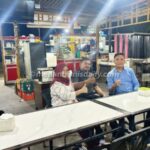
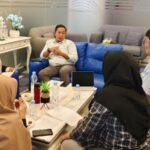
Pertamina Patra Niaga Regional North Sumatra (Sumbagut), through the Teluk Kabung Integrated Terminal (IT), held an Affordable Market activity for residents of Teluk Kabung Tengah Village, Bungkus Teluk Kabung District, Padang City.
The arrival of this program was enthusiastically welcomed by residents who took the opportunity to obtain basic necessities at more affordable prices.
This Affordable Market program is one form of Pertamina’s concern for the community, especially the pre-prosperous group, so they can continue to meet daily needs amidst various economic dynamics.
Through this activity, Pertamina also contributes to maintaining people’s purchasing power and supporting food security in the area around its operations.
The activity was attended by representatives from the local sub-district, village, the Padang City Social Service Office, and local community figures.
A total of 1,000 basic food packages were provided for pre-prosperous community members. Each package contained 5 kg of rice, 2 liters of cooking oil, 2 kg of sugar, 1 can of sweetened condensed milk, 1 bottle of sweet soy sauce, and 1 can of sardines, which could be redeemed for Rp 30,000, or about Rp 181,000 cheaper than the normal package price of around Rp 211,000.
In addition to helping meet basic needs, this activity was also designed to provide sustainable benefits. The proceeds from the sale of the basic food packages will be returned to the community in the form of support for the development of public, social, religious, and educational facilities in the Teluk Kabung Tengah area.
It was stated that this activity is part of Pertamina’s commitment to continue being present and providing real benefits for communities around its operational areas.
“Through this affordable market, we hope to help ease the burden on the community. Furthermore, the proceeds from this activity will also be returned to the community in the form of support for social, religious, and educational facilities,” it was stated.
Community enthusiasm was reflected in various positive responses. One resident of Teluk Kabung Tengah expressed being greatly helped by the activity. “I am very helped by the availability of this basic food package. With affordable prices, our needs can be met,” the resident said.
Appreciation was also conveyed. It was assessed that this activity has a direct impact on the community.
“We appreciate Pertamina Patra Niaga Regional Sumbagut and Teluk Kabung IT for implementing this Affordable Market. This program greatly helps the community in meeting daily needs,” it was said.
It was conveyed that this activity is part of the company’s efforts to present targeted and sustainable programs.
“We strive so that the community can access basic necessities more affordably, while also providing sustainable benefits through strengthening social facilities in the surrounding environment,” it was stated.
Through this activity, Pertamina hopes to continue strengthening synergy with local government and the community in supporting the improvement of welfare in the Teluk Kabung Tengah area.
This Affordable Market program is also in line with the company’s commitment to supporting the Sustainable Development Goals (SDGs), specifically SDG 1 (No Poverty), SDG 2 (Zero Hunger), and SDG 3 (Good Health and Well-being).
Teluk Kabung Integrated Terminal
The Teluk Kabung Integrated Terminal is a major transportation hub located in Padang, West Sumatra, Indonesia. It was developed to modernize and consolidate the city’s bus and minivan (angkot) services, replacing older, scattered terminals to improve urban traffic flow and passenger convenience. Its establishment reflects a broader national initiative in the early 21st century to upgrade public transport infrastructure across Indonesian cities.
<h3 class="text-lg font-semibold mb-2 text-blue-
Teluk Kabung Integrated Terminal
The Teluk Kabung Integrated Terminal is a major transportation hub located in Padang, West Sumatra, Indonesia. It was developed to modernize the city’s transit system, consolidating various bus and minibus services to reduce urban congestion. The terminal, whose name translates to “Cove of Kabung,” began operations in the 2010s as part of regional infrastructure improvements to support the growing population and tourism in the area.
Padang City
Padang is the capital and largest city of West Sumatra, Indonesia, historically serving as a major port for the Minangkabau highlands and a key trading hub since the 16th century. It is the cultural gateway to the Minangkabau people, known for their unique matrilineal society and distinctive Rumah Gadang architecture. The city was also significantly impacted by a major earthquake in 2009, which led to extensive rebuilding and modernization.
Teluk Kabung Tengah Village
Teluk Kabung Tengah is a coastal village located in the Bungus Teluk Kabung district of Padang, West Sumatra, Indonesia. Historically, it was a traditional fishing community, with its economy and culture long centered around the sea and the nearby mangrove forests. Today, it is also known for its scenic beach and serves as a gateway to nearby natural attractions like the Bungus Bay area.
Bungkus Teluk Kabung District
Bungkus Teluk Kabung is a coastal village located within the Teluk Kabung district on the western coast of Padang, West Sumatra, Indonesia. Historically, it has been a traditional fishing community, with its economy and culture closely tied to the sea and the nearby mangrove forests. The area is also known for its scenic beaches and is part of the region’s efforts to develop community-based tourism.
Padang City Social Service Office
The Padang City Social Service Office is a local government agency in Padang, Indonesia, responsible for implementing social welfare programs for the community. While the office itself is a modern administrative unit, its work is deeply connected to the region’s history of resilience, particularly following major natural disasters like the 2009 earthquake that devastated the city and increased the need for coordinated social support and rehabilitation services.
Sustainable Development Goals (SDGs)
The Sustainable Development Goals (SDGs) are a universal set of 17 interconnected goals adopted by all United Nations Member States in 2015 as part of the 2030 Agenda for Sustainable Development. They build upon the earlier Millennium Development Goals and provide a global blueprint to end poverty, protect the planet, and ensure peace and prosperity for all people by 2030.
SDG 1 (No Poverty)
“SDG 1 (No Poverty)” is not a physical place or cultural site, but a global goal set by the United Nations in 2015 as part of the 2030 Agenda for Sustainable Development. Its history is rooted in decades of international development efforts, aiming to eradicate extreme poverty for all people everywhere by 2030 through social protection systems, equal rights to resources, and building resilience to environmental and economic disasters.
SDG 2 (Zero Hunger)
“SDG 2 (Zero Hunger)” is not a physical place or cultural site, but a global goal adopted by the United Nations in 2015 as part of the 2030 Agenda for Sustainable Development. Its history is rooted in decades of international efforts to combat malnutrition and food insecurity, aiming to end hunger, achieve food security, improve nutrition, and promote sustainable agriculture worldwide by 2030.