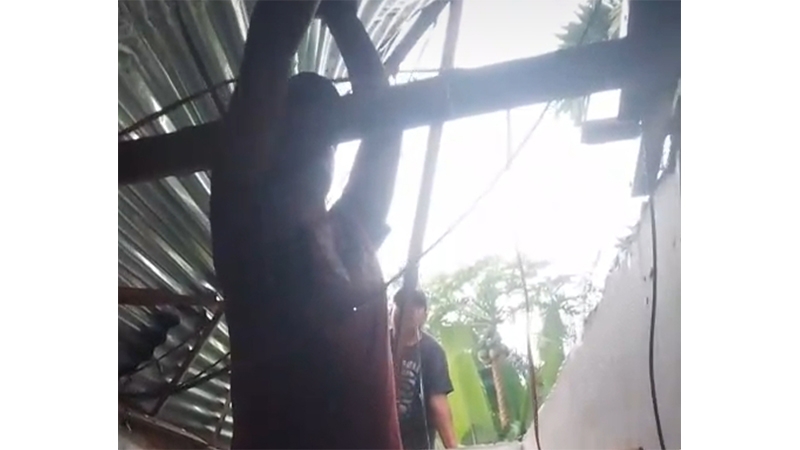
A tornado disaster struck two villages in Sipispis District, Serdang Bedagai Regency (Sergai), North Sumatra, on Wednesday (27/5/2026). As a result, four residents’ houses suffered damage, ranging from severe to minor conditions.
The head of Buluh Duri Village, Dewi Yanti Purba, stated that a house belonging to a resident named Jumini in Hamlet I of Buluh Duri Village was damaged after being hit by strong winds.
“There were no casualties in the incident. However, the victim’s house suffered damage to the zinc roof,” said Dewi Yanti Purba.
Meanwhile, the head of the Serdang Bedagai Regency Disaster Management Agency, Rico Ebtian, stated that based on preliminary reports, four residents’ houses were affected by the tornado.
“Three houses are in Sibarau Village and one house is in Buluh Duri Village, with conditions ranging from severe to minor damage,” revealed Rico.
According to him, officers from the Sergai Disaster Management Agency are still conducting field data collection to confirm the number of affected houses and the extent of the damage.
“We are still collecting data to ensure more accurate information. From the preliminary reports received by the Sergai Disaster Management Agency, four houses were affected,” he said.
Following the incident, residents of Sipispis District have begun cleaning up building debris scattered by the tornado.
Buluh Duri Village
Buluh Duri Village is a traditional settlement in Indonesia, known for preserving the unique cultural heritage of the Suku Anak Dalam (also called the Orang Rimba) community. The village’s history reflects the struggles of this indigenous group to maintain their semi-nomadic lifestyle and forest-based traditions amid modern development pressures. Today, it serves as a cultural tourism site where visitors can learn about their customs, crafts, and efforts to protect their ancestral lands.
Sipispis District
Sipispis District is located in Serdang Bedagai Regency, North Sumatra, Indonesia. Historically, it was part of the broader Malay and Batak cultural region, with its development shaped by agriculture and local trade. Today, the area is known for its natural landscapes and traditional village life, reflecting a blend of indigenous and colonial influences.
Serdang Bedagai Regency
Serdang Bedagai Regency is a regency in North Sumatra, Indonesia, formed in 2003 from the former Deli Serdang Regency. Its history is tied to the Malay and Batak cultures, and it features notable sites like the Simalungun Highlands and coastal areas. The regency is known for its agricultural production, including palm oil and rubber, as well as its cultural heritage from the Serdang Sultanate.
North Sumatra
North Sumatra is a province in Indonesia known for its diverse cultures, including the Batak people, and stunning natural landscapes like Lake Toba, the world’s largest volcanic lake. Historically, the region was influenced by Buddhist and Hindu kingdoms before the rise of Islamic sultanates, and later became a key area for Dutch colonial rubber and tobacco plantations. Today, it remains a vibrant cultural hub with traditional villages
Buluh Duri Village
Buluh Duri Village is a traditional settlement in North Sumatra, Indonesia, known for its scenic highland location and the cultural heritage of the Karo Batak people. Historically, the village features distinctive traditional houses with iconic pointed roofs and serves as a living example of Karo architecture and customs. It has become a popular destination for visitors seeking to experience authentic local culture and history.
Sipispis District
Sipispis District is a region located in Serdang Bedagai Regency, North Sumatra, Indonesia. Historically, it was part of the broader Malay and Batak cultural landscape, with its development shaped by local agriculture and trade. Today, the district is known for its rural communities and natural surroundings, reflecting a blend of traditional customs and modern influences.
Serdang Bedagai Regency
Serdang Bedagai Regency is a coastal region in North Sumatra, Indonesia, established in 2004 after being split from Deli Serdang Regency. Its history is tied to the ancient Malay kingdoms and later the Sultanate of Serdang, which influenced local culture and trade. Today, it is known for its agricultural production, including palm oil and rubber, as well as its beaches and cultural heritage sites.
North Sumatra
North Sumatra is a province in Indonesia known for its stunning natural landscapes, including Lake Toba, the world’s largest volcanic lake, and the traditional Batak culture. Historically, the region was a center of the powerful Batak kingdoms and later became a key site for Dutch colonial trade and plantation agriculture. Today, it is a popular tourist destination, offering a mix of cultural heritage, colonial-era architecture, and outdoor adventure.
Simalungun Highlands
The Simalungun Highlands, located in North Sumatra, Indonesia, are a mountainous region known for their lush landscapes and cool climate, historically part of the ancient Batak kingdom of Simalungun. The area is culturally significant for its traditional Batak Simalungun villages, distinct architecture with pointed-roof houses (rumah bolon), and remnants of the region’s pre-colonial history, including megalithic sites. Today, the highlands are also recognized for their coffee and tea plantations, as well as the scenic Lake Toba area nearby.
Lake Toba
Lake Toba is a massive volcanic lake in Sumatra, Indonesia, formed around 74,000 years ago by a supervolcanic eruption, one of the largest in Earth’s history. It is home to the Samosir Island, a cultural heartland of the Batak people, who have inhabited the region for centuries and maintain rich traditions. Today, Lake Toba is a popular tourist destination, known for its stunning scenery and unique geological and cultural significance.
Serdang Sultanate
The Serdang Sultanate was a Malay monarchy located in present-day North Sumatra, Indonesia, established in the 17th century. It played a significant role in regional trade and politics, often navigating between Dutch colonial influence and local rivalries. The sultanate was eventually dissolved in 1946 following Indonesia’s independence, but its cultural legacy remains in the region.
Suku Anak Dalam (Orang Rimba)
The Suku Anak Dalam, also known as Orang Rimba, are an indigenous ethnic group living in the rainforests of Jambi and South Sumatra, Indonesia. Historically semi-nomadic hunter-gatherers, they have maintained a deep spiritual connection to the forest, which they consider their source of life and identity. In recent decades, deforestation, palm oil plantations, and government resettlement programs have threatened their traditional way of life, leading to ongoing struggles for land rights and cultural preservation.