Read in 10 seconds
- The government is developing the National Strategic Project food estate in Wanam, Merauke, to strengthen Indonesia’s national food security reserves.
- Several main facilities in the Wanam area have been completed one hundred percent to support the target of one million hectares of new rice fields.
- The development carried out by Jhonlin Group is expected to improve the welfare of local communities and encourage long-term economic equity.
The development of the food estate in Wanam, Merauke, South Papua is very important and strategic for realizing national food security according to President’s priority program.
Researcher from Indikator Politik Bawono Kumoro emphasized that the development of the food estate in Wanam as a National Strategic Project is very important for the future.
“It must definitely continue. It should not stop when there are efforts from certain groups trying to sabotage this program,” said Bawono, Wednesday (5/20/2026).
Bawono assessed that there are certain parties trying to hinder the development of the food security sector with the one million hectare new rice field program in Wanam.
“Including by making a film,” he explained.
Furthermore, he also asserted that the benefits of the food barn project in Wanam will be felt in the long term.
“Maybe in the short term or medium term the fruits of this food security program cannot be seen clearly, but in the long term, in the future, this program will certainly have strategic value. Therefore, it must continue to be carried out by the government,” said Bawono.
Significant Progress
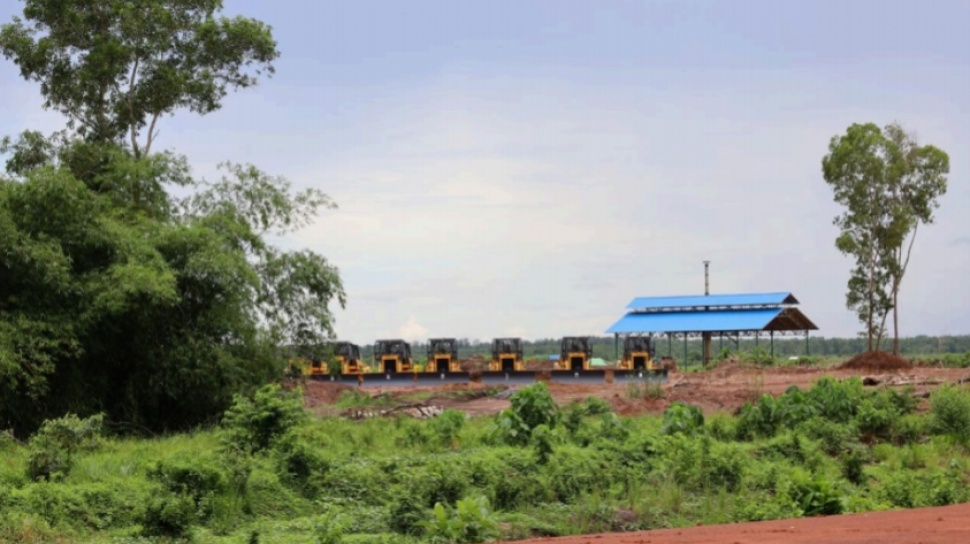
As information, the Wanam National Strategic Project in South Papua shows significant progress with several main facilities having been 100 percent completed.
The presence of this project has brought new hope for local communities, especially in encouraging welfare and equitable development in the region.
One resident of Papua expressed gratitude for the development that now reaches their villages and hamlets. According to him, the benefits of the project are not only felt now but also for future generations.
“We must be grateful because when else can we receive this? Not only for us to enjoy, but also for our children and grandchildren,” said a resident named Tarsan Balagaize.
He assessed that the development program from the central government will open up opportunities for local communities to have a better and more prosperous life.
“If there is already this program from the central government, it means our local community’s life here will probably become more prosperous,” he said.
Furthermore, he said, local residents also expressed appreciation because development now reaches areas that previously had no infrastructure.
“The community fully accepts the development of the Wanam National Strategic Project. So we are very grateful and we accept this development program 100 percent,” he said.
National Food Reserve Center
Meanwhile, a project officer explained that the progress of the development of several supporting facilities in the Wanam National Strategic Project area is almost entirely complete. The multipurpose jetty area and solar cells are reported to have reached 100 percent progress. “For the progress of the multipurpose jetty area, it has reached 100 percent,” said the project officer.
In addition, the construction of a diesel tank with a capacity of 5,000 metric tons has reached 97 percent, while the multipurpose warehouse has reached 88 percent.
“For the diesel tank with a capacity of 5,000 meters per ton, we have stocked it at 97 percent. Also, the multipurpose warehouse has reached 88 percent, and followed by the solar cells, which are already at 100 percent,” he said.
Wanam is now projected to become the center of the National Food Reserve through an ambitious new rice field program covering 1 million hectares.
The National Strategic Project funded and carried out by Jhonlin Group is not just about opening agricultural land, but building a new life ecosystem that includes irrigation networks, biodiesel industry, and strengthening national defense.<
![Ilustrasi kawasan Mal Blok M, Jakarta. [Suara.com/Alfian Winanto]](https://asiacity.news/wp-content/uploads/2026/05/48728-mal-blok-m-kawasan-bawah-tanah-mal-blok-m-150x150.webp)
![Lintas Tridharma Jakarta (LTJ), sebuah wadah konsolidasi berbagai elemen mahasiswa yang tergabung dalam PERISAI SI Mahasiswa HMI, SEMMI, PMII, dan GPI, menyelenggarakan aksi damai [Ist]](https://asiacity.news/wp-content/uploads/2026/04/82779-ltj-150x150.webp)