Jakarta –
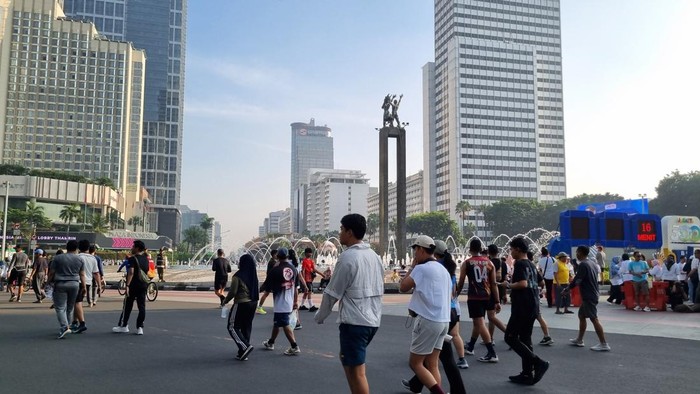
The Jakarta Provincial Government has canceled the car free day this weekend. The car free day is canceled on March 31 in observance of Vesak.
The Jakarta Transportation Agency urges the public to adjust their schedules and locations for exercise. The announcement regarding the cancellation of the car free day was made directly through the official Instagram account of the Jakarta Provincial Transportation Agency.
“The car free day on Sunday, May 31, 2026, is canceled,” the agency wrote in its post, seen on Thursday (May 28, 2026).
Roads that are usually closed for exercise due to the car free day will return to normal operation and can be crossed by motor vehicles. The public and road users are asked to always obey existing traffic regulations.
The decision to cancel the vehicle-free area refers to Article 5 paragraph (1) of the Jakarta Provincial Regulation Number 12 of 2016 concerning the Implementation of the Car Free Day in the Jakarta area.
For information, the Vesak holiday in 2026 falls on the weekend, only one day, and there is no collective leave. Previously there was the Eid al-Adha holiday and after that there was the Pancasila Birth Day holiday, resulting in a long weekend.
Bundaran HI
Bundaran HI, officially known as the Hotel Indonesia Roundabout, is a prominent landmark and traffic circle in central Jakarta, Indonesia. It was built in the early 1960s to commemorate the construction of the Hotel Indonesia, the country’s first five-star hotel, and was inaugurated in 1962 to welcome delegates for the Asian Games. The site is famous for its central fountain and the “Selamat Datang” (Welcome) Monument, symbolizing Jakarta’s openness and development.
Jakarta
Jakarta, the capital of Indonesia, is a sprawling metropolis on the northwest coast of Java with a history dating back to the 4th century as a major port. Originally called Sunda Kelapa, it was later renamed Batavia under Dutch colonial rule in the 17th century, serving as the center of the Dutch East India Company. The city was renamed Jakarta after Indonesia’s independence in 1945, and today it stands as a vibrant hub of culture, commerce, and politics.
Bundaran HI
Bundaran HI, officially known as the Hotel Indonesia Roundabout, is a prominent landmark and traffic circle in central Jakarta, Indonesia. It was built in the early 1960s to commemorate the 1962 Asian Games, with the iconic “Selamat Datang” (Welcome) monument at its center, designed by sculptor Henk Ngantung. Today, it serves as a major hub for cultural events, protests, and a symbol of the city’s modernization.
Hotel Indonesia Roundabout
The Hotel Indonesia Roundabout, located in central Jakarta, Indonesia, is a major landmark and traffic circle named after the historic Hotel Indonesia, which opened in 1962 to host international delegates for the Asian Games. The roundabout is famous for its central fountain, known as the “Welcome Monument,” and has become a symbol of Jakarta’s modernization and a popular gathering spot. It also serves as a key hub for protests, celebrations, and cultural events, reflecting the city’s dynamic social and political life.
Hotel Indonesia
Hotel Indonesia is a historic luxury hotel located in the heart of Jakarta, Indonesia, which first opened its doors in 1962. Built to host foreign dignitaries for the Asian Games that year, it became a symbol of modern Indonesia and the country’s first internationally-standard hotel. The hotel remains an iconic landmark, representing both mid-century architecture and Indonesia’s post-independence development.
Selamat Datang Monument
The Selamat Datang Monument, located in the heart of Jakarta, Indonesia, is a iconic landmark symbolizing a warm welcome. It was built in 1962 to commemorate the Asian Games held in Jakarta that year, featuring two towering bronze figures with raised arms in a greeting gesture. Today, it stands as a popular tourist attraction and a symbol of the city’s openness and hospitality.
Jakarta
Jakarta is the capital and largest city of Indonesia, located on the northwest coast of Java. Originally a small port town called Sunda Kelapa, it was renamed Jayakarta in the 16th century before becoming the colonial hub Batavia under Dutch rule. Today, it is a bustling metropolis reflecting a blend of Indonesian, Chinese, and European influences, with landmarks like the National Monument and old port.
Sunda Kelapa
Sunda Kelapa is an ancient port located in Jakarta, Indonesia, with a history dating back to the 12th century as a key trading hub for the Hindu Sunda Kingdom. It was later renamed Batavia by Dutch colonizers in the 17th century, who developed it into a major center for the spice trade. Today, the port still operates as a traditional harbor for wooden schooners, preserving its historical character and serving as a reminder of Jakarta’s maritime heritage.
Batavia
Batavia, now known as Jakarta, was the colonial capital of the Dutch East Indies, established in 1619 on the ruins of the earlier port city of Jayakarta. It served as a major hub for the Dutch East India Company’s trade, particularly in spices, and was characterized by its canals and fortified architecture. The city’s name was changed to Jakarta after Indonesia’s independence in 1945.