Jakarta –
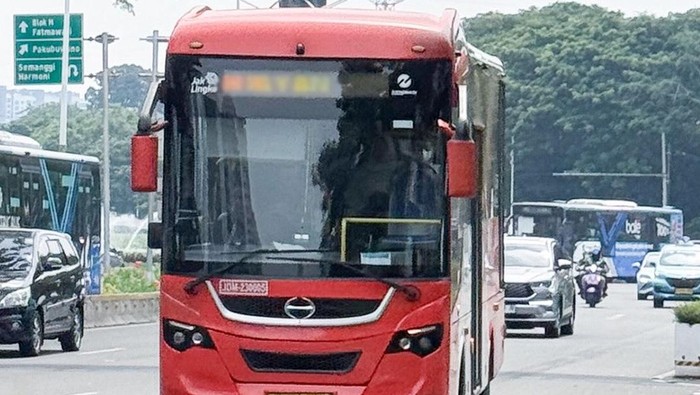
TransJakarta (TransJ) is expanding its reach in the Depok area, West Java. TransJ route 9H now serves passengers from Tanah Baru, Depok, to Pasar Minggu, South Jakarta.
This is part of a collaboration between the Depok City Transportation Agency and the DKI Jakarta Transportation Agency. The Head of the Transportation Division of the Depok City Transportation Agency stated that this policy aims to improve public transport accessibility for Depok residents who commute to the Jakarta area.
“This is a form of collaboration between the Depok Transportation Agency and the DKI Jakarta Transportation Agency to facilitate the mobility of residents, especially those heading to Pasar Minggu,” the official said.
It was explained that previously route 9H served travel from Cipedak to Pasar Minggu. However, the route has now been extended with the starting point (headway) located under the Tugu Tanah Baru flyover in Depok.
“This change is also accompanied by the relocation of the departure point, which was previously at Pancasila University, and is now centralized in the Tugu Tanah Baru area,” the official explained.
It was added that there is a route adjustment for the direction from Tanah Baru to Pasar Minggu. After previously not passing through Jalan Mohammad Kahfi 2, the route has now been diverted to pass through that road to increase travel efficiency.
“Meanwhile, for the opposite direction, from Pasar Minggu to Depok, the route remains the same via Jalan Mohammad Kahfi 2, only now it is extended to the Tugu Tanah Baru flyover,” the official said.
According to the official, route trials have been conducted and this service will begin operations in the near future.
“With this route extension, it is hoped that Depok residents will have an easier, more affordable, and integrated public transportation alternative with the TransJakarta network in DKI Jakarta,” the official concluded.
Tanah Baru
“Tanah Baru” is a common place name in Indonesia and Malaysia, meaning “New Land,” and often refers to newly developed or settled areas. Without a specific, famous cultural site by this name, it is most historically associated with agricultural or residential expansion projects, such as the Tanah Baru district near Bogor, Indonesia, which was developed from former plantation lands. Therefore, its general history typically reflects regional development and settlement rather than a single ancient monument.
Pasar Minggu
Pasar Minggu is a traditional market in South Jakarta, Indonesia, whose name means “Sunday Market,” as it was historically busiest on Sundays. It has operated since the 18th century, originally as a rural trading hub for agricultural produce from the surrounding area. Today, it remains a vibrant local market known for fresh fruits, vegetables, and traditional snacks, though it now operates daily.
Depok
Depok is a city in West Java, Indonesia, originally established in the 18th century as a private agricultural estate by Cornelis Chastelein, a Dutch East Indies Company official. Historically significant for its early Christian community and unique social structure, it has transformed from a quiet settlement into a major university city and bustling satellite city of Jakarta. Today, it is known for its educational institutions, such as the University of Indonesia campus, and its rapid urban development.
Jakarta
Jakarta is the capital and largest city of Indonesia, located on the northwest coast of Java. Historically known as Sunda Kelapa and later Batavia under Dutch colonial rule, it became the center of the Dutch East Indies before being renamed Jakarta after Indonesia’s independence. Today, it is a sprawling, vibrant metropolis that serves as the nation’s political, economic, and cultural hub.
West Java
West Java is a province of Indonesia located on the island of Java, historically home to the powerful Sunda Kingdom and later the Sultanate of Banten. It is renowned for its diverse cultural heritage, including traditional arts like *wayang golek* (wooden puppet theater) and *angklung* (bamboo musical instrument). The region also features significant natural attractions, such as the volcanic highlands of Bandung and the coastal beauty of Pangandaran.
South Jakarta
South Jakarta is a modern administrative city within Indonesia’s capital, formed in 1978, known for its upscale residential areas, shopping malls, and diplomatic embassies. Historically, the area was part of the Sunda Kelapa port region and contains pockets of older Betawi culture, but it is primarily defined by its rapid development as a commercial and expatriate hub since the late 20th century.
Cipedak
Cipedak is a village located in South Jakarta, Indonesia, historically known as a rural area with agricultural land. It has undergone significant urbanization and development as part of Jakarta’s southern expansion. Today, it is primarily a residential suburb, with its historical identity largely absorbed into the modern city.
Pancasila University
Pancasila University is a private university located in Jakarta, Indonesia, founded in 1966. Its establishment was inspired by the philosophical principles of Pancasila, the official foundational theory of the Indonesian state, aiming to develop higher education based on national values. The university has since grown to offer a range of undergraduate and postgraduate programs.