Sustainable Empowerment: Clothing, Books, and 27,000 Trees for Indonesian Grassroots Communities
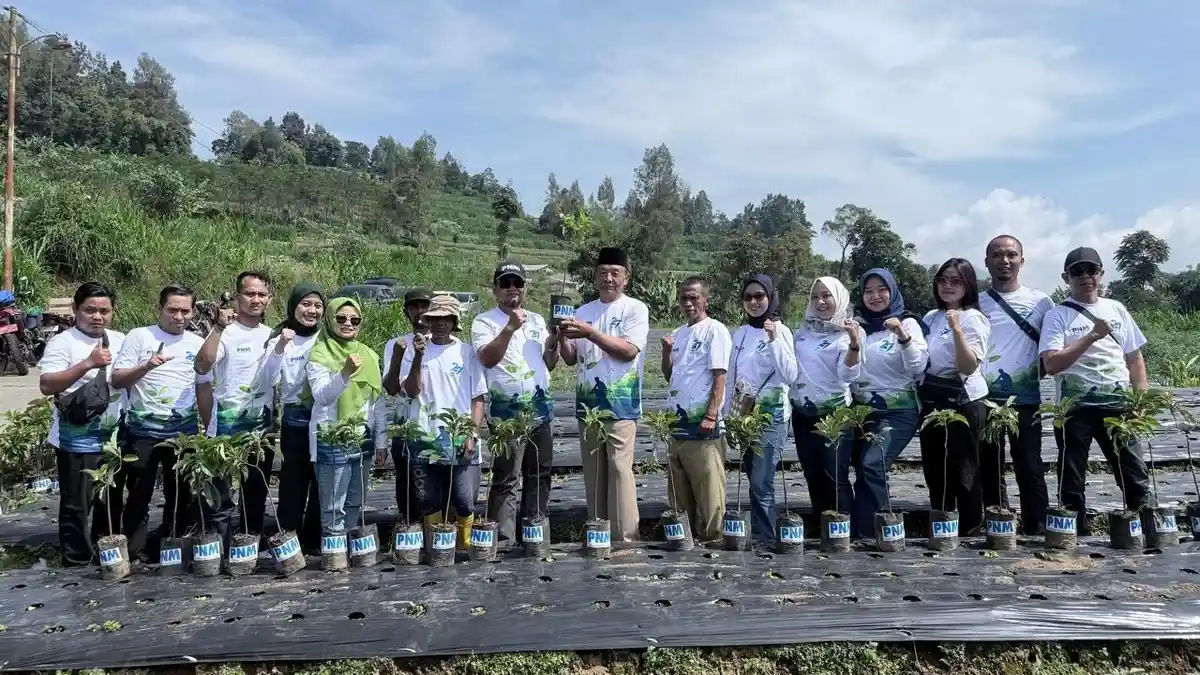
GREENING – Planting 27,000 trees is part of PNM’s effort to support reforestation, while also contributing to the Sustainable Development Goals (SDGs), particularly Goal 13 on Climate Action and Goal 15 on Life on Land.
DEPOK, JAKARTA – Planting a single tree may seem like a small step, but its benefits can grow far beyond the time it is planted.
Roots that hold the soil, leaves that help bring cleaner air, and trunks that will one day provide shade serve as reminders that trees play a vital role in the balance of nature.
Therefore, planting 27,000 trees is part of PNM’s initiative to support reforestation, while also contributing to the Sustainable Development Goals (SDGs), specifically Goal 13 on Climate Action and Goal 15 on Life on Land.
Through the PNM Peduli program, PT Permodalan Nasional Madani (Persero) or PNM expands the meaning of empowerment to include environmental aspects.
The tree-planting movement is carried out at 58 PNM branches across Indonesia, with each branch planting at least 500 tree seedlings.
Overall, 27,000 trees are planted as a simple yet meaningful step to create a healthier environment for communities where they live, work, do business, and build their families’ futures.
With the spirit of #PNMuntukUMKM and #PNMPemberdayaanUMKM, this movement is also part of PNM’s sustainability series, continuing the spirit of RE3 FOR-E which previously successfully collected 20 tons of wearable clothing from PNM personnel to be redistributed to those in need, along with reading books to support literacy access.
The same values are also carried forward through PNM Mengajar, which reaches 58 vocational schools from Sabang to Merauke.
From clothing that becomes useful again, to books that open learning opportunities, to trees planted for the future, PNM wants to show that care can take many forms that are close to the needs of the community.
The President Director of PNM stated that PNM’s green commitment is part of the company’s responsibility to provide sustainable benefits.
“For PNM, empowerment is not only about helping communities develop their businesses, but also about preserving the living space where they grow. Through tree planting and various other sustainability programs, we want the benefits we provide to be felt not only today, but also to grow for future generations,” he said.
Depok
Depok is a city in West Java, Indonesia, known for its historical significance as the site of one of the country’s first planned communities, established by a Dutch landlord in the 18th century. Its name is derived from the Sundanese word for “hermitage” or “secluded place,” and it later grew into a major educational hub, hosting the University of Indonesia. Today, Depok is a bustling suburban city within the Greater Jakarta area, blending modern development with remnants of its colonial-era heritage.
Jakarta
Jakarta, the capital of Indonesia, has a long history as a major trading port, originally known as Sunda Kelapa before being renamed Jayakarta by the Portuguese in the 16th century. It later became Batavia under Dutch colonial rule, serving as the administrative center of the Dutch East Indies. Today, it is a bustling metropolis that blends modern skyscrapers with historic sites like the Old Town (Kota Tua) and the National Monument.
Indonesia
Indonesia is a Southeast Asian archipelago nation made up of over 17,000 islands, with a rich history shaped by Hindu-Buddhist kingdoms, Islamic sultanates, and European colonization, particularly by the Dutch. It declared independence in 1945 after centuries of colonial rule, becoming the world’s largest archipelagic state and a diverse cultural melting pot. Today, Indonesia is known for its vibrant traditions, including batik textiles, wayang puppet shows, and the ancient temple complex of Borobudur.
Sabang
Sabang is a coastal city located at the northern tip of Sumatra, Indonesia, known for its strategic position along the Malacca Strait. Historically, it served as a key port and naval base during the Dutch colonial era and later became a free trade zone. Today, Sabang is a popular tourist destination, famous for its pristine beaches, coral reefs, and the iconic Sabang Merauke monument marking the westernmost point of Indonesia.
Merauke
Merauke is a town in the southern part of Papua, Indonesia, near the border with Papua New Guinea. It holds historical significance as a Dutch colonial outpost and was a key site during World War II, serving as an Allied base. Today, it is known as a cultural crossroads for various Papuan tribes and a gateway to the remote and biodiverse region of southern Papua.