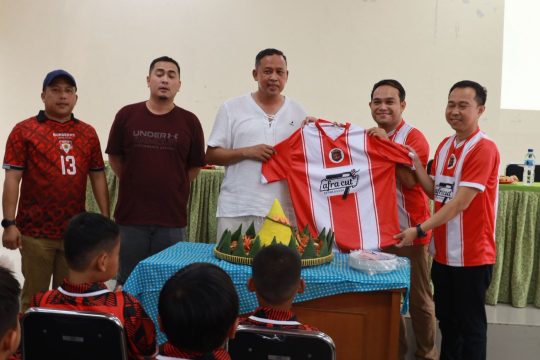
BEKASI CITY – The Mayor of Bekasi, Tri Adhianto, provided motivation to players and the football club during the Kota Baru Cup event with Kota Baru FC. On that occasion, Tri emphasized the importance of character building for young athletes from an early age.
According to him, a player’s success is not only determined by technical skills on the field, but also by discipline, sportsmanship, and a strong competitive mentality.
“A football player with character should leave everything to the coach. Parents should not interfere too much. If a player is not put on the field, don’t get emotional, because the process is part of shaping an athlete until they succeed,” said Tri Adhianto.
He also reminded that an athlete must be brave enough to face greater challenges in order to grow.
“There is no great captain if they only sail on a lake, but on the open sea. That means players must be ready to face real competition,” he added.
Tri hopes that through the Kota Baru Cup event, it can become the first step in producing potential football athletes from Bekasi City who can compete at the national level. In addition to individual abilities, players were also reminded of the importance of teamwork and responsibility toward themselves and the team.
“Basic formation is important, how to cooperate and have responsibility. A sportsmanlike character is the main foundation in becoming an athlete,” he stated.
In a spirited atmosphere, Tri also shared his own youthful experiences when he pursued football. This served as motivation for young players to keep training and never give up in pursuing their dreams in the sports world.