Bekasi City

The Kampung Sawah area in Bekasi City, West Java, is famous for its deeply ingrained culture of tolerance. Here, three houses of worship stand close to each other, and people of different faiths live side by side without any conflict or friction related to belief.

These three houses of worship include St. Servatius Church for Catholics, the Pasundan Christian Church for Protestants, and a mosque for Muslims. Interestingly, those who are Catholic, Protestant, and Muslim are all native locals.

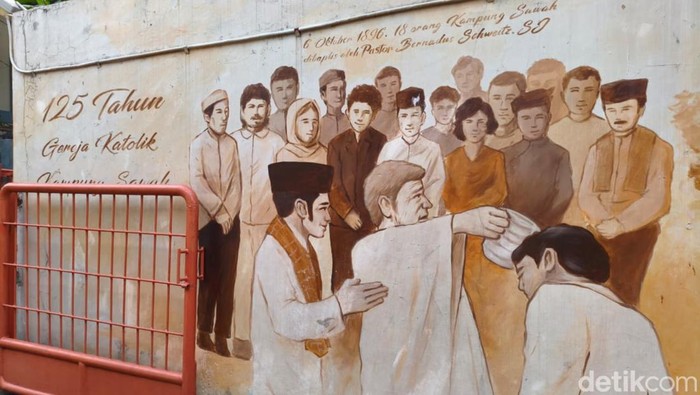
Jacob, who is over 70 years old, recounted the beginnings of the Catholic community in the Kampung Sawah area, which is traditionally a Betawi region. Jacob explained that the birth of the Catholic community among the Betawi in this area began with 18 people being baptized in 1896.

“We were founded in 1896, while the Protestant Christians were founded earlier, in 1874. That’s 22 years older than us. So, the Catholic Betawi of Kampung Sawah were founded in 1896, marked by the Catholic baptism of 18 people from Kampung Sawah,” said Jacob.

Jacob explained that the baptism of those 18 people took place on October 6, 1896. The Catholic baptism was performed by Father Bernardus Schweitz. One of those baptized was an ancestor of Jacob.
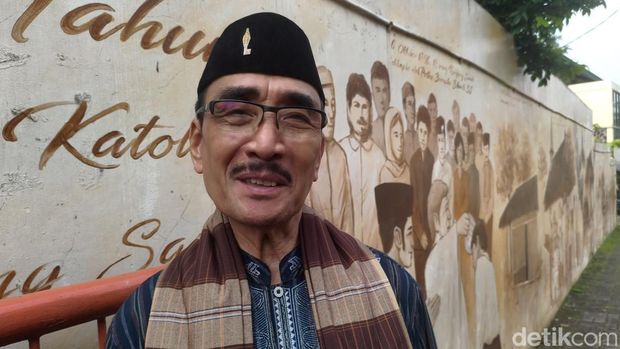
Many original Betawi people live in Kampung Sawah, Bekasi City. This Christian Betawi figure tells the story of the legacy of high tolerance among three religious communities in their area.

“These people, including one of my ancestors named Sam Napiun. My name is Yakob Napiun, full name Ricardus Jacobus Napiun, commonly called Jacob. So, he is one of the grandchildren of the ancestor here, Mr. Sam Napiun,” explained Jacob.

He said that these 18 ancestors had distinctive clan names, like names typical of people such as Noron, Miman, and Rikin. However, he admitted he forgot the complete list of Betawi clan names from those 18 ancestors.

“Why is that? In colonial times, perhaps to make the census easier, community groups were created. This family is Napiun, all Napiun. This one is all Rikin, this one all Miman, so it was easy to know how many families there were. So, that became the origin of the clan names,” Jacob explained.

“So, if you meet someone, for example while traveling in Bandung, and they introduce themselves with the name Napiun, it means this person is from Kampung Sawah or a descendant of someone from Kampung Sawah, definitely. And definitely Christian. Because if they have converted to Islam, the clan name is no longer used; they use ‘bin’,” he continued.

Legacy of High Tolerance

Jacob then explained the high level of tolerance practiced by the Betawi people in Kampung Sawah, despite their different beliefs. He stated that the Betawi in Kampung Sawah have long stopped making an issue of religious differences. According to him, the matter of religious differences is settled.

“All the major religious and community figures in Kampung Sawah have agreed to ensure that in Kampung Sawah, the matter of religion and religious practice is settled. There is nothing more to discuss, nothing more to mention. Yes, it is settled,” he said.

He said that when Betawi people from Kampung Sawah talk about togetherness and common interests, they


Kampung Sawah

Kampung Sawah is a traditional Betawi village located in Ciputat, South Tangerang, Indonesia, known for preserving authentic Betawi culture, including its distinct architecture, arts, and culinary traditions. Historically, the area was established as an agricultural settlement where rice paddies (“sawah”) were cultivated, reflecting the Betawi community’s deep connection to agrarian life. Today, it serves as a cultural tourism destination, offering visitors a glimpse into the heritage and customs of the Betawi people.

Bekasi City

Bekasi City is a major satellite city located just east of Jakarta, Indonesia, and is one of the fastest-growing urban centers in the Greater Jakarta area. Historically, it was an important site during the prehistoric era, with evidence of early human settlements, and later became a key area during the Tarumanagara Kingdom. Today, Bekasi is known primarily as a sprawling industrial and residential hub, housing many commuters who work in Jakarta.

West Java

West Java is a province in Indonesia known for its rich cultural heritage, including the traditional arts of the Sundanese people, such as angklung music and wayang golek puppet performances. Historically, it was part of the ancient kingdoms of Tarumanagara and Pajajaran, and later played a key role in the Dutch colonial era as a center for tea and rubber plantations. Today, it features natural attractions like volcanoes and hot springs, as well as cultural sites like the Gedung Sate building in Bandung.

St. Servatius Church

St. Servatius Church is a historic Romanesque church located in Quedlinburg, Germany, originally built in the 10th century. It was founded by King Henry I and served as the burial site for him and his wife, Queen Matilda, making it a significant royal memorial. The church is also a UNESCO World Heritage site, renowned for its well-preserved medieval architecture and artistic treasures.

Pasundan Christian Church

Pasundan Christian Church is a historic Protestant church located in Bandung, Indonesia, known for its distinctive blend of Western and local architectural styles. Established in the early 20th century during the Dutch colonial period, it served the Christian community in West Java and reflects the region’s cultural and religious diversity. Today, it remains an active place of worship and a notable landmark in Bandung.

Bandung

Bandung, the capital of West Java, Indonesia, is a vibrant city known for its colonial architecture, cool climate, and creative culture. Historically, it gained prominence as a center for the Dutch East Indies’ tea and rubber trade, and was famously the site of the 1955 Asia-Africa Conference, which marked a pivotal moment in post-colonial solidarity. Today, it blends its heritage with modern art, fashion, and culinary scenes, making it a popular destination for both history enthusiasts and travelers.